

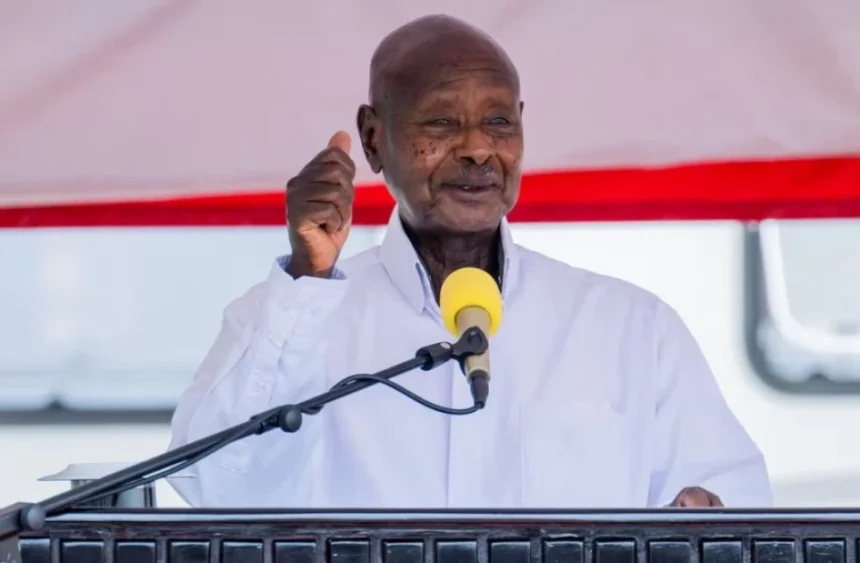
The government of Uganda has ordered a nationwide internet shutdown ahead of Thursday’s General Election, a move that has triggered widespread criticism from opposition figures, civil society groups, and international observers.
The blackout, which affects mobile data, broadband services, and social media platforms, comes just days before Ugandans head to the polls in a highly contested election seen as a critical moment for the country’s political future.
What Happened?
Telecommunications companies in Uganda confirmed that they were directed by authorities to suspend internet services nationwide, citing national security concerns. The shutdown includes access to major platforms such as Facebook, X (formerly Twitter), WhatsApp, and YouTube.
Users across the country reported losing connectivity almost simultaneously, effectively cutting off digital communication for millions of citizens.
Government officials defended the decision, saying it was necessary to maintain public order during the election period.
Timing Raises Eyebrows
The timing of the internet shutdown — just days before voting — has raised serious concerns among election observers. Internet access plays a crucial role during elections, enabling:
Real-time reporting
Voter education
Independent election monitoring
Communication between citizens and observers
Critics argue that cutting off the internet undermines transparency and limits the public’s ability to share information during a sensitive democratic process.
Uganda’s Election Stakes
Uganda’s General Election is taking place amid heightened political tension. President Yoweri Museveni, who has been in power for decades, faces opposition candidates who have mobilized strong support, particularly among young voters.
The election is viewed as a referendum on governance, economic conditions, youth unemployment, and political freedoms.
Digital platforms have become a key battleground for political messaging, especially among younger Ugandans who rely heavily on social media for news and political engagement.
Opposition and Civil Society Reaction
Opposition leaders swiftly condemned the internet shutdown, describing it as a deliberate attempt to suppress dissent and restrict access to information.
“This is an attack on democracy,” one opposition spokesperson said. “Ugandans are being silenced at a critical moment.”
Civil society organizations and digital rights groups echoed these sentiments, warning that internet blackouts:
Limit freedom of expression
Disrupt independent reporting
Prevent documentation of electoral irregularities
Several groups urged the government to restore connectivity immediately.
Economic and Social Impact
Beyond politics, the internet shutdown has significant economic consequences. Uganda’s growing digital economy relies on online platforms for:
Mobile money transactions
E-commerce
Ride-hailing services
Freelancing and remote work
Small business owners reported losses within hours of the blackout, while students and professionals expressed frustration over disrupted work and studies.
Experts say even short-term internet shutdowns can cost economies millions of dollars in lost productivity.
A Pattern in the Region?
Uganda’s move is not unprecedented in Africa. Internet shutdowns during elections have been reported in several countries, often justified on grounds of security and misinformation control.
However, rights groups argue that such measures have become tools for digital censorship, rather than genuine security interventions.
Uganda itself has previously restricted social media access during past elections, making this shutdown part of a broader pattern rather than an isolated incident.
International Concern Grows
International observers, foreign governments, and human rights organizations have expressed concern over the decision.
Some warned that restricting internet access could affect the credibility of the electoral process, particularly if results or incidents cannot be independently verified in real time.
Election transparency, analysts say, relies heavily on free flow of information — something an internet blackout directly undermines.
Government’s Justification
Ugandan authorities maintain that the shutdown is intended to prevent the spread of misinformation, hate speech, and potential unrest.
Officials argue that similar measures have been used elsewhere and insist that the blackout is temporary.
However, critics counter that blanket shutdowns punish ordinary citizens rather than addressing specific security threats.
Impact on Voters
For many Ugandans, especially first-time voters, the internet shutdown has created confusion. Voters rely on digital platforms to:
Confirm polling station details
Follow election updates
Engage with candidates’ messages
With access cut off, many feel disconnected from the electoral process.
“I don’t even know what’s happening anymore,” one voter said. “We are in the dark.”
Digital Rights and Democracy
The shutdown has reignited debate about digital rights and democracy in the modern age. As societies become increasingly connected, access to the internet is no longer a luxury — it is a fundamental tool for participation in civic life.
Rights advocates argue that governments should regulate online spaces through targeted, lawful measures rather than sweeping restrictions that affect entire populations.
What Happens Next?
As election day approaches, pressure is mounting on the Ugandan government to restore internet access. Observers warn that prolonged shutdowns could:
Escalate public frustration
Damage Uganda’s international image
Undermine trust in election outcomes
Whether the blackout will be lifted before or after voting remains unclear.
Conclusion
Uganda’s decision to shut down the internet ahead of Thursday’s General Election has placed the country at the center of a global debate on democracy, security, and digital freedom.
While the government insists the move is necessary for stability, critics argue it weakens transparency and silences citizens at a pivotal moment.