
The fragile, exhausted calm that briefly settled over the Middle East on Monday afternoon has completely evaporated. Less than 24 hours after Israel and Iran appeared to pull back from a chaotic weekend exchange of fire, a new and deeply perilous flashpoint has emerged directly involving American forces.
The Indian Express
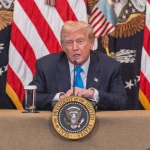
On Tuesday, June 9, 2026, President Donald Trump bypasses diplomatic ambiguity, explicitly accusing Tehran of shooting down a U.S. Army AH-64 Apache attack helicopter patrolling near the heavily contested Strait of Hormuz.
The Indian Express
While the two pilots were pulled from the water alive in a historic, first-of-its-kind autonomous military operation, the political fallout is rapidly accelerating. By shifting the narrative from an “unexplained crash” to an “act of aggression,” the White House has signaled that a direct American military response is no longer an option—it is a necessity.
The Washington Post
+ 1
The Truth Social Ultimatum: Bypassing the Pentagon
The official military line from U.S. Central Command (CENTCOM) early Tuesday morning was one of standard caution. Spokespersons confirmed that an Apache gunship had gone down off the coast of Oman at approximately 3:30 a.m. local time, but insisted the root cause remained strictly “under investigation.”
NPR Illinois
President Trump, however, chose not to wait for the formal bureaucratic ledger. Taking to his Truth Social platform, the commander-in-chief drew an immediate, unyielding line in the sand.
“I have just been informed by our Great Military that last night the Iranians shot down one of our highly sophisticated Apache Helicopters while patrolling over the Strait of Hormuz. There were two pilots involved, both are safe and uninjured. Nevertheless, the United States must, of necessity, respond to this attack.”
Al Jazeera
— President Donald Trump, June 9, 2026
The statement completely alters the calculus of the ongoing 2026 Iran War. By framing a response as an absolute necessity, Trump has locked the administration into a retaliatory posture at a moment when global energy markets are already buckling under the weight of the U.S. naval blockade on Iranian crude.
A Historic First: Rescued by an AI Sea Drone
While the geopolitical implications are ominous, the incident has simultaneously provided a stunning proof-of-concept for the future of military combat search and rescue (CSAR).
When the Apache went down in the dark waters off Oman, the pilots spent nearly two hours stranded in a highly volatile theater. They were not rescued by a traditional carrier-launched helicopter or a manned patrol boat. Instead, the extraction was executed entirely by an unmanned surface vessel (USV).
NPR Illinois
+ 2
The Asset: A 24-foot autonomous drone boat known as the Corsair, manufactured by Saronic Technologies.
NPR Illinois
The Unit: Operated by the U.S. 5th Fleet’s Task Force 59—the Navy’s pioneering experimental AI and uncrewed maritime unit.
Insurance Business
The Execution: Directed via satellite and localized sensors, the sea drone successfully navigated to the pilots’ transponder coordinates, pulled them from the water, and transported them to a secure U.S. Naval Forces Central Command assembly point in stable condition.
The Irish Times
Anatomy of the Incident: Tactical Success vs. Strategic Catastrophe
The dichotomy of last night’s event highlights how a flawless tactical rescue can still trigger a massive strategic crisis.
Incident Breakdown Matrix (June 9, 2026)
Operational Dimension Tactical Success / Innovation Strategic Risk / Escalation Vector
Personnel Status Both U.S. Army pilots were rescued uninjured within two hours; zero operational casualties. Gives the White House the political flexibility to strike back hard without mourning U.S. deaths.
Drone Technology Task Force 59 proves AI-driven sea drones can execute complex CSAR missions in active war zones. Confirms to adversaries that the U.S. is heavily relying on autonomous networks to enforce its blockade.
Geopolitical Stance The U.S. maintains its round-the-clock aerial patrol over the crucial Strait of Hormuz. Iran’s effective closure of the waterway is now being backed by active, lethal anti-air deployments.
Diplomatic Track Prevents Iran from capturing American personnel to use as political hostages or leverage. Iranian negotiator Ghalibaf warns that while Tehran prefers diplomacy, it speaks “other languages more fluently.”
The Next Move: Enforcing the Blockade
The downing of the Apache strikes directly at the core of America’s current regional strategy. Since April, the U.S. military has utilized Apache helicopters and carrier-based aircraft to enforce a strict tightening of the naval squeeze on Iranian ports, aiming to choke off clandestine oil shipments and force a permanent peace settlement.
NPR Illinois
If Iran has begun utilizing advanced surface-to-air missile systems to deliberately target these slow, low-flying patrol assets over international shipping lanes, the entire blockade strategy becomes highly unsustainable without a massive suppression of enemy air defenses (SEAD) campaign inside sovereign Iranian territory.
As oil underwriters frantically price in the reality of a direct U.S.-Iran military clash in the coming hours, the ball rests entirely in the Oval Office. Trump’s promise of a mandatory response means the question is no longer if Washington will strike, but where—and how hard.
Daily Sabah
Master Blog Index: The 2026 Iran War Crisis
Blog 1: The Economic Crisis: Surging Gas Prices, Inflation, and Trump’s Midterm Nightmare.
Blog 2: The Illusion of Control: How Netanyahu and Tehran Shattered Trump’s Peace Deal.
Blog 3: The Hidden Casualties: Inside the Pentagon’s Secret Supplementary Funding Battle and the Growing MAGA Rebellion.
Blog 4: Crossing the Red Line: Trump Vows Retaliation After Iran Downs U.S. Apache Over Hormuz.
Would you like me to draft a series of high-impact social media updates (X/Truth Social style) designed to break this story across your digital platforms, or should we begin outlining Blog 5 to detail the expected U.S. military targets?