
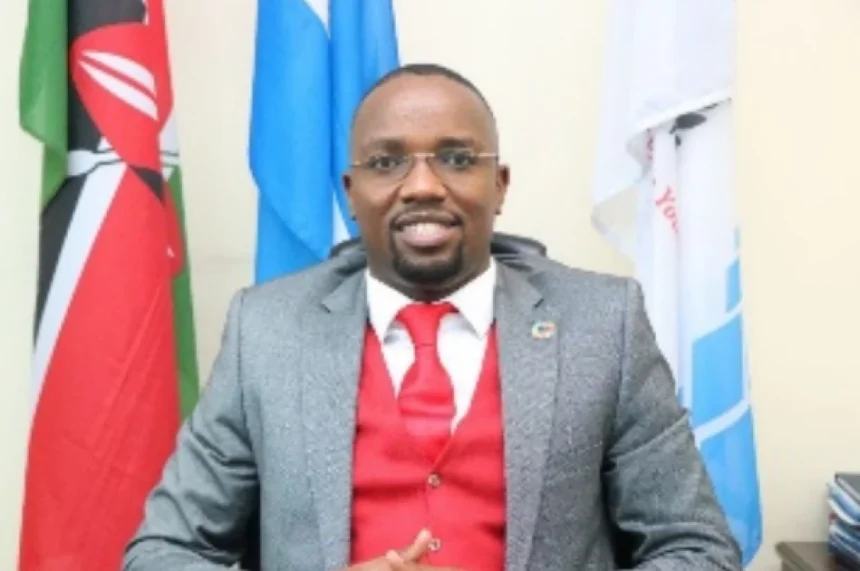
In a high‑profile development shaking Kenya’s governance landscape, the Ethics and Anti‑Corruption Commission (EACC) has formally recommended the suspension of National Government Affirmative Action Fund (NGAAF) CEO Roy Sasaka Telewa pending the outcome of an ongoing corruption investigation. The recommendation comes amid allegations that Mr. Sasaka accumulated unexplained wealth estimated at approximately Ksh.1 billion and may have been involved in procurement irregularities and abuse of office.
This move highlights the increasingly forceful stance of Kenya’s anti‑corruption institutions in promoting accountability and underscores the broader public demand for integrity in the use of public resources entrusted to state agencies.
Background: Who Is Roy Sasaka?
Roy Sasaka Telewa is the Chief Executive Officer of the National Government Affirmative Action Fund (NGAAF), an agency established to empower marginalized groups in Kenya — particularly women, youth, and persons with disabilities — by providing grants and financial support for community projects. Prior to this position, Sasaka held various roles in government, including procurement leadership roles in other public institutions.
NGAAF’s mandate places it at the center of programs designed to reduce inequality and stimulate grassroots development, making leadership credibility essential for public trust.
What the EACC Is Alleging
According to a letter by the EACC dated January 12, 2026, and addressed to the Cabinet Secretary for Gender, the commission recommended a six‑month suspension for Sasaka — to ensure that investigations can proceed “without interference.” The recommendation cited allegations that include:
Possession of unexplained wealth worth approximately Ksh.1 billion
Misuse of office and conflict of interest
Money laundering concerns
Procurement irregularities linked to both his current and previous government roles
These alleged offenses fall under several Kenyan laws, including the Anti‑Corruption and Economic Crimes Act, the Proceeds of Crime and Anti‑Money Laundering Act, and the Leadership and Integrity Act.
To support its request, EACC obtained search warrants and carried out operations at Sasaka’s residence and office on January 8, 2026, recovering documents and digital evidence that the commission described as “incriminating” to its probe.
Legal Pushback: Court Halts Suspension
Notably, while the EACC has urged the ministry to suspend Sasaka, the Employment and Labour Relations Court issued a temporary conservatory order preventing his removal from office. The court barred any board meetings or actions aimed at suspension or termination of his contract until a scheduled hearing on January 21, 2026.
This judicial development highlights a complex legal interaction: while investigative agencies seek to protect the integrity of probes, courts uphold procedural fairness and the right to due process for public officers. The court’s decision does not dismiss the allegations; rather, it temporarily maintains Sasaka’s status pending further legal arguments.
Why This Matters: Public Funds and Accountability
The NGAAF plays a critical role in channelling taxpayer money and donor funds to underserved communities. When leadership at such an institution is under scrutiny, it raises broader questions about:
📍 Public Trust in Governance
Kenyan citizens and civil society entities have long called for stronger enforcement of leadership ethics, especially in state agencies tasked with vulnerable populations. Corruption cases at high levels have historically eroded confidence in public institutions.
📍 Use of Public Resources
Allegations that billions of shillings may have been acquired unlawfully strike at the heart of ongoing debates about transparency in public procurement and the protection of public assets.
📍 Anti‑Corruption Momentum
In recent years, the EACC has pursued several high‑profile investigations involving senior officials. While not all inquiries lead to prosecution, they signal a more assertive approach to accountability.
What Happens Next?
Here’s what to watch in this evolving situation:
⚖️ Court Proceedings
The legal battle will continue, with the NGAAF CEO defending his position and challenging any attempts to remove him from office. The January 21 hearing is pivotal.
📊 EACC Investigation Outcome
If the EACC concludes its probe and determines there is compelling evidence, the file may be forwarded to the Director of Public Prosecutions (DPP) for possible charges. Convictions could lead to prosecution and even asset forfeiture.
💼 Institutional Reforms?
Depending on the findings, both NGAAF governance frameworks and public procurement oversight processes might undergo scrutiny — potentially prompting reforms to prevent future irregularities.
Broader Implications for Kenya
The Sasaka case fits into a larger narrative on governance in Kenya. While constitutional safeguards and anti‑corruption statutes are robust on paper, real‑world enforcement often hinges on political will and institutional independence. High‑profile investigations like this send ripples through the public service, signalling:
A stronger anti‑corruption posture
An emphasis on asset traceability and wealth declarations
Increased expectations of bid transparency and procurement integrity
Conclusion
The EACC’s recommendation to suspend NGAAF CEO Roy Sasaka Telewa amid the Ksh.1 billion unexplained wealth probe is a major news development that underscores Kenya’s ongoing battle with corruption and governance challenges. The court’s intervention to halt the suspension adds a legal twist that will play out in coming weeks, with significant implications for accountability, public confidence in state institutions, and the effectiveness of anti‑corruption enforcement.