
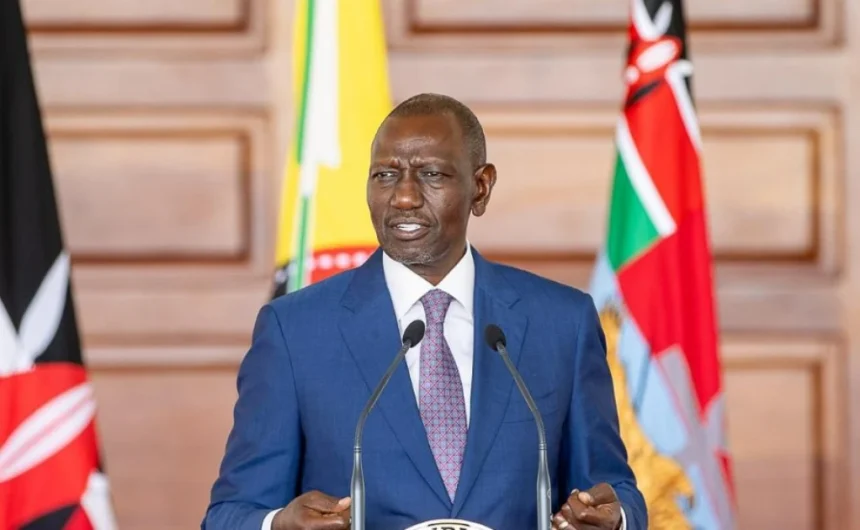
When the President of the Republic of Kenya steps up to deliver a major national address, the nation traditionally halts. Millions tune in across radio stations, television broadcasts, and social media livestreams, eager to hear how the government intends to tackle soaring taxation, youth unemployment, decaying healthcare infrastructure, and an unforgiving cost of living.
Yet, following President William Ruto’s address outlining Kenya’s long-term transformation, economic metrics, and national charter, the collective verdict from everyday citizens was swift, ruthless, and remarkably unified.Summarized in three viral Swahili words—”Ni kelele tu” (It’s just noise)—Kenyans across the political spectrum voiced overwhelming skepticism.From X (formerly Twitter) to barbershops in Kibera, university lecture halls in Eldoret, and online forums across the diaspora, the sentiment was clear:
citizens are exhausted by soaring macroeconomic rhetoric that fails to translate into affordable unga, functional healthcare, or dignifying employment.What triggered this wave of cynicism? How did a carefully staged speech intended to project leadership turn into another flashpoint of public frustration? This comprehensive analysis dives deep into the disconnect between the State House narrative and the daily reality of ordinary Kenyans.
The Speech: What President Ruto PromisedDuring the high-profile national address, President Ruto framed his administration’s record around macroeconomic stabilization, international competitiveness, and structural policy reform.
He highlighted several key benchmarks designed to prove that the country’s economic foundation is strengthening:Currency & Reserve Stabilization: Highlighting foreign exchange reserves reaching historic thresholds and the easing of inflation compared to prior peaks.Foreign Direct Investment (FDI): Pointing to renewed investor confidence and international recognition as a regional economic driver.
Bottom-Up Transformation: Citing thousands of jobs allegedly created through the Affordable Housing program, digital hub initiatives, and foreign labor export agreements.Grand Long-Term Vision: Launching broad national dialogues to define a post-Vision 2030 developmental roadmap for the country.
On paper, the presentation offered a glowing report card. The President painted a picture of a nation that had successfully navigated turbulent global waters and was now standing on the threshold of unprecedented prosperity.However, as the broadcast ended, the contrast between official statistics and kitchen-table economics immediately triggered a public firestorm.”Ni Kelele Tu”: Deconstructing the Public BacklashWithin minutes of the speech’s conclusion, the phrase “Ni kelele tu” began trending across social media channels. The phrase—translated as “It’s just noise” or “Empty words”—became an instant rallying cry for citizens who feel completely detached from the numbers read from executive teleprompters.+———————————————————————–+
| THE GREAT DISCONNECT IN KENYAN POLITICS |
+———————————————————————–+
| |
| STATE HOUSE NARRATIVE GROUND REALITY |
| ——————— ————– |
| • Inflation metrics falling • Food & fuel remain costly |
| • Housing project job creation • High youth unemployment |
| • Expanded healthcare access • SHIF / SHA rollout chaos |
| • Projected futuristic growth • Heavy immediate tax burden |
| |
+———————————————————————–+
The underlying anger stems from several core friction points where policy announcements meet everyday life:
1. The Healthcare Crisis and SHA Transition PainOne of the primary grievances voiced by citizens relates to the ongoing transition from the National Health Insurance Fund (NHIF) to the Social Health Authority (SHA) / Social Health Insurance Fund (SHIF).While the administration continues to promote Universal Health Coverage (UHC) as a major victory, thousands of Kenyans report being turned away from hospitals due to system integration failures, unpaid facility claims, and out-of-pocket costs. For a family facing medical emergencies, promises of long-term healthcare infrastructure sound like empty noise when life-saving care is denied today.
2. Punitive Taxation vs. Dwindling Disposable IncomeSince the passage of consecutive Finance Acts, small business owners (mama mboga, boda boda riders, and SME operators) have endured shrinking profit margins under aggressive revenue mobilization drives. While the government defends increased taxation as essential for sovereign debt servicing and economic independence, citizens feel squeeze without seeing matching public service delivery.
3. Youth Unemployment and the “Exporting Labor” NarrativeFor Kenya’s educated Gen Z and millennial population, the government’s emphasis on exporting young professionals overseas for manual or service-sector employment is seen as an admission of domestic economic failure. Critics argue that instead of celebrating foreign job placements, the government should focus on creating a conducive domestic environment for technology, manufacturing, and entrepreneurship to thrive.Comparative Analysis: State Claims vs. Street Reality
To understand why the response was so sharp, it helps to analyze the specific claims made during the address against the tangible experience of ordinary citizens:TopicOfficial Executive NarrativeThe Citizen Experience (“On the Ground”)Cost of LivingInflation has significantly cooled, stabilizing household purchasing power.
Staple foods, electricity tariffs, and fuel remain painfully expensive relative to stagnant wages.Healthcare ReformUniversal Health Coverage via SHA ensures no Kenyan is left behind.Hospital rejections, broken digital portals, and cash-only demands at public and private facilities.Housing & InfrastructureAffordable housing sites are generating thousands of jobs for local youth.
Mandatory housing levies feel like an unfair tax burden on formal sector employees already struggling to survive.National DebtFiscal discipline has averted default and stabilized the Kenya Shilling.Public debt servicing eats away at healthcare, education, and county government budget disbursements.Governance & SpeechCalls for unified national dialogue and long-term vision building.
Viewed as political posturing, rhetoric, and a distraction from pressing immediate crises.Social Media Reactions: How Kenyans Shared Their ViewsThe digital landscape was dominated by meme creators, political commentators, and ordinary voters sharing their immediate reactions:”We don’t eat GDP figures. We don’t buy unga with foreign exchange reserves. Tell us how the ordinary Kenyan survives tomorrow morning without being taxed into poverty.”— Popular X comment with over 15,000 likes”Calling for national dialogues while hospitals are turning patients away because of SHA confusion is pure public relations.
Address the basics first!”— TikTok commentary video posted following the addressPolitical analysts noted that the phrase “Ni kelele tu” marks a dangerous shift in public perception for the Kenya Kwanza administration. When citizens move from active debate to dismissive indifference, it indicates deep disillusionment with government communication.
The Political Implications: Eyes on the FutureThe backlash following the address carries major political ramifications for President Ruto’s administration as it navigates the remaining years of its first term:Erosion of the “Hustler” Narrative: The core populist message that propelled the administration to power—promising to prioritize low-income workers—is increasingly challenged by those same workers who feel abandoned in favor of aggressive taxation policies.Persistent Youth Mobilization: The vocal response from Gen Z and young adults demonstrates that the civic consciousness awakened during recent national protests remains active. Young voters are demanding transparency, accountability, and practical economic solutions rather than polished political rhetoric.
Opposition Momentum: Opposition leaders and civil society groups have seized on the public discontent, using the phrase “Ni kelele tu” to bolster their critique that the government relies on public relations to mask governance deficits.Where Does Kenya Go From Here?For any government, a national address is an opportunity to build trust, inspire confidence, and set a clear directional tone. When the public’s overwhelming reaction is to dismiss the message as mere “noise,” it highlights a urgent need for course correction.To rebuild trust with a cynical public, political observers suggest the government must focus on tangible, immediate fixes:
Fix the Health Insurance Bottlenecks: Instill confidence by resolving SHA facility reimbursements and guaranteeing uninterrupted medical care for all enrolled members.Provide Tax Relief for Small Enterprises: Ease the regulatory and fiscal burden on MSMEs to foster organic job creation and lower the cost of doing business.Prioritize Transparency & Accountability: Address public concerns regarding government spending, waste, and corruption before asking citizens to bear higher financial burdens.
Shift from Public Relations to Problem-Solving: Move beyond grand developmental charters to address immediate day-to-day survival challenges faced by ordinary families.Until speech transcripts align with the financial realities of ordinary households, the chorus on the streets will likely remain unchanged: more action, less noise.