
Kenya is officially positioning itself to make sporting history by preparing a comprehensive bid to host the 2032 World Masters Athletics Championships. Reported by Magdaline Thuku, this strategic move represents a massive milestone for the continent, potentially bringing one of the world’s largest track and field events to African soil for only the second time since its inception in the mid-1970s.
Citizen Digital
The initiative represents a critical shift in Kenya’s sports management strategy. For decades, the nation has been globally celebrated for producing elite, world-record-breaking distance runners who dominate the Olympic Games and World Athletics circuits. However, by mulling a serious bid for the 2032 World Masters Athletics Championships, Kenya is transitioning from a nation that merely exports athletic talent to a sophisticated, world-class hub capable of hosting massive international sports tourism events.
People Daily
Should the bid prove successful, the championships are projected to bring unprecedented global attention to Nairobi. Early government and athletic federation estimates indicate that the event will attract participants from more than 110 countries, translating into an influx of 9,000 to 10,000 international athletes, along with their coaching staffs, families, and global spectators.
What is the World Masters Athletics (WMA) Championships?
To fully appreciate the scope of this bid, it is essential to understand the unique structure of the World Masters Athletics (WMA) Championships. Unlike elite-level events like the Olympic Games or the standard World Athletics Championships—which feature a small, highly exclusive field of peak-career professionals—the WMA Championships focus on a broader, highly dedicated demographic.
Eligibility and Age Categories: The competition is explicitly designed for non-elite and master athletes aged 35 years and above. Competition tiers are meticulously structured in five-year age increments (e.g., 35–39, 40–44, 45–49, all the way up to 90+ years), allowing athletes to compete globally against their true peers.
Citizen Digital
Historical Precedent: Founded in 1975 with its inaugural event held in Toronto, Canada, the championships have grown into a massive biennial spectacle.
The African Context: Despite its half-century history, the event has historically favored European, North American, and Asian hosts. In fact, Africa has only hosted the tournament once, when South Africa staged the competition in 1997. Kenya’s 2032 proposal seeks to end a 35-year continental drought, establishing East Africa as a premier destination for veteran sports.
Michezoafrika.com Sports News
Leadership and Collaboration: Driving the 2032 Bid Forward
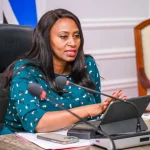
The announcement of the bid has been met with widespread optimism within the regional sports ecosystem. At the forefront of this movement is Africa Masters Athletics President Dr. Rose Tata Muya, a legendary figure in Kenyan athletics who has long championed the recognition and support of veteran sportspeople.
Dr. Muya expressed profound gratitude for the formal opportunity to present Kenya’s candidature on the global stage. She emphasized that the bid is not an isolated project by a single federation, but rather a tightly integrated, joint collaboration involving the Ministry of Sports and Athletics Kenya (AK).
“We have been given an opportunity to submit our bid, and we are incredibly grateful for that chance. This will be a multi-agency collaboration between the Ministry of Sports and Athletics Kenya, and we firmly believe we have what it takes to host the world. Kenya is an undeniable powerhouse in athletics, not only at the elite level but also in Masters Athletics. We have made tremendous progress in infrastructure development, and that gives us maximum confidence as we prepare our formal submission.” — Dr. Rose Tata Muya, Africa Masters Athletics President.
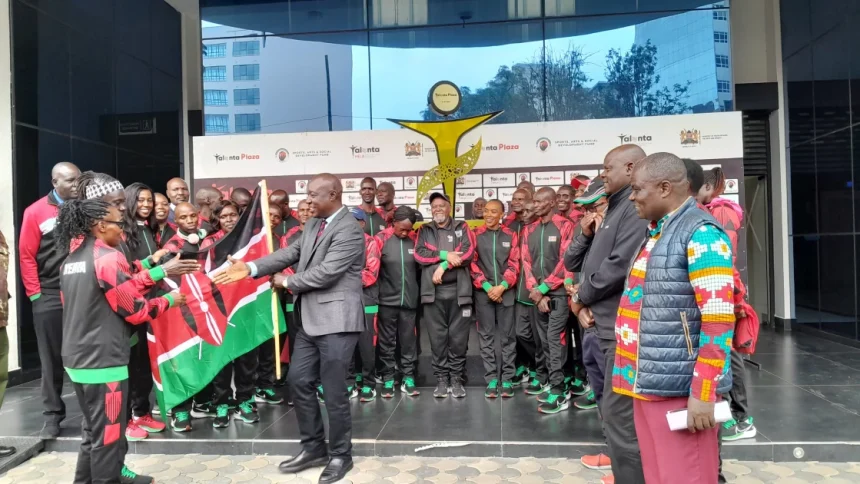
This unified approach is backed by practical government support. Key administrative figures, including Ministry of Sports representatives such as Evans Achoki, have been actively engaging with the Masters Athletics teams. This was recently demonstrated at the Talanta Hela Plaza, where government officials officially handed over the national flag to the veteran athletic squad ahead of their international competitive assignments, highlighting the state’s growing commitment to this demographic.
Infrastructure Revolution: Preparing Kenya’s Stadiums for the World
A primary pillar of Dr. Muya’s confidence rests on Kenya’s rapidly improving sporting infrastructure. Historically, major global bids from Africa have faced skepticism from international evaluation panels due to concerns over stadium quality, warm-up facilities, and technological capabilities. However, Kenya is currently undergoing a massive stadium modernization campaign.
People Daily
The centerpiece of Kenya’s athletic hosting ambitions remains the Moi International Sports Centre (MISC), Kasarani, located in Nairobi.
Michezoafrika.com Sports News
Moi International Sports Centre, Kasarani Stadium. Source: Absa Kip Keino Classic
As seen in the visual above, Kasarani boasts a world-class running track and an expansive layout that has previously hosted high-profile international events, including the 2007 World Athletics Cross Country Championships, the 2017 World Under-18 Championships, and the 2021 World Under-20 Championships.
To meet modern global standards, the government has injected significant capital into renovating Kasarani. Upgrades include installing a comprehensive overhead canopy, complete modernization of indoor media and medical rooms, and advanced security screening systems. Furthermore, a brand-new, high-performance tartan track is scheduled for installation following the completion of upcoming continental soccer tournaments.
People Daily
In tandem with Kasarani, the historic Nyayo National Stadium is being heavily upgraded to serve as the official auxiliary and warm-up venue. For an event like the 2032 World Masters Athletics Championships, which features thousands of concurrent competitors across multiple age brackets, having two fully modernized, high-capacity stadiums in close proximity within Nairobi is a massive competitive advantage for the Kenyan bid.
Economic Projections and the Sports Tourism Multiplier
Hosting between 9,000 and 10,000 international athletes yields economic impacts that extend far beyond the sporting arena. Masters athletes differ significantly from elite junior or senior athletes in terms of their economic footprint. Because master competitors are typically self-funded working professionals, retirees, or business owners, they frequently travel with spouses, children, and training partners, transforming a sporting trip into an extended family vacation.
World Masters Athletics
The financial influx of hosting this tournament can be analyzed across several key sectors within the Kenyan economy:
1. Hospitality and Accommodation
With thousands of visitors staying in the country for a duration of ten to fourteen days, the hospitality sector in Nairobi and its environs will experience an unprecedented demand surge. High-end hotels, serviced apartments, and local Airbnbs will experience peak occupancy rates, directly boosting revenue for local operators and creating thousands of temporary hospitality jobs.
2. Transport and Logistics
An influx of this magnitude requires a seamless logistics network. The aviation sector, led by Kenya Airways and Jomo Kenyatta International Airport (JKIA), will see a major spike in international arrivals. Locally, digital taxi networks, tour bus companies, and car rental agencies will experience heightened economic activity as athletes travel between hotels, training grounds, and tourism destinations.
3. The Safari and Conservation Influx
Masters athletes rarely leave a host country immediately after their events conclude. Kenya’s world-renowned tourism assets—such as the Maasai Mara National Reserve, Amboseli, and the coastal beaches of Diani and Watamu—are perfectly positioned to capture post-championship travel. This provides a direct financial injection into the country’s wildlife conservation efforts and eco-tourism lodges.
Strategic Alignment: The 2029, 2031, and 2032 Event Pipeline
Kenya’s interest in the 2032 World Masters Athletics Championships is not an isolated ambition; it is part of a broader, decade-long sports strategy. The country is currently chasing multiple high-profile hosting rights, creating a powerful, compounding narrative of national readiness.
Target Tournament Year Event Name Current Bid Status Key Strategic Focus
2027 Africa Cup of Nations (AFCON) Secured (Joint East Africa Bid) Major structural upgrades to regional football stadiums, hotels, and transport.
2029 / 2031 World Athletics Championships Candidature Stage (Under Active Inspection) Evaluation panel visits; aiming to be the first African nation to host the premier elite event.
2032 World Masters Athletics Championships Bid Formulation (Mulling/Preparation Phase) Targeting non-elite veteran athletes; capitalizing on infrastructure built for 2027–2031.
As outlined in the timeline above, the 2032 WMA Championships are designed to serve as the perfect climax to a golden era of Kenyan sports hosting. By the time 2032 arrives, the country will have tested its security frameworks, transport networks, and hospitality industries against multiple massive events.
In late May 2026, a high-level World Athletics Bid Evaluation Panel spent three days in Kenya inspecting facilities to determine the country’s capability for the 2029 or 2031 elite championships. Led by legendary distance runner Ibrahim Hussein, the Kenyan bid committee demonstrated that the ongoing renovations give Nairobi the capacity to compete directly against rival bidding cities like London, Rome, Munich, and New Delhi. The infrastructure validated by World Athletics in 2026 will directly underpin the 2032 Masters bid.
Pulse Sports Kenya
Critical Success Factors: What Kenya Must Do to Win the Bid
While Kenya possesses an unparalleled athletic heritage and rapidly improving facilities, securing the 2032 hosting rights from the World Masters Athletics general assembly is not guaranteed. The bidding committee must present a bulletproof strategy addressing several operational areas:
Flawless Medical Infrastructure: Master athletes, due to their advanced age profiles, require highly specialized medical attention on standby. Kenya must demonstrate that its stadiums are equipped with state-of-the-art sports medicine clinics, rapid emergency response vehicles, and direct medical corridors to premier health institutions like the Nairobi Hospital or Aga Khan University Hospital.
Simplified Visa and Entry Logistics: To attract 10,000 athletes from 110 different nations, the government must guarantee streamlined immigration processes. Utilizing digital e-visa portals or offering automated “sports visas” for registered participants will be vital to eliminate entry friction.
Fiscal Transparency and Funding: International voting blocks look closely at a country’s financial commitment. The Ministry of Sports must present a transparent budget detailing exact allocations for event security, technical officiating, anti-doping compliance, and local organizational overheads.
Pulse Sports Kenya