

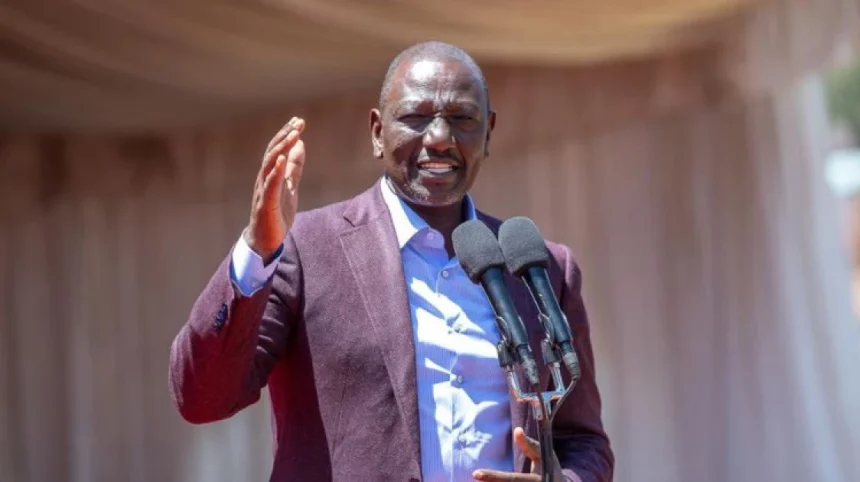
President William Ruto has issued a direct and uncompromising order to residents of the volatile Trans Mara region in Narok County: surrender all illegal firearms within a stipulated timeframe or face the full force of the law. The directive, delivered during a high-security meeting with local leaders, comes against a backdrop of escalating inter-communal clashes, rampant cattle rustling, and a proliferation of small arms that have turned the region into a tinderbox. This move signals a potentially decisive shift in the government’s approach to the long-standing insecurity in the Rift Valley, moving from periodic police operations to a presidential-led disarmament ultimatum. This blog analyzes the implications, challenges, and high stakes of this critical security directive.
Section 1: The Context: Why Trans Mara? A Region on the Edge
Trans Mara is a microcosm of Kenya’s most complex security challenges.
History of Resource-Based Conflict: The region has a decades-long history of violent clashes primarily between communities over pasture, water, and land. These conflicts are deeply entrenched and often follow seasonal patterns.
The Cattle Rustling Economy: Cattle rustling has evolved from a cultural practice into a lucrative, organized criminal enterprise, fueling the demand for illegal firearms. Modern bandits use sophisticated weapons, making traditional security responses ineffective.
Proliferation of Small Arms: The region is a key transit and holding point for illegal arms smuggled from neighboring conflict zones. These weapons empower criminal gangs and escalate local disputes into deadly confrontations.
Erosion of State Authority: In some areas, criminal gangs and militias wield more influence and power than the police, creating a parallel authority that undermines development and the rule of law.
Section 2: Decoding the Directive: What Ruto’s Order Means
The president’s move is significant in its tone, specificity, and top-down approach.
A Defined Grace Period: While the exact number of days is to be formally announced, the order comes with a clear, non-negotiable deadline. This creates a sense of urgent finality, unlike previous open-ended appeals.
“Voluntary Surrender” vs. “Forced Disarmament”: The directive starts with a call for voluntary surrender, promising amnesty or leniency for those who comply. However, it explicitly states that after the deadline, security forces will conduct forceful mop-up operations. This “carrot and stick” approach is designed to maximize compliance.
Political and Community Leader Accountability: By delivering the order directly to local leaders (MPs, MCAs, elders), President Ruto is making them co-responsible for its success. They are expected to mobilize their communities to comply, bridging the gap between the state and the grassroots.
Link to National Security: The president framed this not just as a local issue, but as a threat to national stability and economic development, especially for the tourism and agriculture sectors that are vital to the region and the country.
Section 3: The Challenges: Why This Won’t Be Easy
History shows that disarmament in the Rift Valley is fraught with difficulties.
Deep Distrust in Security Forces: Past disarmament exercises have sometimes been marred by allegations of brutality, bias, and extrajudicial killings. Communities may be reluctant to surrender their only means of perceived self-defense if they don’t trust the state to protect them afterward.
The “First-Mover” Dilemma: No community wants to disarm first for fear of being left vulnerable to attacks by neighbors who retain their weapons. This collective action problem requires unprecedented inter-community diplomacy and simultaneous, verifiable action.
Economic Incentives of the Illicit Trade: For some, illegal guns are tools of a profitable “business” (rustling, protection rackets). Surrendering them means losing income unless alternative livelihoods are provided.
Logistical & Verification Nightmares: Collecting, storing, and destroying thousands of weapons is a massive logistical undertaking. Moreover, how does the state verify that all illegal arms have been surrendered? The most sophisticated weapons may be hidden.
Section 4: The Path to Success: A Multi-Pronged Strategy Needed
For this directive to succeed and not just be another flash in the pan, it must be part of a broader, sustainable strategy.
Simultaneous Civic Engagement: Alongside the ultimatum, there must be a massive, trusted civic education campaign involving church leaders, respected elders, and NGOs to explain the process and build trust.
Iron-Clad Security Guarantees: The government must deploy adequate, impartial, and professional security forces to all flashpoints before and after the disarmament to prevent opportunistic attacks and assure communities of their safety.
A Clear Pathway to Development: Disarmament must be explicitly linked to tangible development dividends—roads, schools, water projects, and youth employment programs. People need to see peace paying off more than conflict.
Follow-Through on the “Stick”: After the deadline, the state must have the political will to conduct forceful, intelligence-led operations against holdouts without backing down. Failure to do so will make the state look weak and embolden criminals.
Conclusion: A Test of Political Will and Social Contract
President Ruto’s order to Trans Mara is more than a security operation; it is a fundamental test of the social contract in one of Kenya’s most troubled regions. It tests whether the state can successfully monopolize the use of force and provide genuine security in return.