
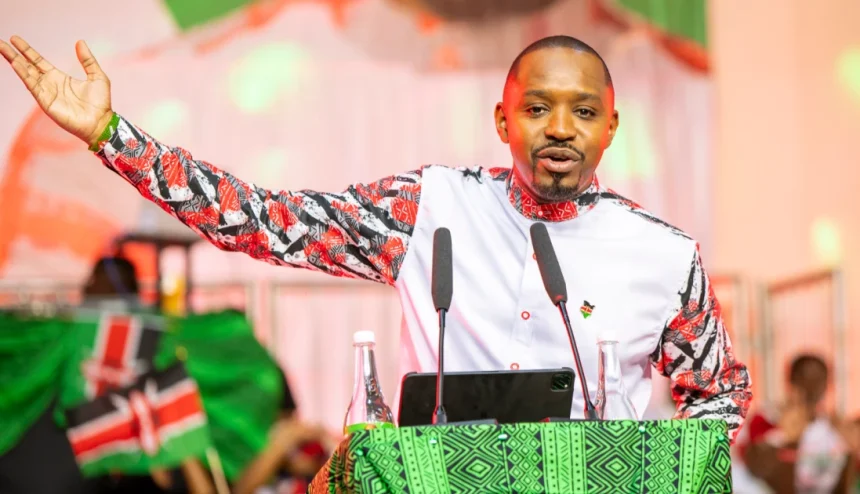
While established politicians often hold rallies to “tell” voters what they need, Mwangi has launched the “Bonga na Bonnie” (Talk to Bonnie) nationwide tour. This is a deliberate “listening tour” designed to harvest the real-life frustrations of Kenyans in all 47 counties.
The Goal of the Tour:
The People’s Manifesto: Instead of a document written by consultants in Nairobi hotels, the campaign is “crowdsourcing” its policy priorities directly from citizens.
Bypassing the Media: By going directly to the ground, Mwangi aims to build a face-to-face relationship with voters that can survive even if mainstream media gives him limited airtime.
Focusing on “Article 43”: The Economic Rights Battle
At the heart of Mwangi’s 2027 platform is Article 43 of the Constitution of Kenya, which guarantees every citizen the right to the highest attainable standard of health, accessible housing, adequate food, and clean water.
The Crowdfunding Model: Breaking the “Bribe” Cycle
One of the biggest hurdles in Kenyan politics is the “War Chest”—the billions of shillings typically required to run a national campaign. Traditionally, this money comes from wealthy “godfathers” who expect government contracts in return.
Mwangi is attempting a radical alternative:
Small-Donor Contributions: Much like Bernie Sanders in the US or Peter Obi in Nigeria, Mwangi is calling for small, transparent donations from everyday Kenyans and the diaspora.
Volunteer-Led Cells: Instead of paying “mobilizers” to bus people to rallies, the campaign is relying on local youth-led volunteer cells that operate on the principle of shared conviction rather than financial handouts.
The Challenge: Can Activism Survive the “Political Machine”?
Skeptics argue that while Mwangi is a hero of the “street,” the “State House” requires a different set of skills—namely, the ability to build coalitions with the very people he has spent years criticizing.
The Risks Identified by Analysts:
The “Loner” Trap: Can he build a national party structure that transcends his own individual celebrity?
Compromise vs. Conviction: Politics is the art of the possible. Critics fear that the compromises required to win could alienate his core base of idealistic young voters.
Incumbency Hurdles: President Ruto’s administration is already laying the groundwork for 2027 with its “Bottom-Up” narrative and strategic alliances (such as the recent shifts within the ODM party).
Final Verdict: The Ideological Litmus Test
Boniface Mwangi isn’t just running for President; he is running an experiment. He is testing whether the “peer bond” formed by Gen Z during the 2024 protests is strong enough to resist the traditional pull of ethnic and “pocket” politics.