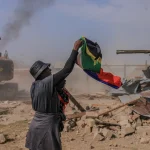

In a series of dramatic announcements on Truth Social and confirmed by international mediators, President Donald Trump has declared that the United States and the Islamic Republic of Iran have reached a definitive agreement to end the military conflict that has roiled the globe since February 2026.
“The Deal with the Islamic Republic of Iran is now complete. Congratulations to all!” Trump posted on Sunday evening, marking what appears to be the end of a three-month war that spiked global energy prices and brought the Middle East to the brink of a wider regional conflagration.
The Architecture of the Deal: Mediators and Switzerland
While the White House has kept the specific text of the “Memorandum of Understanding” (MoU) under wraps, the framework was made public through the primary mediators of the conflict: Pakistan and Qatar. Pakistani Prime Minister Shehbaz Sharif confirmed that the agreement involves the “immediate and permanent termination of military operations on all fronts,” specifically highlighting that the ceasefire includes theaters of conflict in Lebanon.
The official signing ceremony is set for Friday, June 19, 2026, in Switzerland. This neutral ground will serve as the backdrop for the first formal diplomatic encounter between high-level US and Iranian officials since the outbreak of hostilities.
Key Highlights of the 2026 US-Iran Peace Agreement
Feature Description
Strait of Hormuz Immediate reopening to commercial traffic; removal of US naval blockade.
Ceasefire Scope Immediate stop to all military operations, including Iran-backed actions in Lebanon.
Economic Relief Lifting of the naval blockade; future talks on the release of billions in frozen assets.
Nuclear Program A 60-day window for technical talks regarding uranium enrichment and monitoring.
Signing Date Friday, June 19, 2026, in Switzerland.
“Let the Oil Flow”: Reopening the Strait of Hormuz
One of the most immediate and economically significant impacts of the deal is the lifting of the US naval blockade on Iranian ports and the reopening of the Strait of Hormuz. For months, the “choke point” of world oil transit was militarized, leading to record-high fuel prices in the US and East Africa alike.
Trump’s directive was characteristically bold: “I hereby fully authorize the toll-free opening of the Strait of Hormuz… Ships of the World, start your engines. Let the oil flow!”
Market analysts expect a sharp decline in crude oil prices as shipping lanes stabilize. For nations like Kenya, which have grappled with rising transport and energy costs due to Middle Eastern instability, this news offers a much-needed reprieve for local budgets and manufacturing sectors.
The Lebanon Factor and the Israeli Response
Despite the optimism from Washington and Islamabad, the deal faces significant hurdles. A major component of the agreement involves a ceasefire in Lebanon, where Israel has been conducting intense operations against Hezbollah.
While the US-Iran deal calls for a total cessation of hostilities, Israeli Prime Minister Benjamin Netanyahu has reportedly told President Trump that Israel does not consider itself bound by the Lebanon-related clauses of the agreement. This “spoiler” potential remains the greatest threat to the deal’s longevity. On the morning of the announcement, Israeli strikes were still reported in Beirut’s southern suburbs, highlighting the disconnect between the new Washington-Tehran understanding and the realities on the ground.
The Road to Switzerland: 60 Days of High-Stakes Diplomacy
Iranian Deputy Foreign Minister Kazem Gharibabadi has taken a more cautious tone than Trump, emphasizing that the Friday signing is only the beginning. According to Tehran, the next 60 days will focus on “technical talks” regarding:
Sanctions Removal: Iran is demanding the release of approximately US$24 billion in frozen assets.
Nuclear Safeguards: The US seeks the removal or destruction of enriched uranium stocks to prevent a nuclear breakout.
Reconstruction: Rumors suggest the deal may involve a multi-billion dollar reconstruction plan for damaged Iranian infrastructure.
Analysis: Is this a Lasting Peace or a Midterm Maneuver?
Critics within the Republican Party and international observers have questioned the “rushed” nature of the deal. With US midterm elections approaching later in 2026, some see the agreement as a political necessity for an administration facing domestic pressure over war costs and inflation.
However, the involvement of major regional players like Saudi Arabia, Turkey, and Qatar suggests a more robust foundation than previous failed attempts. For the first time in years, there is a clear, written timeline for de-escalation that both sides have publicly acknowledged.
Critical Note: The “Memorandum of Understanding” is not a formal treaty. It is a framework for peace. Until the ink is dry in Switzerland this Friday, and until the naval blockade is visibly dismantled, the global community remains in a state of “cautious optimism.”
Conclusion: A New Chapter for Global Stability
The Trump-Iran peace deal of June 2026 represents a massive shift in 21st-century geopolitics. If successful, it could reset US-Middle East relations for a generation. For now, the world watches the Strait of Hormuz and the upcoming summit in Switzerland, hoping that the “permanent termination” of war is more than just a social media declaration.
What do you think? Will the deal hold despite Israel’s objections? Leave your comments below and stay tuned for our live coverage of the Switzerland signing ceremony this Friday.
Explore deeper into the regional impacts of this deal:
Analyze the impact on Kenyan fuel prices
Deep dive into the 60-day nuclear timeline
The Israeli-Hezbollah conflict vs the new deal