
On Thursday, February 12, 2026, the majestic halls of the Senate witnessed a definitive moment in the history of Kenyan devolution. Senate Speaker Amason Jeffah Kingi delivered a landmark ruling that effectively neutralized an attempted “mutiny” by the Council of Governors (CoG).
By rejecting the Governors’ demand to reconstitute the County Public Accounts Committee (CPAC) and remove four specific senators, Kingi didn’t just protect individuals; he protected the constitutional independence of the Legislature. The message was clear: The Senate is not a department of the Executive, and Governors do not get to choose their own “judges.”
1. The Genesis: Allegations of a “Senate Cartel”
The drama began on February 9, 2026, when the CoG, led by Wajir Governor Ahmed Abdullahi, issued a stinging press statement following a retreat in Kilifi. The Governors dropped a political bombshell, alleging that a “notorious” quartet of senators was using oversight as a weapon for personal gain.
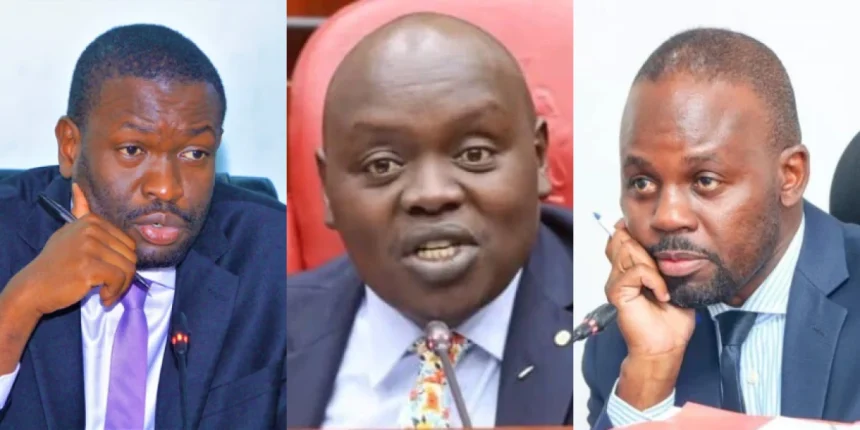
The “Targeted Four”:
Moses Kajwang’ (Homa Bay – CPAC Chair)
Johnes Mwaruma (Taita Taveta – Vice-Chair)
Edwin Sifuna (Nairobi)
Samson Cherargei (Nandi)
The CoG’s allegations were severe. They claimed these lawmakers engaged in continuous extortion, political witch-hunts, and public humiliation. Reports even surfaced of “demand notes” ranging from Sh9 million to Sh12 million to clear audit queries. In response, the Governors declared a total boycott of all CPAC sessions—a move that threatened to bring the wheels of county accountability to a grinding halt.
2. Kingi’s Ruling: A Masterclass in Constitutional Law
Speaker Kingi’s response on February 12 was surgical. Drawing from his experience as a two-term Governor, he addressed the CoG’s demands by dismantling their legal foundation.
A. The Power of Article 124
Kingi ruled that the power to establish committees and appoint or remove members rests exclusively with the Senate.
“The Council of Governors’ demand that certain Senators be removed from the service of any Committee is without constitutional anchor,” Kingi stated.
He reminded the House that allowing an external body to dictate committee membership would be a “total surrender” of Parliamentary sovereignty.
B. The “Untenable” Boycott
The Governors had resolved to stay away from the Senate until their “terms” were met. Kingi labeled this resolution “untenable” and “unconstitutional.” He cited Article 125, which gives the Senate powers equivalent to the High Court to summon any person and compel the production of documents.
The Verdict: No person, organ, or authority—including the CoG—has the power to vary or suspend the Legislature’s constitutional mandate.
3. The “Fire-Breathers” Fight Back
The accused senators were quick to turn the heat back on their accusers. Senator Edwin Sifuna, known for his razor-sharp rhetoric, dared the Governors to name the “extortionists” and provide evidence to the DCI or EACC.
“If you have been asked for a bribe, report it! But do not use unsubstantiated claims to hide from the Auditor General’s report,” Sifuna challenged during the afternoon session.
Senator Samson Cherargei took it a step further, calling for the Inspector General of Police to arrest any Governor who snubs a Senate summons. The underlying sentiment among senators is that the “extortion” narrative is a smokescreen designed to avoid answering for the Sh533 billion in audit queries currently pending before the committee.
4. The “Kilifi Retreat” Conspiracy
Political analysts suggest the CoG’s sudden aggression isn’t just about audit queries. The 2026 Kilifi retreat, themed “Repositioning the Council for Effective Service Delivery,” was held against the backdrop of the upcoming 2027 elections.
The Political Shield: By painting oversight committees as “extortionist cartels,” Governors who are seeking higher office (or defending their seats) can frame any negative audit report as a “malicious political attack” rather than financial misconduct.
The “One Man, One Shilling” Tension: With the ongoing debate over the revenue sharing formula, Governors are under pressure to show they are “protecting” county resources from a “predatory” Senate.
5. The Path to February 26: Dialogue or Deadlock?
While Kingi rejected the Governors’ demands, he did not slam the door on peace. He has invited the CoG leadership to a consultative meeting on February 26, 2026, at the Mini Chamber, County Hall.
The Conditions for Dialogue:
Summons Stay Active: Every Governor currently invited to appear before CPAC must do so.
No Preconditions: The meeting will discuss an “engagement framework,” not the removal of senators.
Mandatory Attendance: Failure to honor current summonses will result in legal consequences, regardless of the upcoming talks.
Conclusion: Accountability Cannot Be Negotiated
The 2026 Senate-Governor standoff is a litmus test for the maturity of Kenyan democracy. If the Governors succeed in boycotting the Senate, oversight dies. If the Senate uses its power to genuinely extort, the moral authority of the House dies.