

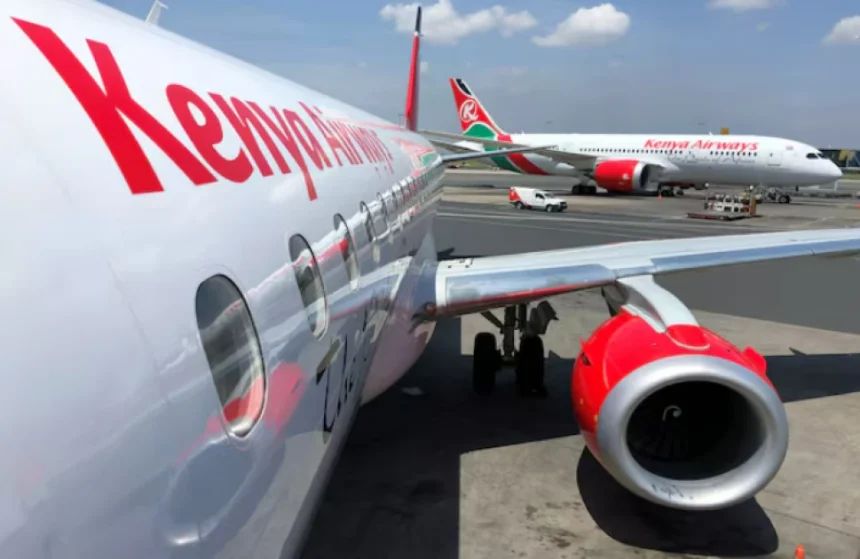
The silence at Jomo Kenyatta International Airport (JKIA) has finally been broken by the familiar roar of jet engines. After 48 hours of industrial action that left thousands of travelers stranded and the “Pride of Africa” grounded, Kenya Airways (KQ) has officially announced the resumption of full flight operations.
As of Tuesday, February 17, 2026, the national carrier is in a race against time to clear a massive backlog of passengers and stabilize a network that reaches across continents. But while the planes are back in the air, the ripples of this strike—led by the Kenya Aviation Workers Union (KAWU)—will be felt for weeks to come.
1. The Breakdown: What Happened?
The disruption began on Monday, February 16, when aviation workers downed their tools over a long-standing labor dispute. The strike wasn’t just about a single issue; it was a boiling point for several grievances that have been simmering since 2015:
Stagnant Pay: Workers argued that salary reviews were a decade overdue.
Contractual Disputes: A demand to move temporary workers to permanent and pensionable terms.
Union Recognition: The inclusion of employees in grades 4 and 5 within union representation.
By Tuesday morning, the situation at JKIA was described by many as “total paralysis.” With air traffic controllers and ground staff away from their posts, Kenya Airways was forced to announce delays of up to four hours, with dozens of international flights being diverted to neighboring hubs.
2. The Turning Point: The Return-to-Work Formula
The breakthrough came on Tuesday afternoon following high-stakes mediation led by Transport Cabinet Secretary Davis Chirchir, alongside officials from the Ministry of Labour and the Kenya Civil Aviation Authority (KCAA).
The KAWU Secretary General, Moses Ndiema, confirmed the suspension of the strike after a “return-to-work formula” was signed.
“We are satisfied with the government’s intervention,” Ndiema stated. “We have addressed the immediate concerns, specifically the union representation for grades 4 and 5. The more complex long-term issues will be handled through a structured conciliatory process.”
3. Kenya Airways’ Path to Normalization
For the national carrier, the end of the strike is only the beginning of a logistical marathon. In an official statement, Kenya Airways noted that they expect full recovery within 24 hours.
The Recovery Strategy:
Prioritizing the Backlog: Re-booking passengers who were stranded during the 48-hour window.
Safety First: Ensuring all aircraft undergo rigorous checks after the operational pause.
Communication: Deploying teams across WhatsApp, the KQ mobile app, and social media to manage customer inquiries.
While the airline expressed “sincere regret” for the inconvenience, the financial impact of such a shutdown—coupled with the reputational damage among international tourists—remains a significant hurdle for the carrier’s 2026 growth targets.
4. Essential Advice for Travelers
If you are flying in or out of Nairobi this week, the “business as usual” sign isn’t quite lit yet. Here is how to navigate the aftermath:
Don’t Just Show Up: Kenya Airways has explicitly advised passengers not to proceed to the airport without a confirmed flight status.
Use the App: The KQ mobile app is currently the fastest way to check for real-time schedule adjustments.
Check Rebooking Options: Many passengers are being offered alternative flights via partner airlines or later KQ slots.
Patience is Key: Expect longer-than-usual queues at check-in and security as the airport handles the overflow from the past two days.
5. The Bigger Picture: The Economic Ripple Effect
JKIA is more than just an airport; it is the heartbeat of East African commerce. When operations stall here, the regional economy feels the pulse skip.
The strike affected more than just Kenya Airways. International giants like Ethiopian Airlines, Qatar Airways, and Jambojet were all caught in the crossfire. For a country that relies heavily on the “Visit Kenya” tourism brand and fresh produce exports (like flowers and tea), a two-day shutdown is an expensive lesson in the importance of industrial harmony.
The 2026 strike serves as a stark reminder that the “hardware” of aviation—the billion-dollar Dreamliners and modern terminals—is only as good as the “software”: the workers who keep the wheels turning.
6. Looking Ahead: Can We Prevent a Repeat?
The agreement signed on Tuesday is a temporary truce. While the immediate grievances have been addressed, the Ministry of Labour has its work cut out to resolve the broader Collective Bargaining Agreement (CBA) issues.
For Kenya Airways and the KAA, the focus must now shift from crisis management to long-term relationship building. Ensuring that the backbone of the industry feels valued is the only way to guarantee that the next time a traveler heads to JKIA, the only thing they have to worry about is whether they packed enough sunscreen.
Conclusion
The resumption of flights is a massive relief for the thousands of families, business people, and tourists whose lives were put on hold. As the Boeing 787s take to the skies again, the message from Nairobi is clear: we are back in business, but the conversation about workers’ rights is far from over.