
1. The “Invisible” Transfer
While the public focus has been on the 200+ invaders living on the land, the real legal earthquake in the Mbugua family’s petition involves a “questionable transfer.”
The Claim: The family alleges that while they were fighting off physical invaders, a significant portion of the 300-acre parcel was covertly transferred to a private company at the Kiambu Land Registry.
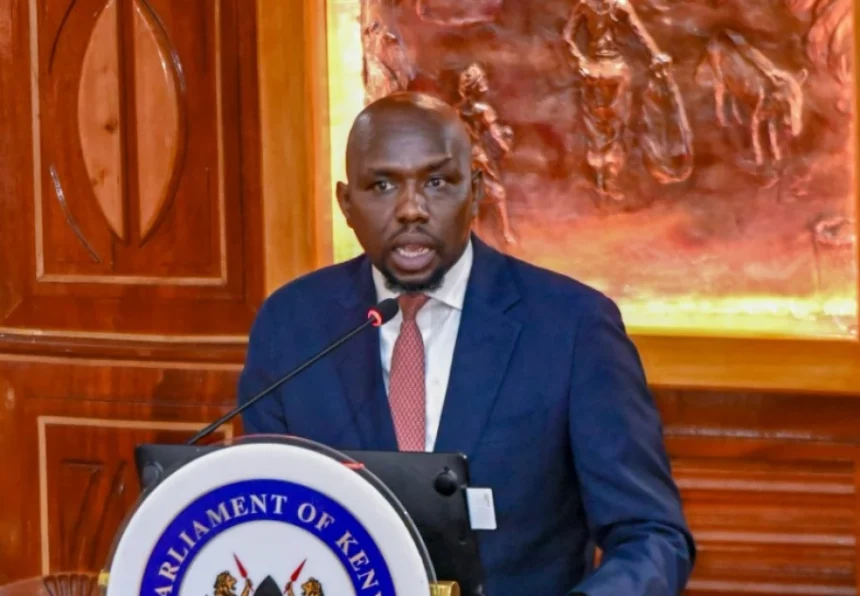
The “Power Trio” Link: The petition suggests this company isn’t just a random buyer but is “linked to or protected by” the trio of politicians—Murkomen, Sudi, and Kururia.
The Paper Trail: Lawyers for the family are now demanding a full forensic audit of the Kiambu Land “Green Card” to see exactly which registrar signed off on a transfer for land that has been under active litigation since 2013.
2. The Silence of Sudi and Kururia
While CS Murkomen issued a 500-word denial through the Ministry of Interior, his co-accused have been notably quieter.
Oscar Sudi’s Defense: Known for his blunt social media videos, the Kapseret MP has previously dismissed land-grabbing claims as “political witch hunts” by the former regime. However, he has yet to issue a specific technical rebuttal to the Mbugua family’s High Court filing.
Elijah Kururia’s Backyard: As the MP for Gatundu North, the land in question sits right in Kururia’s political “neighboring zone.” The family claims his “influence” has been used to ensure that local sub-chiefs and police do not interfere with the ongoing occupation.
3. The “Cartel” Infrastructure
This case is a “textbook” example of the Nairobi-Machakos-Kiambu Land Triangle crisis.
The Modus Operandi: 1. Invasion: Send in “squatters” to create a human shield.
2. Litigation: Tie the owners up in court for 10+ years.
3. Registry Fraud: Use the “confusion” to flip the title to a shell company.
The Damage: The Mbugua family isn’t just asking for their land back; they are demanding Sh5 billion in lost revenue. They argue that the 20-year delay has cost them the chance to build what would have been one of Kenya’s most exclusive gated communities.