

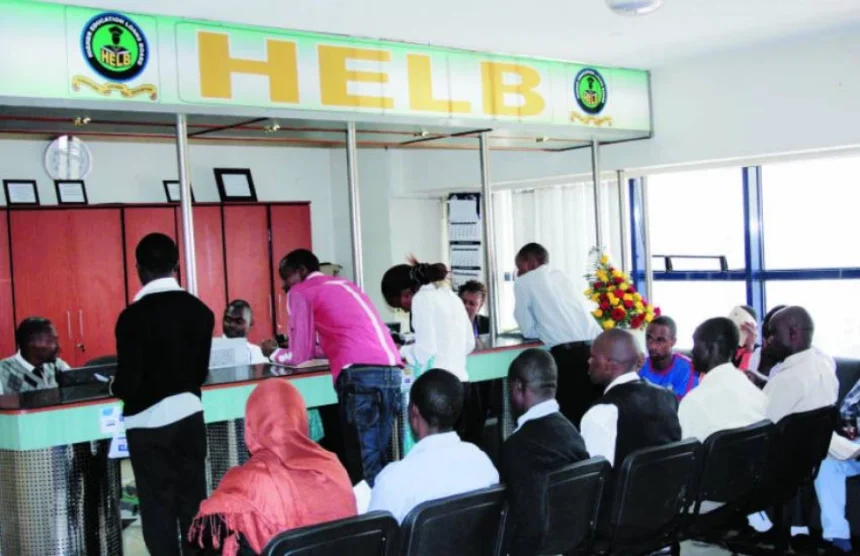
The recent KSh 4.2 billion scholarship release by the Universities Fund (UF) has provided immediate financial breathing room for public campuses, but it has also thrust a major structural debate back into the spotlight: Is Kenya’s new higher education financing system genuinely sustainable?
Citizen Digital
To understand why the state aggressively phased out old block capitation grants, one must look directly at the overwhelming demographic numbers. According to historical tracking data from the Ministry of Education, Kenya’s higher education sector has expanded at an unprecedented speed, with the number of students qualifying for university admission exploding by 332% over a nine-year window—skyrocketing from a manageable 62,581 students in 2017 to an unprecedented 270,715 students.
Education News
[ THE MASSIVE ENROLLMENT EXPANSION ]
│
2017 ──> [ 62,581 Students ]
2025 ──> [ 270,715 Students ] 📈 (A Massive 332% Multiplier Increase)
│
▼
🔻 OLD CAPITATION SYSTEM COLLAPSED UNDER THE WEIGHT 🔻
The Death of the Old Block Capitation Blueprint
Under the traditional Differentiated Unit Cost (DUC) model, the National Treasury was theoretically mandated to fund up to 80% of the cost of any degree program directly to the university administration.
However, as the enrollment multiplier kicked in following successive high-performance Kenya Certificate of Secondary Education (KCSE) cycles, the state’s budget simply could not keep pace. The actual government capitation contribution slid down to below 40% for many courses.
This funding gap pushed public universities into a combined debt crisis exceeding Sh60 billion, forcing institutions to default on statutory deductions like KRA remittances and NHIF contributions. The old framework was systematically starved because funds were distributed flatly to institutions based on enrollment volumes, completely ignoring whether a student came from a high-income household or an impoverished background.
The Eastleigh Voice
Enter the SCFM: Funding the Needy, Not the Brick and Mortar
Unveiled by President William Ruto, the Student-Centred Funding Model (SCFM) fundamentally inverted the financial pipeline. Instead of trying to keep entire university structures afloat with block checks, the state decided that funding must follow the individual student.
Capital FM
+ 1
[ Old DUC Blueprint ] ──> Money sent to University ──> Split evenly across all placed students
│
(THE EQUITABLE TRANSITION)
▼
[ New SCFM Framework ] ──> Money follows the student ──> Scaled strictly to verified vulnerability
The system works by using an automated Means Testing Instrument (MTI) on the Higher Education Financing (HEF) portal. When students apply, the algorithm processes key vulnerability variables to classify applicants into distinct financial bands:
The Eastleigh Voice
Band Designation Level of Financial Need Government Scholarship % HELB Loan Allocation % Household Contribution %
Band 1 Extremely Vulnerable 70% 25% 5%
Band 2 Highly Needy 60% 30% 10%
Band 3 Needy 50% 30% 20%
Band 4 / 5 Less Needy / High Income 30% – 40% 30% – 45% 25% – 30%
By limiting full-scale maximum scholarships exclusively to lower-income bands, the state is attempting to optimize its current KSh 18.4 billion annual scholarship allocation—ensuring that students from vulnerable families are not locked out of higher learning due to fee deficits.
Upgrading Data Integrity in the University Portals
A major hurdle that plagued the early rollouts of the model was the chaotic reporting and reconciliation process between individual university registrars and the centralized fund.
To bridge this operational deficit, the Universities Fund recently concluded a massive, multi-level technical training drive with finance officers from all 43 public universities.
Education News
The institutions are now utilizing a standardized Institutional Portal. This digital bridge allows university accountants to upload, validate, and track student attendance and invoice tallies in real-time. This automated checking system is precisely what allowed the latest KSh 4.2 billion tranche to clear lines smoothly without the historical multi-month processing delays.
Education News
Preparing for the Next Wave
As the pioneer cohort under this model marches steadily toward graduation next year, the system is preparing for its next major pressure test.
Capital FM
With placement channels via the Kenya Universities and Colleges Central Placement Service (KUCCPS) concluding selections for the latest KCSE cohort, thousands of new undergraduates are preparing to log onto the HEF portal.
Citizen Digital
The state’s primary challenge moving forward will be ensuring consistent, timely Treasury releases to match the growing demand—proving that this student-centered model can permanently anchor the financial future of the country’s higher education sector.