
The ongoing standoff over the establishment of a US-linked Ebola quarantine facility in Nanyuki has taken an explosive political turn. Stepping directly into an already volatile public health debate, Democracy for the Citizens Party (DCP) Leader Rigathi Gachagua has leveled a heavy accusation against the executive, alleging that the Laikipia Ebola centre is a deliberate plot by President William Ruto’s administration to harm the Mt Kenya community.
Gachagua’s remarks have instantly amplified the local anxieties surrounding the project, transforming a complex international health agreement into a high-stakes domestic political battlefield. While the government maintains that the facility is a strategic asset for national pandemic preparedness, the former Deputy President’s rhetoric capitalizes on deep-seated regional anxieties, setting up a massive confrontation between the state executive, opposition forces, and local residents.
The Accusation: Gachagua’s Broadside from the Opposition Trenches
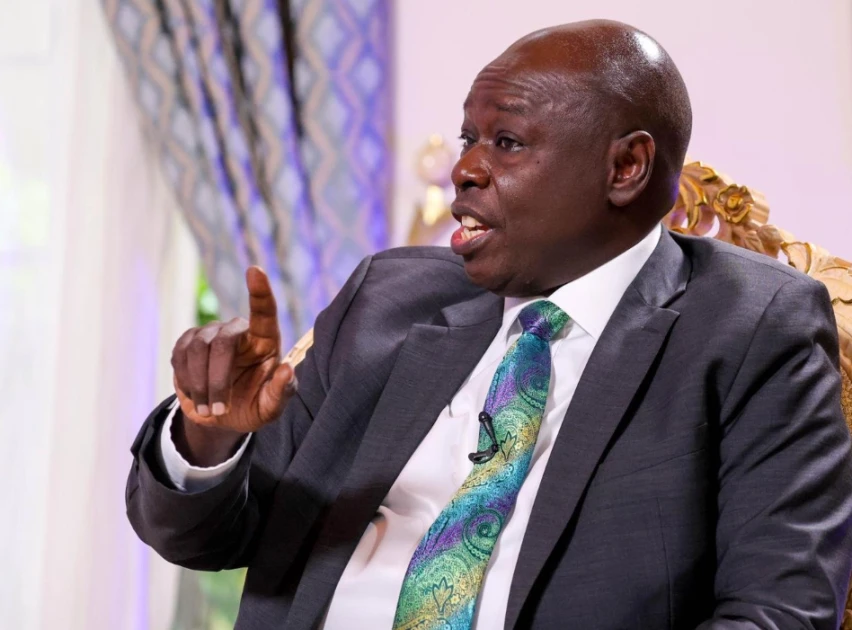
Speaking on Thursday, June 4, 2026, Gachagua—who has aggressively carved out his space as an opposition figure since his historic impeachment in late 2024—did not mince his words. He framed the decision to host foreign individuals exposed to the deadly Bundibugyo Ebola strain within a military installation in Laikipia County as a direct structural threat to the populations living within the Mt Kenya basin.
“Without fear of any contradiction, I can look at everybody in the eye and say this is an existential threat. Why bring a highly infectious disease with no approved vaccine or treatment to the doorstep of our people? If this facility is too dangerous for the United States, why is it safe for Laikipia? This is a calculated move to expose and wipe out the Mt Kenya community.”
— DCP Leader Rigathi Gachagua, June 4, 2026.
By explicitly linking the geographic location of the Laikipia Air Base to the broader Mt Kenya geopolitical block, Gachagua is aiming to galvanize local resistance. His political framing centers on a powerful narrative: that the current administration is treating the region as a “containment colony” for hazardous foreign medical risks.
The Legal and Civic Standoff: High Court vs. Executive Action
Gachagua’s fiery political statements are unfolding alongside a serious constitutional crisis in Nairobi’s courts. Just days before his address, the Law Society of Kenya (LSK) and the constitutional watchdog Katiba Institute successfully filed an urgent petition challenging the bilateral arrangement.
On Friday, May 29, High Court Judge Patricia Nyaundi issued strict conservatory orders explicitly barring the Kenyan government from establishing, operationalizing, or facilitating any Ebola exposure or treatment facility linked to the US or any foreign entity. The court also blocked the entry of any foreign nationals exposed to the virus, scheduling a comprehensive inter-partes hearing for June 23, 2026.
Despite this clear judicial red flag, reports that US responders and diplomatic cargo have continued to land at the Nanyuki military airstrip have fueled a massive wave of local fury. Hundreds of youths took to the streets of Nanyuki town, marching directly to the gates of the Laikipia Air Base to protest the facility. Local leaders, including Laikipia Governor Joshua Irungu, have backed the residents, pointing out that hundreds of locals work inside the base daily and could easily serve as vectors carrying the virus back to their families.
The State Defense: “Politicizing National Preparedness”
Faced with a rapidly expanding wave of public panic and aggressive opposition rhetoric, President William Ruto and Health Cabinet Secretary Aden Duale have fiercely defended the partnership. Appearing before the National Assembly, CS Duale emphasized that the 50-bed unit inside the Air Base is not an exclusive American colony but a collaborative asset managed under the joint command of the Kenya Defence Forces (KDF) and Ministry of Health medical experts.
President Ruto pushed back directly against Gachagua’s narrative, arguing that the country’s leadership would look “very inhuman” if it refused to participate in global health security efforts, especially given that the US government has committed a $13.5 million funding package to boost Kenya’s wider laboratory and emergency infrastructure.
Point-by-Point: The War of Narratives
The debate over the Laikipia facility represents a fundamental clash between grassroots safety fears and high-level diplomatic commitments:
Evaluation Vector Gachagua & Civic Opposition Stance Ruto Administration & KDF Defense
Primary Risk Assessment Bringing individuals exposed to the Bundibugyo strain—which currently has no approved treatment or vaccine—poses an unacceptable biological risk to local workers and families. The facility is located inside a heavily secured, restricted military zone with world-class biocontainment protocols, completely isolating patients from the public.
Sovereignty & Equity Highlighting double standards: The US has restricted domestic entry for travelers from high-risk zones, meaning Kenya is being used to shoulder a burden Western nations refuse to face. The partnership leaves behind a permanent legacy of upgraded medical laboratories, stronger local supply chains, and advanced disease surveillance networks.
Political Intention Framing the site selection as a targeted act of negligence designed to compromise the economic and social stability of the Mt Kenya region. Dismissing regional accusations as malicious political opportunism designed to spark ethnic tension and disrupt state foreign policy.
The Broader Impact on Regional Stability
As the country awaits the June 23 High Court hearing, the political temperature in central Kenya is expected to rise significantly. By transforming a highly technical medical isolation policy into an emotive issue of regional survival, Gachagua has effectively raised the stakes for the Kenya Kwanza administration.
If the government chooses to plow ahead with the US agreement in defiance of localized protests and court orders, it risks fueling long-term political alienation across a critical voting bloc. However, if it backtracks, it faces the awkward diplomatic task of canceling a high-profile security and health pact with Washington. For now, Nanyuki remains a town on edge, caught directly in the crosshairs of global health management and intense domestic political warfare.