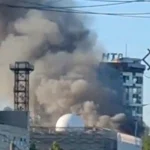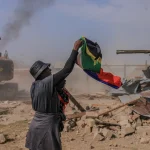

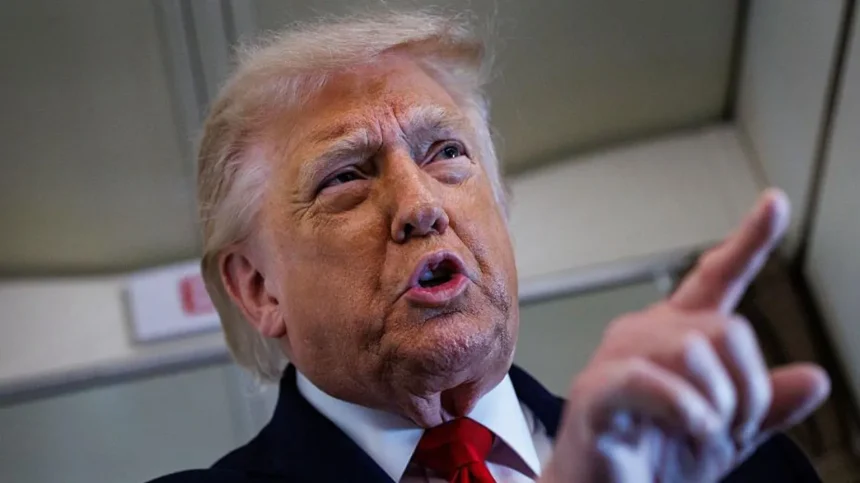
The fragile peace that has tenuously held the Middle East together since the April ceasefire is on the verge of a catastrophic collapse. In a series of fast-moving developments, United States President Donald Trump issued a stern warning from the Oval Office, declaring that the U.S. will hit Iran “hard again today” following a heavy exchange of missile and drone fire.
CBS News
The latest flare-up marks a sharp pivot from the administration’s previous optimism regarding a permanent peace deal. Accusing Tehran of dragging out negotiations and treating American diplomats with bad faith, Trump made his administration’s position clear on social media and to reporters at the White House: the time for waiting is over, and Iran will “have to pay the price.”
The Hindu
This deep-dive analysis unpacks the critical events driving this sudden escalation, the breakdown of the diplomatic track, the immediate military realities on the ground, and the massive economic shockwaves rippling through global energy markets.
Timeline of the Escalation: How the Ceasefire Fractured
The current crisis did not emerge in a vacuum. It is the result of escalating friction points over maritime security in the vital Strait of Hormuz, culminating in direct military engagements between U.S. forces and the Islamic Revolutionary Guard Corps (IRGC).
PBS
Date (2026) Event Immediate Outcome
June 8 Iranian drone downs U.S. Army AH-64 Apache helicopter. Two U.S. pilots rescued via an advanced naval sea drone; Trump vows retaliation.
June 9 (Night) U.S. Central Command (CENTCOM) launches “self-defense” airstrikes. Destruction of Iranian air defense, radar sites, and ground control stations near the Strait of Hormuz.
June 10 (Early Morning) Iran retaliates with sweeping missile and drone barrages. 21 U.S. and allied assets targeted across Jordan, Bahrain, and Kuwait.
June 10 (Afternoon) President Trump issues a fresh warning of impending strikes. Trump threatens to target civilian infrastructure, including Iranian power plants and bridges.
The Catalyst: The Downing of the AH-64 Apache Helicopter
The match that ignited this latest powder keg was struck near the coast of Oman on June 8, where an Iranian drone downed a low-flying U.S. Army AH-64 Apache gunship conducting routine patrols in the Strait of Hormuz.
PBS
In a phone interview, President Trump detailed the terrifying conditions the American pilots faced during the incident. An Iranian drone struck the helicopter but failed to explode. Instead, it became lodged directly inside the aircraft’s fuselage. The pilots managed to safely bring the burning, heavily damaged helicopter down into regional waters.
The Jerusalem Post
“It was on fire, it was hot,” Trump remarked, praising the bravery of the aviators.
In a historic first for naval warfare, both crew members were swiftly extracted from the water by an autonomous naval sea drone mission deployed by the U.S. Fifth Fleet. While the pilots escaped without injury, the symbolic and physical attack on a U.S. military asset forced an immediate shift in Washington’s posture. Trump quickly took to Truth Social, stating that the U.S. must “of necessity, respond to this attack.”
Drone XL
+ 1
Tit-for-Tat: Tuesday Night Airstrikes and the Iranian Response
True to the administration’s warnings, U.S. Central Command executed what it labeled “proportional, self-defense strikes” on Tuesday evening. The operations explicitly targeted the infrastructure Iran used to project power over international shipping lanes, specifically focusing on air defense networks, ground control stations, and coastal surveillance radar sites near the Strait of Hormuz. According to White House officials, the strikes successfully dismantled over half of what Iran had attempted to military reconstitute during the two-month truce.
The Jerusalem Post
+ 2
Tehran’s response was swift and geographically expansive. Moving away from localized skirmishes, the IRGC launched a coordinated wave of long-range ballistic missiles and suicide drones targeting at least 21 sites across three nations hosting American military personnel:
The Hindu
1. Jordan (Al-Azraq Air Base)
The IRGC claimed to have successfully destroyed four critical targets, including “F-35 fighter nests” and a U.S. command center. However, the Jordanian Armed Forces heavily disputed this narrative, confirming they successfully intercepted and shot down five incoming Iranian missiles over the historic town of Azraq, preventing any casualties or severe structural damage.
Anadolu Ajansı
+ 1
2. Bahrain (U.S. Fifth Fleet Base)
As the nerve center for American naval operations in the Gulf, Bahrain faced a barrage of drones and missiles. The General Command of the Bahrain Defence Force confirmed that its air defense layers successfully intercepted the threat, fiercely condemning Tehran’s “systematic hostile approach” toward vital civilian and military facilities.
Yeni Şafak
+ 1
3. Kuwait (Ali al-Salem Air Base)
Kuwaiti military radars tracked and intercepted multiple aerial threats targeting the facility. The Kuwaiti Ministry of Foreign Affairs issued a scathing public statement, calling the bombardment “a dangerous overreach that endangers the lives of civilians and regional stability.”
The Washington Post
Despite the scale of Iran’s multi-front retaliation, no allied fatalities were reported, largely due to the high readiness of regional air defense umbrellas.
The Diplomatic Breakdown: “Playing Us for Suckers”
The sudden return to kinetic warfare marks a dramatic collapse of the backchannel diplomacy that had been taking place in Qatar. Just days prior, President Trump had indicated that a comprehensive peace settlement to permanently end the war was in its “final throes” and could be concluded within days.
However, by Wednesday morning, Trump’s rhetoric shifted completely. In a blistering post on Truth Social, he declared:
“The Bully of the Middle East is DEAD!!! They’ve taken too long to negotiate a deal that would have been great for them, now they will have to pay the price!!!”
Speaking to reporters in the Oval Office later that afternoon, Trump expanded on his frustrations, claiming that Iranian negotiators were simply stalling to buy time while avoiding real concessions. “We were really close to a deal, but they keep tapping us along. They keep playing us for suckers because you know what? They dealt with some very stupid Presidents in the past. It was just tap, tap, tap.”
CBS News
The Unbridgeable Divide in Negotiations
The core issues halting the peace process stem from fundamentally incompatible demands between Washington and Tehran:
The Nuclear Stockpile: The United States is demanding that Iran completely forfeit its extensive stockpile of highly enriched uranium, which sits just a short technical step away from weapons-grade material. Trump reiterated his absolute refusal to accept a weak framework, calling the original 2015 JCPOA “the worst deal” and stating, “If they had a nuclear weapon, there would be no Israel, there would be no Middle East, and they would have an absolute shot at us.”
PBS
+ 1
Sanctions and Asset Relief: Facing a crippling domestic economic crisis, Iran has demanded immediate sanctions relief and the release of billions of dollars in frozen assets before signing a final agreement. The Trump administration has flatly rejected any upfront economic concessions.
PBS
With Iranian Foreign Ministry spokesperson Esmail Baghaei announcing that Tehran is officially “reviewing its stance on negotiations” in light of the new U.S. strikes, the diplomatic track appears entirely frozen.
PBS
Economic Shockwaves: The Threat to Global Energy Markets
The military escalation has immediately manifested as a severe economic crisis. The Strait of Hormuz, a narrow choke point through which a massive portion of the world’s petroleum passes, has effectively been throttled by the ongoing hostilities.
JINSA
Speaking at a business leader summit hosted by the Wall Street Journal, Wael Sawan, the Chief Executive Officer of global energy giant Shell, issued a stark warning to international markets. He noted that the effective closure and heightened risk premium of the strait have triggered global energy disruptions “never seen before,” noting that more than 10% of global oil production is directly impacted.
www.nampa.org
[Global Energy Impact Factor]
Strait of Hormuz Risk Escalation ──> 10%+ Global Oil Production Throttled ──> Surge in Global Energy Prices
To compound Iran’s economic isolation, Trump praised the efficacy of the ongoing U.S. naval blockade, describing it as a “steel wall” and the most successful maritime blockade in global history. The President revealed that the U.S. military had silently seized or neutralized 22 Iranian shipping vessels over the preceding nights, cutting off millions of barrels of oil meant for illicit export. Trump asserted that this economic chokehold has left the Iranian regime entirely incapable of paying standard military wages.
The Guardian
+ 1
What Lies Ahead: Escalation Scenarios and Infrastructure Targets
As both nations dig in, the immediate future points toward further escalation rather than de-escalation. U.S. Defense Secretary Pete Hegseth, speaking during an official visit to the U.S. base at Guantanamo Bay, emphasized that while the current operations are categorized as “defensive strikes to protect our people,” Iran would be incredibly “unwise” to test American resolve further.
The Jerusalem Post
Trump has already hinted that the next phase of American military planning could move beyond radar and air defense installations. The administration is actively reviewing plans to strike critical dual-use infrastructure within Iran, including major power plants and key logistical bridges, to completely paralyze the regime’s internal supply lines.
The Jerusalem Post
With Iran’s military spokesperson Abolfazl Shekarchi warning via state media that the Islamic Republic has “proven it will respond to threats accordingly,” the region stands on the absolute knife-edge of total war. International leaders, including the head of the United Nations, have issued urgent pleas for restraint—especially on the eve of the World Cup, an event both nations are set to participate in—but the political and military momentum in both Washington and Tehran suggests that Wednesday’s fireworks are only the beginning of a highly volatile chapter in global history.
The Jerusalem Post
5 High-Click Internal Link / CTA Ideas to Keep Your Readers Engaged
To maximize your internal traffic and keep readers exploring your news domain, insert these high-CTR linking blocks throughout the article:
[Internal Link Opportunity]: “Want to understand how we got here? Read our comprehensive breakdown of the April Ceasefire Agreement and the hidden loopholes that led to its collapse.” (Best placed in the introduction).
[Internal Link Opportunity]: “Inside the Tech: How the U.S. Navy’s new autonomous sea drones executed a flawless rescue mission in the Strait of Hormuz.” (Best placed after the Apache helicopter section).
[Internal Link Opportunity]: “Is your portfolio safe? Check out our expert analysis on how rising Middle East tensions are impacting global oil prices and stock markets this week.” (Best placed in the Economic Shockwaves section).
[Internal Link Opportunity]: “From the JCPOA to 2026: A complete history of Donald Trump’s strategy on Iranian nuclear containment.” (Best placed in the Diplomatic Breakdown section).
[Internal Link Opportunity]: “Stay ahead of the crisis: Sign up for our Breaking News Alerts to get real-time updates on the U.S.-Iran conflict delivered straight to your inbox.” (Best placed as a final call-to-action at the bottom of the page).