

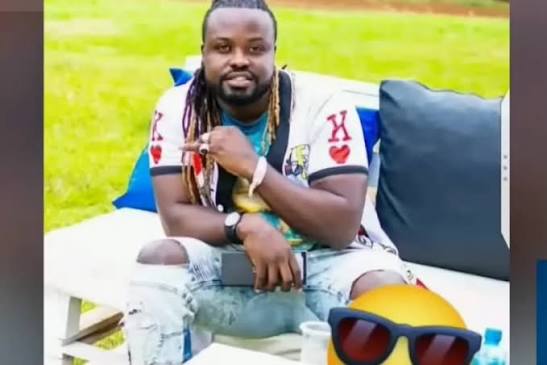
The autopsy doesn’t just tell us that Alphy died; it tells us exactly how the physical violence he endured on December 22nd led to his final breath.
The Medical Verdict: Pulmonary Embolism
The chief finding of the autopsy conducted at Mama Lucy Kibaki Hospital mortuary is Pulmonary Embolism. For those unfamiliar with the term, this occurs when a blood clot travels from another part of the body—usually the legs—and lodges in the blood vessels of the lung, blocking blood flow.
How the Assault Caused the Clot
Medical experts at the examination explained the direct link between the beating and the fatal clot:
The Trauma: During the assault by the suspect (identified as Nicholas Ireri Njue), Alphy sustained a severe leg fracture and fractured ribs.
The Immobilization: Serious bone fractures often lead to “Deep Vein Thrombosis” (DVT). When the body is traumatized and mobility is restricted, blood pools and clots.
The Fatal Move: That clot eventually broke loose, traveled through Alphy’s venous system, and blocked his pulmonary artery.
This medical trail creates a “Direct Link” of causation. Without the assault and the resulting fractures, the clot would never have formed. This is the smoking gun the family needs for the DCI to move forward with heavy charges.
CCTV vs. The Defense: No Room for Doubt
The autopsy results complement the harrowing CCTV footage that captured the incident outside a local entertainment joint. In the video, the suspect is seen pulling Alphy to the ground with such force that his leg was broken instantly.
While the defense might argue that Alphy died “days later” and not on the spot, the autopsy serves as the ultimate rebuttal. It proves that the “time-bomb” that killed him was planted the moment those blows were delivered.
“The Suspect is Still Free”: Family’s Anguish
Despite the autopsy confirming the cause of death and the suspect being identified as a KDF officer and business owner, the Migasha family is living in a nightmare of police inaction.
Alphy’s mother, Stella Okinda, has been vocal about the obstacles they’ve faced at the Buruburu Police Station. “We gave them the footage. We gave them the name. Now we have given them the autopsy,” she stated. “Why is he still walking free? Why is he still running his business while my son is in a cold room?”
The family has also raised alarms over alleged threats. They claim the suspect told them “nothing would happen” to him due to his military status. This has sparked a massive outcry from Kenyans on social media, demanding that DCI Director Mohamed Amin intervene personally to ensure the case isn’t “diluted” by internal military protection.
Why This Case is a Landmark for Justice
The Alphy Migasha case is becoming a symbol of the struggle against “impunity” in Nairobi’s estates. It highlights three critical issues:
Military-Civilian Relations: When a KDF officer uses combat force on a civilian, should they be tried in a civilian court or a martial court? (In this case, it is a civilian criminal matter).
The Danger of “Minor” Injuries: It warns the public that internal injuries like clots can be more dangerous than external wounds.
Police Accountability: The delay in arresting a clearly identified suspect with video evidence points to a breakdown in local law enforcement.
The Path Forward: What Happens Next?
With the autopsy results now part of the official police file, the next steps are critical:
Formal Charging: The DCI is expected to upgrade the charge from “Assault” or “Grievous Harm” to Manslaughter or Murder.
Arrest and Arraignment: The public is waiting for the news that Nicholas Ireri Njue has been taken into custody.
Public Advocacy: The #JusticeForAlphy campaign is growing, with human rights organizations now taking interest in the case.
Alphy was described by those who knew him as a man who “wouldn’t hurt a fly.” His death has left a hole in the Umoja community that can only be filled by the firm hand of the law.
Final Thoughts
The autopsy has stripped away any excuses. The link between the violence in Umoja and Alphy’s death is now a scientific fact. We wait to see if the Kenyan justice system will prove that no one—regardless of their rank or uniform—is above the law.