

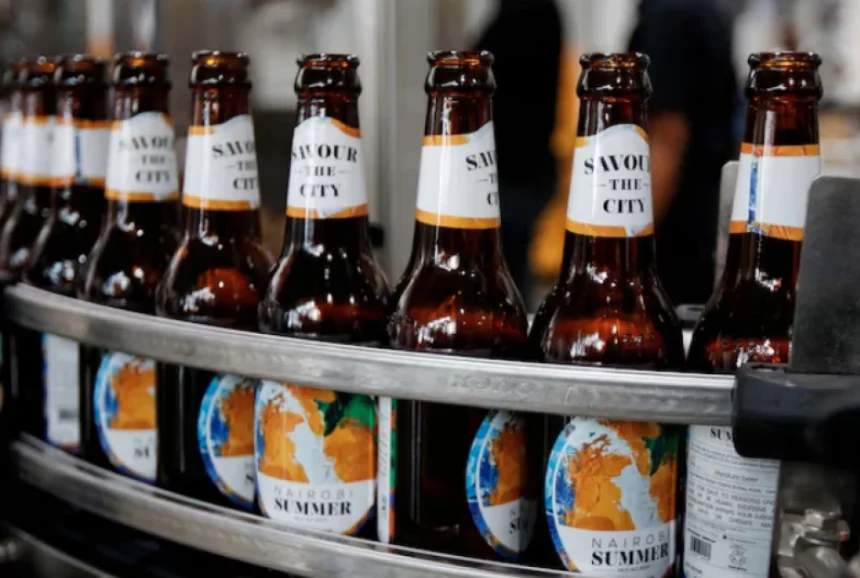
When global corporate mergers break the news, retail investors on the Nairobi Securities Exchange (NSE) usually brace for a forced exit. Historically, when an international conglomerate buys out a local blue-chip company, they often delist it from the local bourse, squeezing out minority shareholders and shrinking the diversity of the local stock market.
However, the historic US$2.3 billion (approx. KSh 300 billion) acquisition of East African Breweries PLC (EABL) by Japan’s Asahi Group Holdings is breaking that old script.
By securing a rare, unanimous takeover exemption from capital markets regulators in Kenya, Uganda, and Tanzania, Asahi has been cleared to take over Diageo’s 65% controlling stake without being legally compelled to buy out the remaining 35% of shares held by the public.
For the thousands of individual Kenyans, institutional pension funds, and asset managers holding EABL stock, this regulatory waiver changes everything. It means the regional brewing giant will remain firmly anchored on the NSE boards.
But what does this changing of the guard mean for your hard-earned money? Will the share price rally, or will it slide? And crucially, what happens to EABL’s legendary dividend payouts? Here is a deep-dive investment analysis of the deal.
1. Shielding the Market: Why Retaining the Listing Matters
EABL is not just any listed company; it is a foundational pillar of the Kenyan capital markets. Alongside Safaricom and the top tier-one banks, EABL represents a massive portion of the NSE’s total equity market capitalization.
Had the Capital Markets Authority (CMA) denied Asahi the exemption, the Japanese multinational would have been forced to launch a multi-billion-shilling mandatory tender offer to buy out all public shares. This would have almost certainly resulted in EABL’s complete delisting from the NSE.
Market Capitalization Protection: The Ripple Effect
┌───────────────────────────────────┬───────────────────────────────────┐
│ If Delisting Had Occurred │ With The CMA Waiver Granted │
├───────────────────────────────────┼───────────────────────────────────┤
│ • Massive capital flight as KSh │ • EABL remains a liquid, tradeable│
│ 100B+ leaves the local market. │ blue-chip asset on the NSE. │
│ • Shakes foreign investor direct │ • Preserves index weight for large│
│ confidence in the local bourse. │ pension and institutional funds.│
└───────────────────────────────────┴───────────────────────────────────┘
By allowing EABL to remain public, regulators have protected market liquidity. Institutional funds—like the National Social Security Fund (NSSF) and private insurance portfolios—will not be forced to liquidate their holdings, stabilizing the broader financial system.
2. The Dividend Question: Will Asahi Maintain the Payout Culture?
For decades, EABL has been loved by local investors for one primary reason: its reliable, robust dividend distribution history. As a mature consumer-goods giant with massive, consistent cash flows, EABL regularly pays out a substantial percentage of its earnings back to its shareholders.
Under Diageo’s tenure, this dividend policy was highly predictable, aligning with the parent company’s global requirement for steady cash generation from its international subsidiaries. The big question on every investor’s mind now is whether the leadership in Tokyo operates on the same frequency.
The early signs are highly encouraging. Asahi is entering the African market precisely because its domestic market in Japan is stagnant due to a rapidly aging population. To justify a KSh 300 billion bet to its own shareholders in Tokyo, Asahi desperately needs immediate, high-yield cash flows to service the debt acquired to fund the takeover.
Because EABL’s high-margin spirits and mainstream beer portfolios generate reliable cash daily, it is highly in Asahi’s financial interest to maintain, if not aggressively optimize, the existing dividend payout ratios. Minority shareholders on the NSE will simply ride on the coattails of this corporate necessity.
3. Valuation and Share Price Performance Outlook
In the run-up to the official regulatory approvals, EABL’s share price on the NSE experienced volatile trading sessions, driven by market speculation. Now that the procedural red tape has been cleared, the stock is expected to enter a period of price correction and stabilization.
Financial analysts use a metric called Enterprise Value-to-EBITDA (EV/EBITDA) to evaluate corporate takeovers. The Asahi deal values EABL at a premium compared to traditional African beverage listings.
This high valuation sets a solid, psychological floor for the stock price on the secondary market. Now that the threat of an aggressive, forced undervaluation buyout is off the table, the stock is highly attractive to foreign frontier-market institutional investors looking for exposure to sub-Saharan Africa’s consumer boom.
4. Capital Injection vs. Operational Synergies
Beyond the immediate numbers on a ticker screen, a stock’s long-term value is driven by operational growth. Asahi brings a massive global technological edge to East Africa’s manufacturing landscape.
Strategic Synergies: What Asahi Brings to the Table
• Advanced Supply-Chain Automation (Slashes localized production costs)
• Global Premium Brands Portfolio (Asahi Super Dry, Peroni, Pilsner Urquell)
• Sustainable Energy Infrastructure (Transition to zero-carbon brewing)
• Deep Capital Buffers (Ability to fund massive plant expansions)
By integrating Asahi’s hyper-efficient Japanese manufacturing frameworks into EABL’s plants in Ruaraka, Kisumu, and Kampala, the company can extract significant cost savings. In an economic environment where rising excise taxes and raw material inflation threaten consumer demand, any improvement in operational efficiency directly protects the net profit margin—and by extension, the earnings per share (EPS).
Conclusion: The Long-Term Verdict for Smart Money
The regulatory green light for Asahi’s entry into East African Breweries is a landmark moment that validates the maturity of Kenya’s financial architecture. For the everyday investor, the message is clear: there is no need to panic sell.
By retaining EABL’s listing, minority shareholders get to keep their front-row seats to one of the most exciting corporate transitions in modern African history. You remain an owner of a dominant monopoly that controls the regional beverage market, now backed by the immense technical prowess and deep financial pockets of a Japanese global giant. For long-term value investors focused on compounding dividend yields and steady capital appreciation, EABL remains an essential, high-conviction anchor for any diversified Kenyan portfolio.