

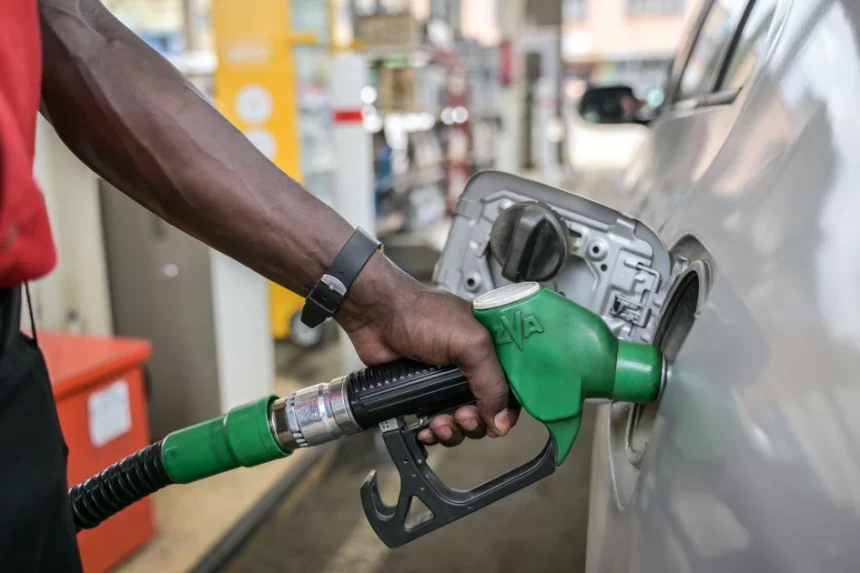
Kenyan consumers and businesses have received a much-needed financial breather. In its monthly pricing cycle announcement released on June 14, 2026, the Energy and Petroleum Regulatory Authority (EPRA) confirmed a significant drop in the retail price of diesel, alongside a minor reduction for super petrol.
Capital FM
The new pricing structure takes effect from midnight, running through to July 14, 2026.
People Daily
According to the regulator, the maximum allowed pump price for Diesel will decrease by Ksh.10.00 per litre, while Super Petrol drops marginally by Ksh.0.22 per litre. Kerosene prices, meanwhile, will remain completely unchanged for the next 30 days.
People Daily
+ 1
The New Retail Prices: Town-by-Town Breakdown
Following this review, the cost of fuel across major urban hubs has shifted down slightly. Below is the official retail price log for the June-July 2026 cycle:
Town Super Petrol (Ksh/Litre) Diesel (Ksh/Litre) Kerosene (Ksh/Litre)
Nairobi Ksh.214.03 Ksh.222.86 Ksh.191.38
Mombasa Ksh.210.87 Ksh.219.58 Ksh.188.09
Nakuru Ksh.212.92 Ksh.222.27 Ksh.190.81
Eldoret Ksh.213.69 Ksh.223.09 Ksh.191.63
Kisumu Ksh.213.69 Ksh.223.08 Ksh.191.63
Thika Ksh.213.70 Ksh.222.50 Ksh.191.02
Behind the Numbers: Landed Costs vs. The Ksh.10B Subsidy Shield
The math behind the latest price drop reveals a massive government stabilization intervention. Interestingly, international markets did not experience a uniform drop in refined petroleum costs. EPRA’s data logs show that while the average landed cost of imported Super Petrol declined by 0.56% (from $906.23 to $901.16 per cubic metre), the landed cost of Diesel actually increased by 0.21% globally due to regional trade bottlenecks.
People Daily
+ 1
EPRA’S JUNE 2026 LANDED COST MATRIX
Super Petrol ──► 📉 Decreased by 0.56% ($906.23 to $901.16 per m³)
──────────────────────────────────────────────────────────────────
Automotive Diesel ──► 📈 Increased by 0.21% ($1,291.98 to $1,294.71 per m³)
So, how did diesel drop by Ksh.10 locally if its import cost rose? The answer lies in heavy state cross-subsidization and tax adjustments.
To honor commitments made to the public transport sector and insulate the economy from secondary inflation, the government deployed approximately Ksh.10 billion from the Petroleum Development Levy (PDL) Fund. This cash cushion allowed EPRA to absorb the landed cost spike, providing a direct subsidy support of Ksh.34.07 per litre for diesel and Ksh.55.68 per litre for kerosene.
Citizen Digital
+ 1
Additionally, the prices incorporate the statutory framework of Legal Notice No. 70 of April 15, 2026, which managed temporary Value Added Tax (VAT) adjustments on energy products. A relatively stable Kenyan Shilling, which traded in a steady range of 129.5 to 130.08 against the US Dollar throughout May, also helped anchor the final calculations.
Citizen Digital
+ 1
Economic Impact: A Lift for Manufacturing and Farming
The decision to aggressively target diesel reductions carries substantial macroeconomic weight. Because diesel acts as the primary fuel engine for heavy machinery, long-distance freight logistics, agricultural tractors, and industrial electricity generators, the Ksh.10 drop will trick down into everyday consumer costs:
People Daily
THE REVERSE INFLATION DOMINO EFFECT
Ksh 10 Diesel Cut Production Relief
┌───────────────────────┐ ┌─────────────────────────┐
│ Lowers freight haulage│ ►►► │ Moderates food costs, │
│ costs and commercial │ │ manufacturing overhead, │
│ farming input metrics.│ │ and matatu fares. │
└───────────────────────┘ └─────────────────────────┘
Public Transport Stabilization: The reduction directly pacifies public transport and matatu operators, who have been piling pressure on the Ministry of Transport regarding unsustainable operational overheads.
Agricultural Relief: Farmers currently managing mid-season crop weeding and agricultural logistics can optimize their mechanized production margins.
The Political Backlash: Opposition Dismisses the Cut
Despite the relief, the price drop has faced sharp criticism from political opposition leaders. Speaking shortly after the announcement, Wiper Democratic Movement leader Kalonzo Musyoka dismissed the reduction as a minor token gesture.
People Daily
Addressing congregants in Bungoma County, Musyoka argued that keeping fuel retailing above the Ksh.210 mark does not offer realistic relief to struggling families, maintaining that the alternative opposition framework would cut fuel spending closer to Ksh.170 per litre by aggressively trimming the national budget.
Conclusion: A Tense Stability for the Month Ahead
The latest EPRA fuel review indicates that while global energy corridors remain highly volatile due to international conflicts, local stabilization mechanisms are currently acting as an effective shield for the Kenyan consumer.
By pulling Ksh.10 billion from the PDL fund, the state has managed to buy short-term price predictability for the transport and industrial sectors. For the next 30 days, businesses can plan their logistical costs with certainty, while keeping a close eye on global crude routes to see if this downward trend will hold into the next cycle.
Related Media Context
To view a complete televised breakdown of the price schedules, including live interviews with matatu operators and financial experts analyzing the long-term sustainability of the Petroleum Development Levy fund, watch this Citizen TV News Report on the June EPRA Fuel Price Review. This news segment provides essential background on how local markets are adjusting to the new pump limits.