

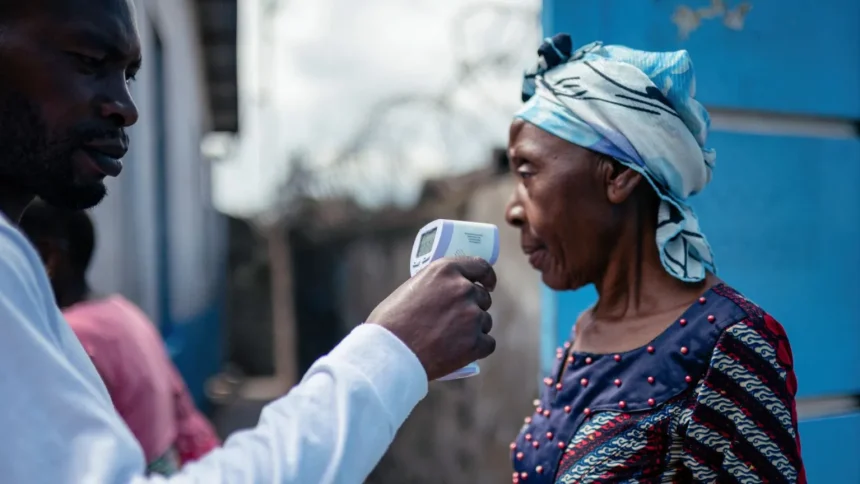
When the World Health Organization (WHO) triggers a Public Health Emergency of International Concern (PHEIC), global panic instinctively turns toward stockpiling medicines, fast-tracking vaccines, and deploying advanced therapeutic arrays. However, as the newly declared Ebola emergency in the Democratic Republic of the Congo (DRC) and Uganda unfolds, international responders are confronting a stark, uncomfortable medical reality:The cutting-edge biomedical weapons used to crush recent Ebola outbreaks are completely ineffective against the current pathogen.The culprit is the Bundibugyo ebolavirus (BDBV). While the world has grown accustomed to dealing with the more prevalent Zaire ebolavirus strain—which plagued West Africa from 2014–2016 and eastern DRC repeatedly over the last decade—the Bundibugyo strain is a rare, genetically distinct variant. Because international pharmaceutical pipelines have heavily favored Zaire-specific countermeasures, the declaration of this PHEIC exposes a massive structural gap in global health security. Responders on the ground in the Ituri Province are not just fighting an aggressive virus; they are fighting it without a baseline medical shield.1. The Immunological Wall: Why Existing Vaccines FailTo understand why health officials are highly alarmed, one must look at the structural mechanics of the current vaccine infrastructure.The global community currently holds robust, highly effective stockpiles of the Ervebo vaccine, a viral vector vaccine that saved thousands of lives during recent Zaire-strain epidemics in Equateur and North Kivu. Ervebo works by presenting the specific surface glycoprotein of the Zaire virus to the human immune system, training it to generate neutralizing antibodies.However, the Bundibugyo strain possesses a significantly altered genetic sequence.The Antigenic Disconnect
[Ervebo Vaccine / Zaire Antibodies] ──> Locks onto Zaire Glycoprotein [PASS]
[Ervebo Vaccine / Zaire Antibodies] ──> Attempts to bind to Bundibugyo [FAIL]
Because the structural “keys” on the surface of the Bundibugyo virus do not match the Zaire-derived “locks” of existing vaccines, Ervebo offers zero cross-protection. The same limitation applies to standard monoclonal antibody treatments like Ebanga and Inmazeb; these breakthrough therapeutics cannot bind to the Bundibugyo variant, leaving clinicians with no approved targeted antiviral tools.2. The Old-School Containment Blueprint: Survival by InterventionIn the absence of a pharmaceutical silver bullet, the joint response teams from the DRC Ministry of Health, the Uganda Ministry of Health, and the Africa CDC are being forced to scale up traditional, resource-intensive public health interventions. When a vaccine cannot create an artificial wall of immunity around an outbreak zone (a process known as ring vaccination), containment relies entirely on breaking the chains of human-to-human transmission manually.The Four Pillars of Non-Pharmaceutical Ebola Containment
┌─────────────────────────────────┐
│ 1. Aggressive Contact Tracing │ ──> Tracking up to 21 days of proximity exposure.
├─────────────────────────────────┤
│ 2. Rapid Point-of-Care Isolation│ ──> Establishing decentralized treatment tents.
├─────────────────────────────────┤
│ 3. Strict Clinical IPC Measures │ ──> Protecting vulnerable frontline medical staff.
├─────────────────────────────────┤
│ 4. Dignified & Safe Burials │ ──> Eliminating post-mortem transmission vectors.
└─────────────────────────────────┘
The success of this strategy rests entirely on speed. Because the incubation period for Ebola ranges from 2 to 21 days, a single missed contact in an urban hub like Bunia can quietly anchor a dozen new clusters before symptoms manifest. 3. The High-Risk Logistics of the Ituri Mining BeltExecuting this manual containment blueprint is exceptionally difficult given the specific socio-economic landscape of the northeastern DRC. The primary epicenter, Mongwalu Health Zone, is a sprawling network of informal, artisanal gold-mining camps. This terrain presents three unique challenges for epidemiologists:Fluid and Transient Populations: Miners rarely stay in one camp for long. They move fluidly across the dense forest terrain based on local economic yields, completely erasing traditional geographic tracking parameters.Deep Mistrust of Formal Institutions: Artisanal mining communities often operate outside official state frameworks. Introducing government health workers in full Personal Protective Equipment (PPE) can easily trigger community resistance, driving symptomatic individuals deeper into hiding within the forest.The Insecurity Variable: Ituri Province remains plagued by localized militia activity. Armed skirmishes frequently block transport corridors, preventing rapid response teams from delivering critical infection prevention and control (IPC) kits to rural clinics.When a healthcare worker infected in an isolated camp travels to an urban center looking for better care—as was the case with the initial suspected index patient who tragically died in Bunia—the virus instantly transitions from a remote forest issue to an immediate urban threat.4. Cross-Border Vulnerabilities: The Albertine Rift ConnectionThe threat is explicitly regional. The geographical proximity of Ituri Province to western Uganda means that the local economies are completely intertwined. Lake Albert and the surrounding land corridors see thousands of traders moving agricultural goods, fish, and hardware back and forth daily.The confirmed death of an imported case in Uganda underscores how quickly a localized cluster can export itself. In response, the Africa CDC has activated its continental Incident Management Support Team (IMST) to enforce synchronized border health protocols. Instead of closing formal border gates—which would instantly cause an explosion of unmonitored crossings through the bush—Ugandan authorities are deploying mobile thermal scanners and rapid testing laboratories directly to official Points of Entry (PoEs). The priority is keeping regional trade alive while creating a reliable diagnostic filter. Conclusion: The Urgency for Candidate TrialsWhile the immediate focus remains squarely on isolation and traditional field epidemiology, the declaration of the PHEIC acts as a powerful catalyst for clinical research. The WHO and various global scientific coalitions are already moving to fast-track emergency regulatory pathways for Bundibugyo candidate vaccines that have been sitting in early-phase development since the last major BDBV outbreaks in 2007 and 2012. Until those candidate doses arrive on the ground for field trials, containment will depend entirely on the resilience, bravery, and institutional memory of local African health surveillance teams. The DRC has successfully overcome 16 previous Ebola crises through sheer operational expertise. Confronting the 17th without a vaccine will undoubtedly be one of its steepest challenges yet, but the lessons learned here will fundamentally shape how the world prepares for non-Zaire viral threats in the future.