

Direct, high-stakes diplomatic talks between the United States and Iran are officially underway in the serene resort town of Bürgenstock, Switzerland. Intended to hammer out the technical details of the fragile interim peace agreement signed earlier this week, the summit has instead been thrust into immediate geopolitical turbulence.
CBS News
Just hours before delegations sat down at the negotiating table, Tehran announced it had re-closed the vital Strait of Hormuz in response to ongoing Israeli military strikes in southern Lebanon—a move the Iranian government labels a direct breach of the war-ending memorandum of understanding (MoU). However, Washington has swiftly pushed back, with the U.S. military heavily disputing that any actual maritime blockade is in effect.
The Times of Israel
+ 1
The Gathering in Bürgenstock: High-Level Teams Arrive
Despite the aggressive brinkmanship playing out in the Persian Gulf, neither side pulled out of the scheduled diplomatic meeting.
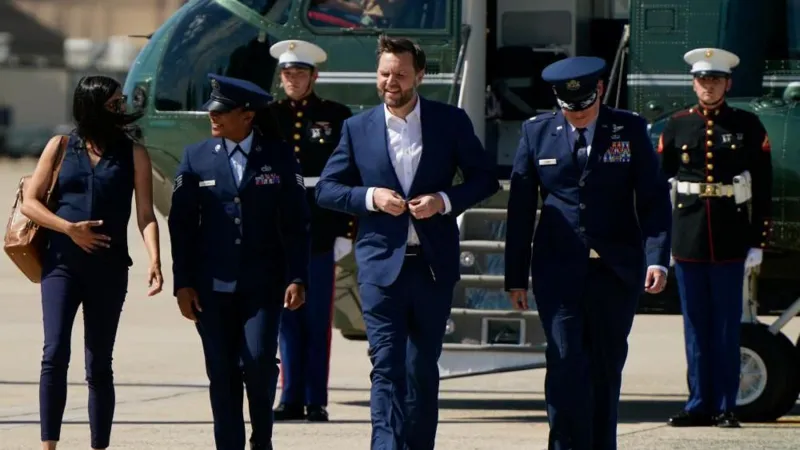
The Iranian delegation, led by Parliamentary Speaker Mohammad Bagher Ghalibaf and Foreign Minister Abbas Araghchi, arrived in Switzerland late Saturday night. On the American side, heavy hitters Jared Kushner and U.S. Envoy Steve Witkoff have been on the ground managing early technical protocols, joined early Sunday morning by U.S. Vice President JD Vance, who touched down at Emmen Air Base.
Pittsburgh Post-Gazette
+ 1
Pakistan’s Prime Minister Shehbaz Sharif and Chief of Army Staff Field Marshal Asim Munir have also traveled to the Swiss venue. Pakistan has served as the core neutral mediator facilitating communication between Washington and Tehran throughout the 15-week conflict.
The Hindu
+ 1
[PAKISTAN MEDIATORS]
(PM Shehbaz Sharif & FM Asim Munir)
│
┌─────────────────────┴─────────────────────┐
▼ ▼
[U.S. DELEGATION] [IRAN DELEGATION]
VP JD Vance, Jared Kushner, Speaker Ghalibaf,
& Envoy Steve Witkoff FM Abbas Araghchi
The Strait of Hormuz Dilemma: Closed or Flowing?
The immediate point of friction hanging over the Bürgenstock summit is the physical status of the world’s most critical oil chokepoint.
Iran’s Position: The Strait is Blockaded
Iran’s Joint Military Command announced via state television that it had ordered the Islamic Revolutionary Guard Corps (IRGC) Navy to close the Strait of Hormuz to all commercial traffic. Tehran argues that because the interim agreement was built on an immediate freeze of hostilities on all regional fronts—including the Israel-Hezbollah front in Lebanon—continued military strikes represent a failure by the U.S. to hold up its side of the bargain.
Arab News
+ 1
“This trip is about demanding that the other side fulfill its obligations,” stated Iranian Foreign Ministry spokesperson Esmail Baghaei. He warned that if U.S. commitments are not aggressively enforced, “the memorandum of understanding as a whole will be jeopardized.”
The Hindu
+ 1
The U.S. Position: Total Denial & Toll Threats
The Biden-Trump transition framework has completely rejected Iran’s claims of a blockade. U.S. Central Command (CENTCOM) spokesperson Capt. Tim Hawkins clarified that the waterway remains entirely functional, noting that 55 merchant ships safely transited the strait on Saturday alone, moving over 17 million barrels of crude.
Furthermore, Vice President JD Vance told reporters before departure that he has seen “no evidence that the Strait of Hormuz was closed.” Meanwhile, Donald Trump took to social media to escalate the stakes, threatening to impose steep “American tolls” on ships transiting the waterway if Iran fails to sign a permanent, comprehensive treaty within the mandated 60-day window, framing the fee as compensation for U.S. forces acting as a “Guardian Angel” to the region.
Why the Emergency Lebanon Session Was Added
The cracks in the initial agreement have forced negotiators to rapidly alter the summit agenda. Diplomats confirmed that an emergency session addressing the Israel-Hezbollah conflict has been added as the official opening event of the Swiss talks.
While neither Israel, Hezbollah, nor the Lebanese government are official signatories or participants in the Bürgenstock meeting, their field actions wield absolute veto power over the peace process. Far-right Israeli National Security Minister Itamar Ben Gvir recently declared that “all of Lebanon must burn” following the deaths of four Israeli soldiers, signaling that Jerusalem is far from ready to de-escalate, despite Washington and Tehran trying to wind down their direct war.
What is at Stake in Switzerland?
The interim MoU gave both nations a 60-day window to convert a basic halt in hostilities into a legally binding international treaty. The technical teams in Switzerland are tasked with unpacking structural, deep-rooted issues:
The Washington Post
The Nuclear Redlines: The U.S. wants a long-term, verifiable rollback of Iran’s uranium enrichment programs, while Iran is demanding immediate, irreversible economic sanctions relief.
Enforcing the Regional Ceasefire: Establishing clear mechanisms to hold regional proxies and allies accountable so that localized skirmishes do not re-ignite a full-scale international conflict.
Global Energy Stability: Ensuring the unhindered flow of Middle Eastern oil to stabilize global financial markets, which remain highly volatile following months of naval blockades.
As the technical-level talks begin, the atmosphere remains incredibly fragile. The coming days in Switzerland will prove whether the Islamabad-brokered MoU was the foundation for true regional stabilization, or merely a temporary pause before a much larger storm.