

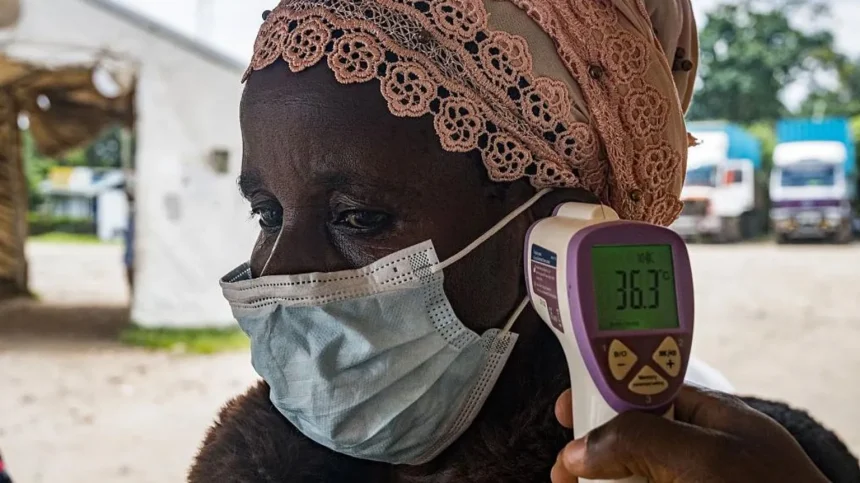
When the World Health Organization (WHO) declared the current crisis in the Democratic Republic of the Congo (DRC) and Uganda a Public Health Emergency of International Concern (PHEIC), it sent shockwaves through the global health security architecture.
International Rescue Committee
To the casual observer, the world should be ready for Ebola. We have highly effective, field-tested vaccines (like Ervebo), advanced monoclonal antibody treatments (Inmazeb and Ebanga), and rapid, point-of-care diagnostic kits.
Yet, as of late May 2026, over 540 suspected cases have emerged, and the death toll has passed 131. The reason for this aggressive spread is simple but terrifying: our medical armor was forged for a completely different enemy.
Wikipedia
The current epidemic is driven by the rare Bundibugyo ebolavirus (BDBV). Because almost all modern Ebola interventions were engineered specifically for the Zaire strain, responders are essentially fighting a brand-new war with obsolete weapons.
Wikipedia
The Molecular Blindspot: Why Vaccines and Therapies are Failing
The genus Orthoebolavirus contains multiple distinct species, but the two most relevant to human epidemics are Zaire ebolavirus and Bundibugyo ebolavirus. While they cause similar symptoms—severe fever, intense malaise, and internal bleeding—their surface structures are fundamentally different.
[Ebola Species Variation]
│
├─► Zaire Strain ──────► Target of Ervebo Vaccine & Monoclonal Therapies (99% Match)
│
└─► Bundibugyo Strain ──► Structural Mismatch (Existing Vaccines & Monoclonals Ineffective)
Existing vaccines work by exposing the immune system to the specific glycoprotein (the outer spike protein) of the Zaire strain. Because the Bundibugyo strain’s surface protein features a vastly different molecular shape, the antibodies generated by the Ervebo vaccine cannot bind to it.
The same structural mismatch neutralizes our best treatments. Advanced therapeutic drugs like Inmazeb and Ebanga—monoclonal antibody cocktails that brought the mortality rate of Zaire Ebola down drastically in recent years—are completely blind to the Bundibugyo variant.
The Clinical Reality: Without specific antivirals or vaccines, medical teams at treatment centers in Ituri and Kampala are forced to rely solely on aggressive supportive care—intravenous hydration, electrolyte stabilization, and symptom management.
ReliefWeb
The Diagnostic Failure: How the Virus Spread Undetected
One of the most troubling aspects of the 2026 outbreak is how long the virus circulated silently before being officially identified. It is now believed that active transmission began in late April, masquerading as standard local fevers in the Mongbwalu and Rwampara health zones.
Wikipedia
A major reason for this dangerous delay lies in the limitations of field diagnostics:
The Zaire-Centric Test Design: The rapid diagnostic test (RDT) kits stockpiled in regional clinics were engineered to look exclusively for Zaire antigens.
Wikipedia
False Senses of Security: When early patients presented with hemorrhagic symptoms, initial rapid tests came back negative. This led healthcare workers to suspect other regional endemic diseases, such as severe malaria or typhoid.
Wikipedia
The Hospital Amplification: Because the tests failed to identify the virus, patients were admitted to standard open wards. At least four healthcare workers contracted the virus and died in early May before molecular sequencing by the Institut National de Recherche Biomédicale (INRB) in Kinshasa finally exposed the Bundibugyo strain on May 15.
World Health Organization (WHO)
The Cross-Border Equation: Trade and Urban Density
Stopping an infectious disease outbreak depends heavily on the geographic containment of its vectors. However, the economic geography of northeastern DRC makes containment an uphill battle.
Mongbwalu is a major gold-mining hub characterized by high population mobility. Miners, traders, and laborers constantly move along informal pathways between transit hubs, the provincial capital of Bunia, and major cross-border commercial centers like Goma and Kampala.
[Geographic Transmission Pathways]
Mongbwalu (Mining Center) ──► Bunia (Provincial Capital)
│
┌──────────────────────────┴──────────────────────────┐
▼ ▼
Kampala, Uganda (Regional Hub) Goma (Border Metropolis)
With two confirmed cases already treated in intensive care units in Kampala, the risk of rapid urban amplification is incredibly high. Unlike rural villages where contact tracing is straightforward, tracing a virus through dense, highly mobile urban networks requires unprecedented logistical coordination.
World Health Organization (WHO)
+ 1
The Emergency Strategy: Deploying Experimental Countermeasures
With no approved medical countermeasures on the shelves, global health scientists are scrambling to innovate on the fly. Epidemiologists and clinical researchers are currently weighing two main emergency strategies:
World Health Organization (WHO)
1. Cross-Protection Testing
Public health officials are evaluating whether a combination approach utilizing approved vaccines for the Zaire and Sudan variants could offer any degree of cross-protection. While laboratory data suggests limited crossover efficacy, the severity of the crisis may prompt a compassionate-use deployment in high-risk zones.
2. Experimental Vector Platforms
Pharmaceutical consortia, backed by funding from Africa CDC and international partners, are moving to accelerate phase-1 candidate vaccines built on Vesicular Stomatitis Virus (VSV) and mRNA platforms specifically tailored to the Bundibugyo surface glycoprotein.
Metric Zaire Outbreaks (Historical Reference) Bundibugyo Outbreak (Current 2026 Crisis)
Case Fatality Rate 60% to 90% (Without treatment) Estimated 30% to 40%
Vaccine Availability Highly effective (Ervebo deployed rapidly) None approved; experimental pipeline only
Targeted Therapeutics Monoclonal antibodies available None approved; supportive clinical care only
Field Diagnostic Speed Minutes (Via Zaire-specific RDTs) Days (Requires specialized RT-PCR/Sequencing)
Conclusion: The Cost of Fragmented Preparedness
The 2026 Bundibugyo crisis is a stark reminder that global health security cannot afford to be reactive. By focusing vaccine stockpiles and diagnostic development almost exclusively on a single strain of Ebola, the international community left a predictable vulnerability wide open.
As rapid response teams deploy across East and Central Africa, the immediate priority is to scale up protective gear (PPE), fix the diagnostic gap by distributing broad-spectrum PCR tests, and establish robust isolation protocols. The fire in Ituri is burning, and containing it requires a united, scientifically agile global response before the virus finds a permanent foothold in the region’s major transit cities.
To look deeper into the clinical response:
Review the current clinical protocols for supportive care
Investigate the pipeline for Bundibugyo vaccine development