
The Ultimate Report: Catholic Bishops Condemn Violence in Places of Worship and Demand Urgent Government Probes
The year 2026 has begun with a somber and defiant tone from the Catholic Church across Africa. In a series of coordinated and individual statements, the Catholic hierarchy in Kenya, Nigeria, and Sierra Leone has moved beyond mere prayers for peace. They are now demanding active justice, government accountability, and a full-scale investigation into what they describe as a “desecration of the sacred” and a “slaughterhouse of the innocent.”
For millions of faithful, the church has historically been a sanctuary—a place where the troubles of the world are left at the door. However, recent events have seen this sanctuary violated by state-sanctioned force and non-state terror. Here is a deep dive into the crisis and the bishops’ uncompromising response.
1. Kenya: “Stop Teargassing God”
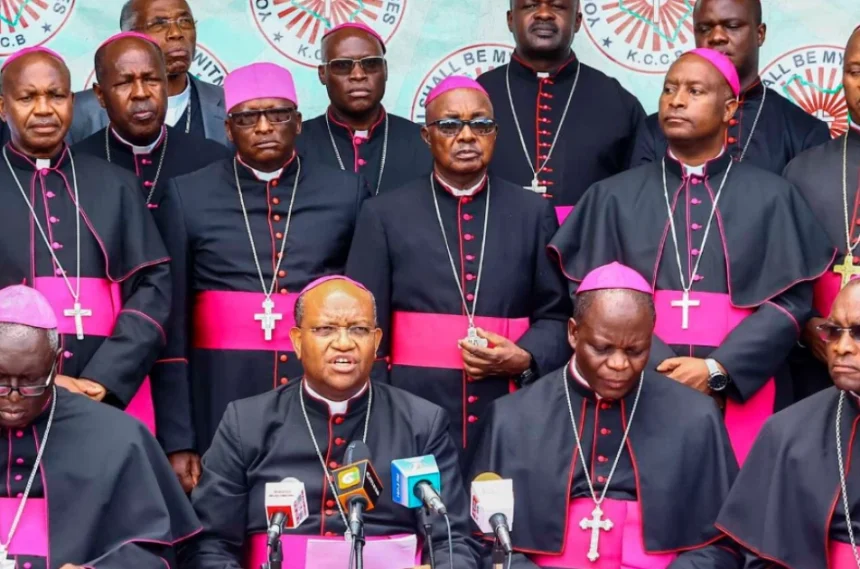
On February 13, 2026, the Kenya Conference of Catholic Bishops (KCCB), led by Most Rev. Maurice Muhatia Makumba, issued a blistering statement from Lodwar. This follows a disturbing pattern where the National Police Service has been accused of using chemical agents—specifically teargas—inside church buildings during active worship services.
The Violation of Article 32
The bishops emphasized that these actions are not just tactical errors; they are gross violations of the Constitution of Kenya. Article 32 guarantees every person the right to manifest their religion through worship.
The Incident at Othaya: In late January, police lobbed teargas into an Anglican church in Nyeri County, causing a stampede of children and the elderly.
The Bishops’ Demand: The KCCB has called for the immediate interdiction and prosecution of the officers involved and the “hired goons” who facilitated the chaos. They are demanding a public apology from the Interior Cabinet Secretary and the Inspector General of Police.
The Political Undercurrent
The clergy warned that Kenya is entering a dangerous phase of “premature political thuggery” ahead of the 2027 General Election. They accused leaders of using religious spaces as battlegrounds for ethnic profiling and incitement, calling on the government to protect the “sanctity of the pulpit.”
2. Nigeria: “The Cry of the Innocent”
In West Africa, the rhetoric is even more dire. The Catholic Secretariat of Nigeria (CSN) released a harrowing document on February 7, 2026, titled “The Cry of the Innocent: Stop this Slaughterhouse in Nigeria!”
A Nation in Grief
The Nigerian bishops are reacting to a relentless wave of coordinated massacres and abductions.
The Woro Massacre: In early February, over 160 innocent civilians were slaughtered in a single coordinated attack in Woro, Kwara State.
The Abduction of Clergy: The Church continues to mourn the kidnapping of Fr. Nathaniel Asuwaye from the Archdiocese of Kafanchan, who was taken during a violent invasion of his rectory that left three others dead.
The Demand for a Real Probe
The Nigerian clergy are no longer satisfied with “empty condolences.” They have officially demanded that the Federal Government:
Identify and Expose Sponsors: Move beyond arresting “foot soldiers” and target the financiers and political enablers of terror.
Establish Frontline Bases: Deploy security forces to actual farming communities currently under siege rather than just urban centers.
Acknowledge Complicity: The bishops stated that “silence in the face of such horror can hardly escape being labeled as complicit.”
3. Sierra Leone: “Enough is Enough”
In Sierra Leone, the Catholic hierarchy has denounced a “disturbing surge” in targeted violence against clergy and the systematic looting of mission properties.
Targeting the Vulnerable: Recent attacks on priests, including the wounding of Fr. James Joshua Jamiru in Pendembu, follow the tragic murder of Fr. Augustine Dauda Amadu in late 2025.
Looting of Missions: The bishops noted that these aren’t just random crimes; they are attacks on facilities intended to serve the poor. They have called on the Sierra Leonean government to provide concrete security measures for religious missions that often act as the only source of healthcare and education in remote areas.
4. The Global Response: Pope Leo XIV Weighs In
The cries of the African bishops reached the Vatican this week. During his Sunday Angelus, Pope Leo XIV expressed his “sorrow and concern” over the renewed violence.
“Nigeria cannot afford to normalize bloodshed,” the Pope echoed, urging competent authorities to work with determination to ensure the safety of every citizen.
This global backing provides the bishops with a “moral shield,” making it harder for local governments to dismiss their demands as mere political interference.
5. Why This Matters: The Shrinking Civic Space
The bishops’ demands for a probe highlight a broader, more dangerous trend: the shrinking of democratic and civic spaces. When a church is no longer safe from teargas or a rectory is no longer safe from gunmen, the “social contract” between the state and the citizen is effectively broken.