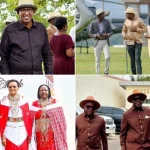


When the curtains fell on the Media Council of Kenya’s 2026 Media Excellence Awards, rival newsrooms were left with a familiar homework assignment. Royal Media Services (RMS) didn’t just win; they systematically dominated the event. With News Gang securing media freedom honors, Sema na Citizen taking civic engagement awards, and Managing Director Wachira Waruru walking away with the Lifetime Achievement Award, the gala felt less like a competition and more like a coronation.
But in the corporate boardrooms of Nairobi, the conversation isn’t just about the trophies—it’s about the money, the metrics, and the market share.
In an era where global streaming giants, TikTok creators, and independent digital startups are fracturing audience attention, traditional media houses worldwide are facing an existential crisis. Yet, RMS continues to grow its numbers, command premium advertising rates, and maintain an iron grip on both television and radio ratings.
How does a local media house defy global trends and maintain total market dominance? The answer lies in a highly deliberate, flawlessly executed operational blueprint that combines hyper-local content with aggressive talent retention and multi-platform monetization.
1. The Vernacular Radio Fortress: The Hidden Profit Engine
While Citizen TV is the highly visible, glamorous flagship of the empire, media insiders know that the true financial engine of Royal Media Services is its massive stable of vernacular radio stations.
Long before competitors realized the power of regional languages, RMS under Wachira Waruru began launching specialized stations catering to distinct linguistic communities across Kenya. Today, brands like Inooro FM (Kikuyu), Ramogi FM (Luo), Mulembe FM (Luhya), and Egesa FM (Kisii) are not just radio stations; they are foundational cultural pillars within their respective regions.
The RMS Multi-Tier Audience Architecture
┌───────────────────────────────────┬───────────────────────────────────┐
│ National Mass Reach │ Hyper-Local Micro-Targeting │
├───────────────────────────────────┼───────────────────────────────────┤
│ • Citizen TV (Urban & Rural Mass) │ • 14 Vernacular Radio Stations │
│ • Radio Citizen (Swahili National)│ • Regional digital portals │
│ • Citizen Digital App & Web │ • Localized event activations │
└───────────────────────────────────┴───────────────────────────────────┘
From a business perspective, this hyper-local approach created a goldmine for advertisers. A blue-chip corporate entity or a government ministry looking to launch a fertilizer subsidy program, for instance, does not need to waste ad spend on a broad national broadcast. They can buy highly targeted, localized prime-time slots on the exact vernacular station that reaches their target demographic. By decentralizing their radio strategy, RMS built an advertising moat that competitors have found impossible to breach.
2. The “Star System” and Talent Retention Strategy
The media business is fundamentally a talent business. Audiences do not form emotional attachments to corporate logos; they connect with the faces they see on their screens and the voices they hear on their morning commutes.
RMS mastered the “Star System” early on. The media house has consistently been willing to invest top dollar to acquire and retain the country’s most authoritative, engaging, and credible journalists. The victory of News Gang at the 2026 awards is a direct validation of this strategy. By assembling a powerhouse panel of seasoned editors who possess deep institutional memory and political access, RMS created an unmissable weekly appointment-viewing event.
More importantly, RMS does not just hire stars—it builds a production infrastructure that allows them to thrive. By providing state-of-the-art newsrooms, advanced field-reporting equipment, and an editorial environment that fiercely protects media freedom, they ensure that their top talent rarely looks elsewhere.
3. Aggressive Digital Aggregation
A common trap for legacy media empires is ignoring the digital shift until it is too late. RMS avoided this by launching Citizen Digital, an expansive web and mobile application ecosystem that aggregates news, live broadcasts, and video-on-demand content.
Instead of fighting platforms like YouTube or TikTok, RMS treats them as distribution funnels. A explosive political interview or a viral human-interest feature captured by Videographer of the Year Hebron Kinyoda is instantly chopped, optimized, and pushed across digital touchpoints within minutes of airing.
This creates a seamless loop: digital clips drive younger viewers back to the main Citizen Digital app, while the massive web traffic numbers provide a secondary, highly lucrative digital advertising stream that buffers the company against fluctuations in traditional print and TV ad spends.
4. Cultural Alignment and Civic Trust
The win for Sema na Citizen as the Best Civic Engagement Programme highlights the final, crucial pillar of the RMS blueprint: trust.
In developing markets, media houses can easily alienate audiences by becoming overly elitist or disconnected from the daily struggles of the working class. RMS has intentionally kept its programming grounded. By designing shows that allow ordinary citizens to call in, confront leaders, and demand accountability in clear, unpretentious Swahili, the network has positioned itself as the “People’s Watchdog.”
This deep-seated public trust acts as a shield. When a brand enjoys that level of grassroots goodwill, its audience numbers remain stable even during volatile political or economic cycles, guaranteeing consistent eyes and ears for corporate partners.
Conclusion: The Legacy of Visionary Governance
Royal Media Services’ spectacular performance at the 2026 Media Excellence Awards was not a stroke of luck; it was the inevitable dividend of a 20-year masterclass in media management.
By honors like the Lifetime Achievement Award being handed to Wachira Waruru, the industry explicitly recognized that sustainable media success requires a delicate balance of creative freedom, technical excellence, and cut-throat corporate strategy. As RMS looks to the future, its competitors must realize that defeating this giant will require more than just changing anchors—it will require reinventing how media connects with the soul of the Kenyan consumer.