
A Presidential Challenge Echoes Across the Continent
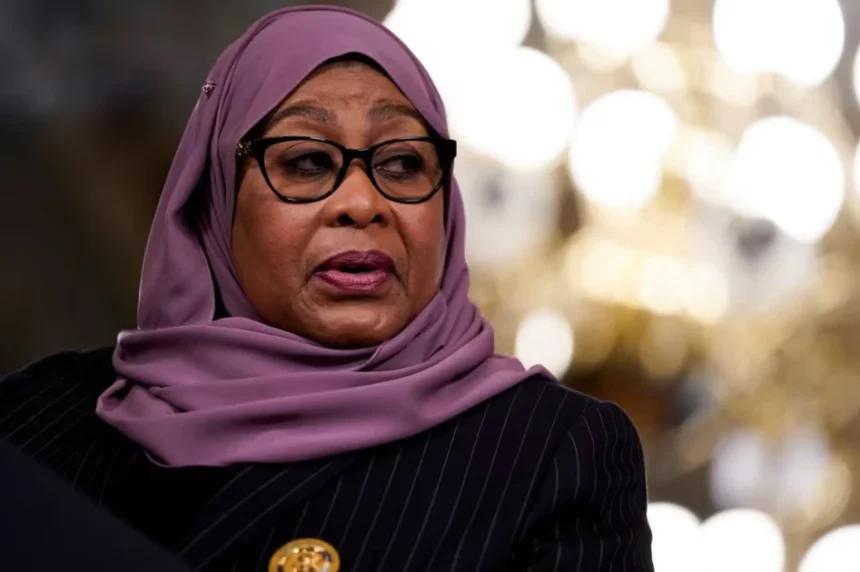
In a speech that resonated far beyond Tanzania’s borders, President Samia Suluhu Hassan looked squarely at her foreign critics and posed a deceptively simple, yet loaded, question: “Who are you?” The remark, delivered on December 2nd, 2025, was not made in a vacuum. It was a calculated, fiery response to a wave of international condemnation following violent post-election clashes, crystallizing a moment of profound diplomatic rupture. This was more than a rebuke; it was a declaration of a new, defiant stance from a nation increasingly unwilling to accept what it views as hypocritical lectures on democracy and governance from abroad.
The immediate target was the European Union, which had just days earlier voted overwhelmingly to suspend €156 million in development aid to Tanzania. The EU Parliament’s resolution condemned “extrajudicial killings” and a violent crackdown on opposition supporters, calling for an independent investigation. But President Samia’s message was broadcast to a wider audience: to all foreign powers who believe their funding grants them moral or political authority over Tanzanian sovereignty. In one sharp phrase, she reframed the conversation from one of human rights conditionalities to one of mutual respect—or the lack thereof.
The Spark: From Ballots to Bullets
To understand the force of Samia’s words, one must revisit the turbulent events of late October 2025. Tanzania held its general elections on October 29th in a tense atmosphere. The main opposition party, Chadema, rejected the process, alleging widespread irregularities and a deliberate silencing of their campaign. What followed were not just peaceful protests but, according to opposition accounts, a violent state crackdown.
Opposition Claims: Chadema leader Tundu Lissu stated that security forces killed over 100 people in the aftermath.
UN Verification: While not confirming that figure, the United Nations human rights office did verify that at least 10 people were shot dead by police in Mwanza and other cities, with many more injured.
Internet Blackout: Authorities imposed a near-total internet shutdown for several days, severing communication and drawing further international ire.
On November 1st, the National Electoral Commission declared President Samia the winner with a staggering 98% of the vote, a result dismissed as illegitimate by the opposition. The stage was set for a major international response.
The Foreign Pressure Mounts
The reaction from Western capitals and international bodies was swift and severe. The narrative of Tanzania backsliding on the democratic gains and relative openness promised at the start of Samia’s presidency took hold.
The EU’s Financial Hammer: The most consequential action came on November 27th, when the European Parliament voted 539 in favor to suspend a significant portion of its budget support to Tanzania. The resolution was a direct indictment, citing “murder, enforced disappearances, and torture” and demanding an independent, African-led inquiry.
American Condemnation: U.S. Congressman Gregory Meeks, Chairman of the House Foreign Affairs Committee, had warned weeks earlier of a “closing civic space,” explicitly mentioning “extrajudicial killings.” His statement signaled that Tanzania’s actions were being watched closely at the highest levels in Washington.
African & UN Concern: Even regional bodies expressed alarm. The African Commission on Human and Peoples’ Rights and the UN High Commissioner for Human Rights called for investigations and the restoration of freedoms.
Tanzania’s initial response was one of injured pride. Its embassy in Brussels accused the EU of acting “without allowing the Tanzanian government to present its side,” framing the resolution as a prejudiced, neo-colonial act.
Samia’s Counter-Narrative: Sovereignty, Survival, and Selective Outrage
President Samia’s December 2nd address was the full-throated, presidential-level counterpunch. She constructed a powerful alternative narrative to the international criticism.
Rejecting the “Lecture”: The core of her speech was a rejection of external moralizing. “Who are you?” was the rhetorical spearhead, followed by a dismissal of the suspended aid as “too little.” She argued that Tanzania seeks “business, not aid”—a direct reference to her government’s much-touted “Economic Diplomacy” foreign policy, which prioritizes trade and investment over traditional donor-recipient relationships.
Justifying the Crackdown as National Defense: Samia did not apologize for the state’s violence. Instead, she reframed it. She called the post-election unrest a “manufactured event” and a planned “operation to overthrow the government,” likening it to an insurrection. In her telling, the security forces’ “strong measures” were a legitimate, even restrained, response to protect the state, no different from actions other nations would take when facing a coup attempt.
Shifting Blame to the Opposition: The President placed the blame for the violence squarely on her political opponents. She accused them of manufacturing chaos to hide their “embarrassment” over an anticipated electoral defeat and of “misleading the youth” of Tanzania into becoming pawns in a destructive game.
The Bigger Picture: A Continent at a Crossroads
The standoff between Dar es Salaam and Brussels/Washington is a microcosm of a larger shift in Africa’s geopolitical landscape. The post-Cold War model of aid-for-good-governance is under strain.
The Rise of “Economic Diplomacy”: Samia’s stance is a practical application of her 2025 foreign policy doctrine. With other suitors like China, Russia, and Gulf States offering investment without political preconditions, traditional Western partners find their leverage diminished.
The Sovereignty vs. Accountability Dilemma: This clash poses a fundamental question: where does legitimate concern for human rights end and illegitimate interference in internal affairs begin? Tanzania, and many African nations, are increasingly insisting on the latter interpretation.
A Test for Samia’s Legacy: Once hailed as a liberalizing reformer after the authoritarian rule of John Magufuli, President Samia is now defining her legacy differently. She is choosing to be seen as a sovereigntist defender of national interests against a disapproving West, a potentially powerful stance domestically.
Conclusion: The Aftermath of the Question
President Samia’s “Who are you?” is likely to echo for some time. It has halted, for now, any notion of external actors dictating terms to Tanzania. The suspended EU funds may indeed be “too little” in the grand scheme of Tanzania’s budget, but the diplomatic cost—a eroded relationship with a major traditional partner—is significant.
The ultimate answer to Samia’s question will be determined by what happens next. Will the international community find new ways to engage, or will it disengage further? Will Tanzania’s economic diplomacy deliver the prosperity and stability it promises without the guardrails Western aid once attempted to impose? For now, the message from Dar es Salaam is clear: Tanzania will define its own path, on its own terms, and it is not asking for permission. The world has been put on notice.