

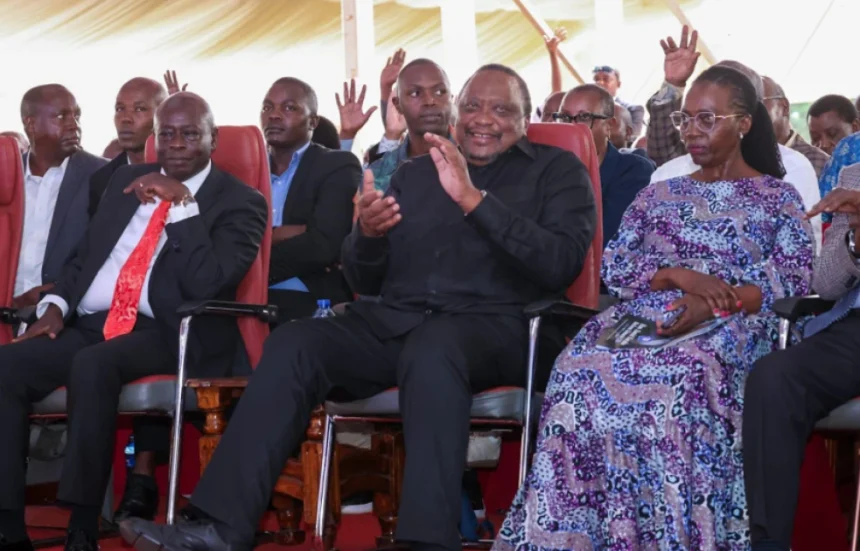
Former President Uhuru Kenyatta has once again stepped into the political spotlight with a bold and emotional message directed at the Mt Kenya region. In a statement that is already sparking intense debate, Uhuru warned residents to be cautious of what he described as “sweet-tongued” politicians—leaders who make appealing promises but fail to deliver once elected.
His remarks, delivered during a recent public address, carried a tone of urgency and reflection. “I warned you,” Uhuru stated, suggesting that the region may already be experiencing the consequences of choices made in previous elections. The message appeared to resonate with both supporters and critics, quickly gaining traction across Kenya’s political landscape.
The Mt Kenya region has long been considered a political stronghold, often playing a decisive role in national elections. As such, any message directed at its voters carries significant weight. Uhuru’s warning seems to be a direct appeal to the electorate to become more critical and cautious when evaluating political leaders, especially those who rely heavily on persuasive rhetoric.
At the heart of his message is a concern about leadership accountability. According to Uhuru, many politicians use charming language and grand promises to win public trust, only to fall short once they assume office. This pattern, he implied, has contributed to frustration and unmet expectations among citizens.
His comments come at a time when political temperatures in Kenya are steadily rising ahead of future elections. Alliances are shifting, new leaders are emerging, and competition for influence in regions like Mt Kenya is intensifying. In this context, Uhuru’s words can be seen as both a warning and a strategic intervention in ongoing political conversations.
Supporters of the former president argue that his message is timely and necessary. They believe it encourages voters to look beyond campaign promises and focus on track records, integrity, and tangible results. For them, Uhuru is urging Kenyans to demand better from their leaders.
However, critics have interpreted his remarks differently. Some view the statement as politically motivated, suggesting it could be aimed at undermining certain leaders who currently enjoy strong support in the region. Others question whether Uhuru himself bears responsibility for past political dynamics and decisions.
Regardless of differing opinions, one thing is clear—his message has reignited an important conversation about leadership and voter responsibility in Kenya.
For many residents in the Mt Kenya region, the warning serves as a reminder that political decisions have long-term consequences. Choosing leaders based solely on persuasive speeches can lead to disappointment if those promises are not backed by action.
As the country moves closer to another election cycle, such messages are likely to become more frequent and more intense. Politicians will continue to compete for attention, using every tool at their disposal—including powerful rhetoric.
Uhuru Kenyatta’s warning, however, cuts through the noise with a simple but impactful message: not everything that sounds good should be trusted.