
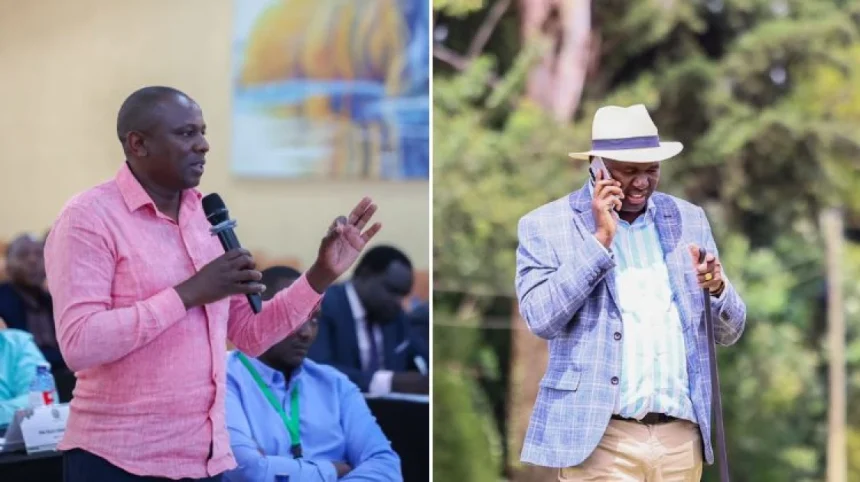
On paper, the Grade 10 transition looks like a success, with the Ministry reporting a 92% reporting rate as of January 25, 2026. However, National Assembly Majority Leader Kimani Ichung’wah isn’t buying the statistics. Speaking from the legislative retreat in Naivasha, he painted a far grimmer picture of what is actually happening in the villages.
1. The “Ghost” Schools: Staffing Paradoxes
Ichung’wah’s most stinging allegation involves the “mathematical insanity” of teacher deployment. He challenged PS Bitok to explain how a school with only 100 students can have 28 teachers, while a neighboring school with 600 students has none.
The Ichung’wah Insight: He argues that the Ministry has abandoned its oversight role, leaving MPs to act as “de facto school inspectors.” Without a “ground-up” rationalization of the Teachers Service Commission (TSC) staff, Ichung’wah believes the current Sh48 billion budget request is just “throwing good money after bad.”
2. The “Uniform Cartel” Economy
While President William Ruto recently intervened to allow Grade 10 students to wear their Junior Secondary (JSS) uniforms, Ichung’wah claims the “uniform cartels” are already finding new ways to exploit parents.
Tactical Failure: In “civilized countries,” Ichung’wah noted, students simply change a badge or a tie for a few shillings. In Kenya, he accuses school heads of forcing total uniform overhauls to feed a lucrative kickback system with specific suppliers. He is now demanding a Gazette Notice to put an end to this “bedrock of corruption.”
3. The Lunch Program Price War
The disparity in school lunch fees is perhaps the most visible sign of the “cluelessness” Ichung’wah referenced. In the same sub-county, schools are reportedly charging anywhere from Sh3,000 to Sh9,000 for the same meal programs.
“Why don’t you get the resources from the school feeding program to ensure there is food in the schools and also Gazette the maximum amount that should be charged?” — Kimani Ichung’wah.