
The Quiet Act of Love That Captured a Nation
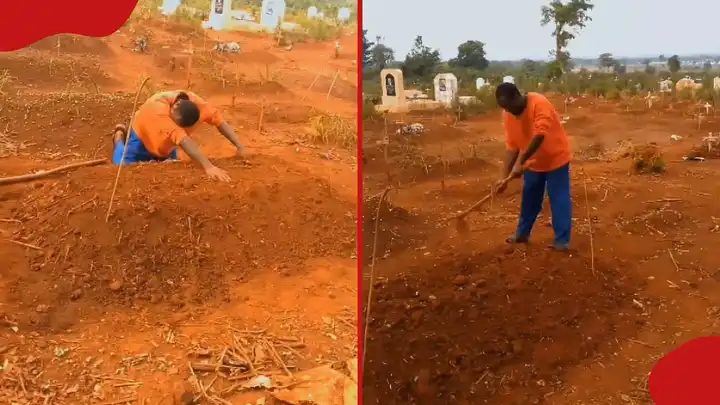
In a quiet corner of a cemetery, a simple, profound act of love unfolded and soon resonated across a nation. A man, after three long months, finally stood before his mother’s final resting place. Overcome with emotion, he knelt on the earth, tenderly cleaned the headstone, and through his tears, whispered the words that forever connect a child to their first home: “Nakupenda Mama” (I love you, Mom). A bystander, moved by the raw sincerity of the moment, captured it on video. When shared online, it didn’t just go viral; it became a mirror for millions, reflecting the universal language of grief, memory, and undying love for a mother.
The video is almost silent save for the man’s soft weeping and the sounds of his caretaking. There are no grand speeches, just the gentle scraping of grass from the stone’s edge, the careful placement of flowers, and the weight of three months of unshared days and unsaid words finally being released. It is in this quietude that its power lies. It is a portrait of mourning made visible, a testament to the fact that love does not end with a burial, but transforms into a practice of remembrance.
Beyond the Tears: The Rituals That Keep Us Connected
The man’s actions—kneeling, cleaning, speaking—are not random. They are part of the deep-seated human rituals of mourning that help bridge the chasm between life and death. Psychologists and grief counselors affirm that these rituals are not a sign of being stuck in the past, but a healthy, necessary process of adjustment.
The Physical Act of Care: Tending a grave is a tangible expression of ongoing love and respect. It is one of the last acts of service a child can perform for a parent. Wiping away dust, pulling weeds, and placing fresh flowers are quiet, deliberate actions that say, “You are still cared for. You are not forgotten.”
The Sanctuary of the Site: For many, a gravesite becomes more than a plot of land; it is a sacred space for conversation and comfort. It is the one place where one can speak aloud to a loved one without pretense, to share updates, confess worries, or simply sit in the peace of their symbolic presence. The man’s whispered words were likely part of a longer, unseen conversation held in his heart.
Marking the Passage of Time: The three-month gap mentioned in the story is significant. The initial shock of loss has often faded by this point, replaced by the aching reality of permanent absence. Visiting the grave can be a way to mark this passage, to confront the new normal, and to reaffirm the bond that death cannot sever.
A Universal Echo: Why the Story Struck a Chord
The reason this video resonated so deeply is that it stripped away all pretense and showcased a fundamental human experience. In a world of curated online personas, here was unfiltered vulnerability. It reminded viewers of their own losses, their own mothers, and their own private moments of grief.
The phrase “Nakupenda Mama” is itself a powerful incantation. In Swahili, “Mama” carries a weight of ultimate reverence, care, and foundation. To declare love for “Mama” is to acknowledge the source of one’s own life and the anchor of one’s deepest emotions. Hearing it in this context reminded every viewer, regardless of language, of their first word, their safest haven, and their most enduring love.
Navigating the Journey of Grief
This man’s public moment offers a quiet lesson in the deeply personal journey of grief:
Grief Has No Timeline: The three-month wait before his visit is a reminder that everyone mourns differently. There is no “right” schedule for grief. Some visit daily; others, like this man, need time to gather the emotional strength for the profound encounter.
Express to Process: Keeping emotions locked inside can be isolating. The act of going to the grave, crying, and speaking is a form of emotional release and processing. It externalizes the internal storm, providing a crucial step toward healing.
Find Your Own Ritual: Not everyone finds solace at a gravesite. Healing can come through writing letters, creating photo albums, volunteering in a mother’s name, or simply talking about her with family. The key is to find a personal ritual that maintains the connection and honors the memory in a way that feels authentic.
Conclusion: The Love That Endures
The viral video of the man at his mother’s grave is not a story about death. It is a story about love’s stubborn, enduring presence. In his tears was the pain of absence, but in his gentle hands and whispered words was the proof of a love that persists.
He did not just clean a stone; he honored a memory. He did not just say words; he sustained a relationship. His visit screams a silent truth to all who have loved and lost: that our loved ones are never truly gone as long as we find ways, however simple, to say, “Nakupenda.” To remember is to love. And to love is to keep a part of them forever alive within us.