
1. The Video That Wouldn’t Go Away
In previous decades, a police shooting on a crowded street might have been reduced to “conflicting reports.” In 2026, the prosecution’s strongest witness isn’t a person—it is a collection of metadata.
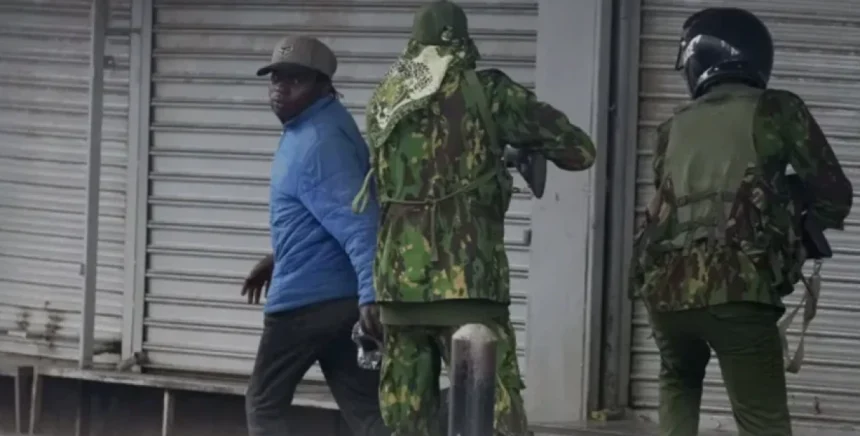
Point-Blank Evidence: The footage captured by bystanders and the Associated Press crew on June 17, 2025, shows the entire sequence: the initial assault, the confrontation, and the point-blank shot to the head.
The “Smoking Gun”: Digital forensic experts have authenticated the footage, matching the muzzle flash from the officer’s rifle to the exact timestamp of Boniface’s collapse. This evidence is what led Justice Kanyi Kimondo to remark that the case for the prosecution is “exceptionally strong,” further justifying the denial of bail.
2. The Family’s Long Walk to Justice
For the family of Boniface Kariuki Mwangi, the last eight months have been a cycle of grief and financial ruin.
The KES 3.6 Million Debt: Beyond the emotional loss, the family was left with a staggering bill from Kenyatta National Hospital (KNH), where Boniface spent 13 days on life support before succumbing to his injuries.
A Life Cut Short: At just 22 years old, Boniface was the primary provider for his siblings, selling masks to put food on the table. His mother’s testimony in late 2025 remains one of the most heartbreaking moments of the trial, as she described her son as “a peaceful boy who only wanted to work.”
3. IPOA’s Technical Knockout
The Independent Policing Oversight Authority (IPOA) has used this case to showcase its revamped investigative capabilities.
Ballistic Match: The ballistic report confirmed that the bullet fragments recovered from Kariuki’s skull matched the G3 rifle issued to Constable Baraza on the day of the protests.
Command Responsibility: While Baraza is the one facing murder charges, the trial has also opened doors for investigations into his superiors. “The question isn’t just who pulled the trigger,” says human rights advocate Irũngũ Houghton, “it’s who gave the order to use lethal force on a mask vendor.”