

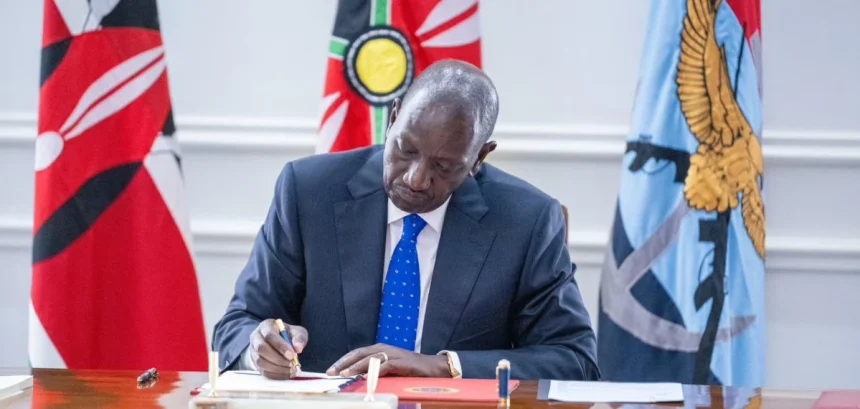
President William Ruto has officially signed into law a KSh 5 trillion National Infrastructure Bill, marking a significant milestone in Kenya’s plan to modernize its transport and economic infrastructure.
The legislation is expected to unlock funding for major projects across the country, including the long-awaited expansion of Jomo Kenyatta International Airport (JKIA) in Nairobi.
Government officials say the bill will accelerate the development of critical infrastructure needed to support Kenya’s growing economy.
What the Infrastructure Bill Means
The newly approved law is designed to facilitate large-scale infrastructure investments by providing a framework for financing, construction, and management of national projects.
Under the bill, the government aims to expand and upgrade key infrastructure sectors such as:
Airports and aviation facilities
Roads and highways
Rail transport systems
Energy infrastructure
Urban development projects
Authorities believe these investments will improve connectivity, boost trade, and enhance Kenya’s competitiveness as a regional economic hub.
JKIA Expansion Takes Center Stage
One of the most notable projects expected to benefit from the new law is the expansion of Jomo Kenyatta International Airport, the country’s main international aviation gateway.
The planned upgrade aims to increase passenger capacity and modernize airport facilities to meet rising demand for air travel.
Officials say the expansion could include:
New passenger terminals
Improved cargo handling facilities
Expanded runways and taxiways
Modernized airport technology
The project is expected to strengthen Kenya’s position as a major aviation hub in East Africa.
Boosting Kenya’s Economic Growth
According to the government, the infrastructure investments made possible by the bill are expected to stimulate economic growth and create thousands of jobs.
Improved infrastructure can significantly reduce transport costs, increase efficiency in logistics, and attract foreign investment.
Economists note that better airports, roads, and rail systems often lead to stronger trade connections and increased tourism.
For Kenya, expanding Jomo Kenyatta International Airport could play a critical role in supporting the country’s growing tourism and export sectors.
Strengthening Kenya’s Aviation Industry
The aviation sector is considered a key driver of economic development in Kenya.
As the busiest airport in East Africa, Jomo Kenyatta International Airport handles millions of passengers and large volumes of cargo every year.
However, experts have long argued that the airport requires major upgrades to keep up with increasing traffic.
The expansion project is therefore expected to enhance operational efficiency and improve the overall passenger experience.
Government Vision for Infrastructure Development
President William Ruto has repeatedly emphasized the importance of infrastructure development as part of his administration’s economic transformation agenda.
The government believes that modern infrastructure will play a vital role in supporting:
Trade and logistics
Tourism growth
Industrial development
Regional integration within East Africa
Officials say the newly signed bill will help accelerate these goals by ensuring stable funding and efficient project implementation.
Conclusion
The signing of the KSh 5 trillion National Infrastructure Bill marks a major step forward for Kenya’s development ambitions.