

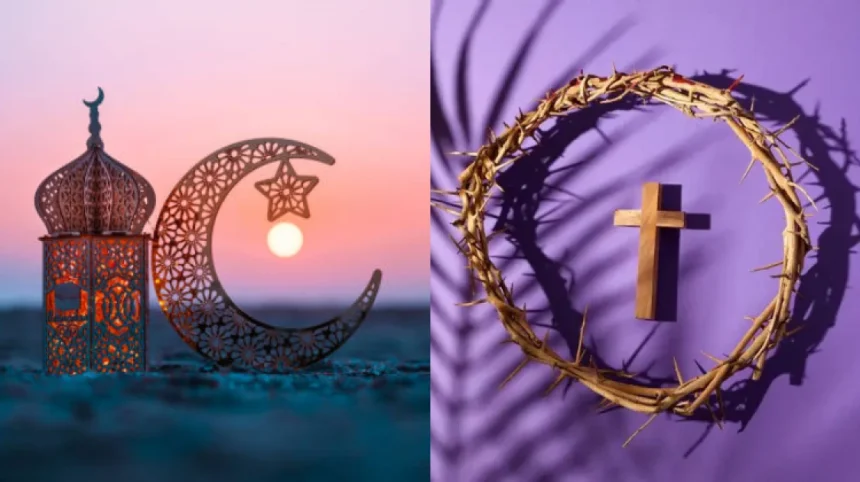
The dawn of Wednesday, February 18, 2026, marked more than just a date on the calendar. It was a historic moment where nearly half of the world’s population began a journey of self-denial. For the first time since the early 1990s, the lunar-based Islamic calendar and the solar-linked Christian liturgical calendar have harmonized, creating a 30-day window where the pealing of church bells and the call of the Muezzin signal a shared rhythm of devotion.
1. The Mechanics of the “Great Overlap”
Why does this happen so rarely? This alignment is a result of the intricate dance between different systems of time:
The Islamic Calendar: Operates on a lunar cycle, which is approximately 11 days shorter than the solar year. This causes Ramadan to “drift” through the seasons, completing a full cycle every 33 years.
The Christian Calendar: Lent is anchored to Easter, which is determined by the first full moon following the spring equinox.
The 2026 Miracle: This year, the calculation of the vernal equinox and the sighting of the Ramadan crescent moon fell into perfect step. After this month, we won’t see such a close simultaneous start again until the late 2050s.
2. Shared Architecture: Fasting, Prayer, and Alms
While the way we fast may differ, the spiritual “architecture” of Lent and Ramadan is strikingly similar. In 2026, both faiths are focusing on three core pillars:
A. The Discipline of the Body (Fasting)
Ramadan: A total abstinence from food, drink, and sensory pleasures from dawn to sunset. It is a “hard reset” for the soul.
Lent: A 40-day period of “giving up” specific luxuries, meat (on Fridays), and practicing partial fasting on Ash Wednesday and Good Friday.
Shared Goal: Both use physical hunger to highlight a spiritual “appetite” for justice and God’s presence.
B. The Discipline of the Wallet (Charity)
Zakat & Sadaqah: During Ramadan, Muslims are encouraged to give their compulsory charity (Zakat), often funding massive “Iftar” programs for the poor.
Lenten Almsgiving: Christians use the money saved from fasting to support initiatives like “Operation Rice Bowl” or local parish outreach.
“Our hunger is the same, our thirst is the same, and our need for mercy is the same.” — Sheikh Mohamed Khalifa, Feb 18, 2026.
C. The Discipline of the Heart (Prayer)
From the Taraweeh prayers in mosques to the Stations of the Cross in cathedrals, the world is physically quieter this month. Both traditions emphasize Tawba (repentance) and a “turning back” to the Creator.