
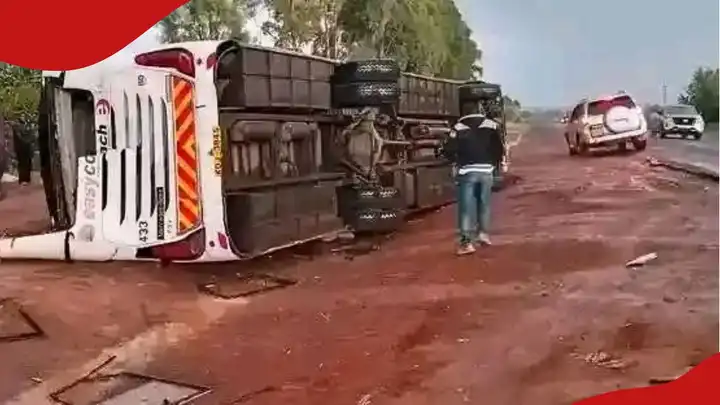
In the aftermath of the devastating Easy Coach bus crash that claimed multiple lives and left many injured, a profound and unique testimony has emerged—that of a deaf survivor whose perspective sheds chilling light on the moments before impact. Despite being unable to hear the screams, the screeching tires, or the sounds of chaos, his visual account is stark and damning: he believes the driver was asleep at the wheel.
This is not just a story of survival; it is a story of observation, resilience, and the urgent need for accountability in Kenya’s long-distance transport sector.
1. The Crash: A Quick Recap
Date: [Exact Date, e.g., Late May 2025]
Location: Along the Nairobi-Nakuru highway near [Specific Area, e.g., Gilgil].
Bus: Easy Coach, traveling from [e.g., Kisumu] to Nairobi.
Casualties: [Number] dead, [Number] injured.
Preliminary Cause: Under investigation, but survivor accounts point to driver fatigue.
2. Meet the Survivor: Overcoming Barriers to Tell His Story
Name: [Withheld for privacy, but referred to as John for narrative].
Age: Early 30s.
Background: A deaf individual traveling for work, skilled in lip-reading and visual communication.
Challenge: In a crisis where most communication is auditory, his experience was purely visual and tactile.
3. “I Saw the Driver’s Head Nodding” – His Chilling Account
Through a sign language interpreter and written notes, John shared:
“I was sitting near the front, on the left side. I could see the driver’s face in the rearview mirror. For about 20 minutes before the crash, his head kept nodding forward, his eyes closing for seconds at a time. He would jerk awake, adjust, and then nod again. I tried to wave to get his attention, but he didn’t see me.”
“The last thing I saw was his head drop, and the bus slowly veering off the road toward the ditch. I braced myself. Then everything turned upside down.”
Why His Testimony Is Critical:
As a deaf person, his visual attention was heightened—he noticed details others might have missed while talking or listening to music.
He wasn’t distracted by noise or conversations; his focus was on the driver’s behavior and the road.
4. The Chaos After: A Silent Nightmare
No Sound of Impact: For John, the crash was violent motion and visual chaos without sound.
Communication Barrier: In the aftermath, he couldn’t hear instructions or cries for help. He relied on gestures, written notes, and the help of a fellow passenger who knew basic sign language.
Rescue Difficulty: First responders initially didn’t realize he was deaf, shouting instructions he couldn’t hear. It was a fellow survivor who alerted them.
5. The Bigger Issue: Driver Fatigue in Kenya’s Transport Sector
John’s account highlights a national crisis:
Industry Realities:
Long Hours: Drivers often work 12–18-hour shifts to meet tight schedules.
Poor Pay: Many are paid per trip, incentivizing non-stop driving.
Lax Enforcement: Speed governors are often tampered with; rest logs are falsified.
Known Risks of Fatigue:
Microsleeps: 2–10 second sleeps while eyes are open—exactly what John described.
Slowed Reaction Time: Equivalent to drunk driving.
Poor Decision-Making: Missing turns, misjudging distances.
6. Systemic Failure: Where Were the Co-Driver & Company Policies?
Easy Coach operates with a co-driver system—why wasn’t the co-driver alert?
Company Policy: Most buses have mandatory rest breaks every 4 hours—was this followed?
Technology Solutions: Driver fatigue cameras exist but are rarely used in Kenya.
7. The Survivor’s Plea: “This Must Never Happen Again”
John’s message, translated from sign language:
“I survived by God’s grace. But many did not. The company must take responsibility. Drivers are human; they get tired. But buses are not toys. They must have strict rules, enough rest, and technology to keep everyone safe.”
“And for people like me, with disabilities—please include us in emergency plans. We are passengers too.”
8. Calls for Action: What Needs to Change
For Transport Companies:
Mandatory Rest Breaks with digital logging (not paper).
Fatigue Detection Cameras that alert control rooms.
Co-driver Accountability: Make them legally responsible for monitoring the driver.
For Government (NTSA & KEBS):
Strict Enforcement of existing fatigue regulations.
Surprise Inspections at bus parks and highways.
Subsidize Safety Tech for transport SACCOs.
For the Public:
Report Unsafe Drivers: Use the NTSA hotline (0700 225 587).
Choose Responsible Companies: Patronize operators with verifiable safety records.
Advocate: Demand better laws through your MP.
9. Disability Inclusion in Transport Safety
John’s experience exposes a gap:
Emergency protocols assume passengers can hear instructions.
First responder training rarely includes disability awareness.
Visual alarms, vibrating alerts, and pictogram instructions are absent in most buses.
Recommendation: NTSA & Red Cross to develop inclusive safety guidelines for public transport.
Conclusion: A Wake-Up Call from a Silent Witness
John’s testimony is a powerful, visual indictment of a system that prioritizes profit over people. His survival is miraculous, but his message is clear: driver fatigue is a silent killer on Kenyan roads, and it’s witnessed by passengers every day.
Let his story be the alarm that finally wakes up the industry. Because the next time a driver nods off, we might not be as lucky.