

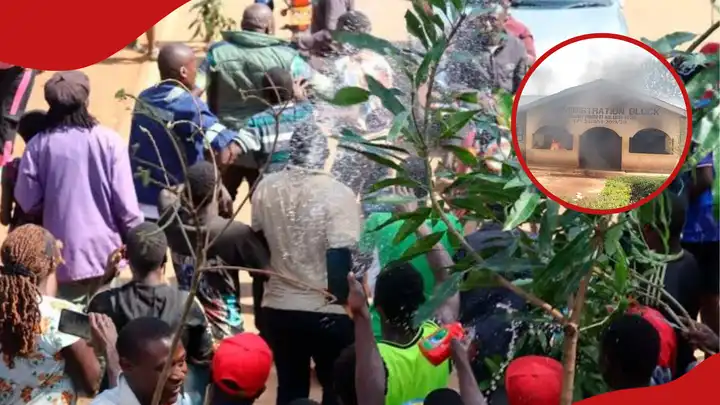
A Land Dispute Explodes Into Bloodshed
In the green, rolling hills of Ikolomani, Kakamega County, a long-simmering dispute over a 50-acre piece of land boiled over into a scene of tragic violence. What began as a local conflict rooted in competing claims and community tension escalated into a deadly confrontation that shocked the region. On a day in March 2024, armed groups clashed violently, leading police to intervene with live fire to disperse the mobs. When the chaos subsided, the human cost was devastating: four people lay dead, and the community was left reeling.
In the immediate aftermath, law enforcement moved swiftly, launching a major operation that led to the arrest of 63 individuals. Among those detained were two elected local leaders: Members of the County Assembly (MCAs) from the Ikolomani ward. This detail transformed the narrative from a simple community skirmish into a politically charged crisis, raising urgent questions about the role of leadership in fanning the flames of local discord.
The Unresolved Core: A 50-Acre Powder Keg
At the heart of the Ikolomani tragedy is a classic, yet volatile, Kenyan problem: an unresolved land dispute. The contested 50-acre parcel in the Shieywe area is not a new issue; it has been a source of friction for an extended period, with different families and community groups holding deep-seated, competing claims to its ownership.
In many parts of Kenya, land is more than an asset; it is identity, ancestry, and livelihood. When legal titles are unclear, historical agreements are contested, or the process for adjudication is seen as slow or corrupt, these disputes can fester for generations. The land becomes a silent powder keg, waiting for a spark. In Ikolomani, that spark was the latest in a series of confrontations, but this time, it ignited with lethal force. The failure to resolve this issue through legal and diplomatic channels created a vacuum where violence became the default arbitrator.
The Arrests and the Allegation of Political Incitement
The scale of the police response—63 arrests—signaled the seriousness with which authorities viewed the clash. Charging the suspects with “creating a disturbance” was the immediate legal step, but the subtext of the operation was clear in official statements. The arrest of the two MCAs was particularly significant.
The local administration did not mince words. The Kakamega County Commissioner issued a stern warning that pointed directly at the heart of the problem: political incitement. The message was that the violence was not a spontaneous eruption but was actively fueled. The implication was that local leaders, potentially for their own political or financial gain, had mobilized their supporters, turning a civil dispute into a physical battle. This transforms the tragedy from a regrettable conflict between neighbors into a failure of leadership and a betrayal of public trust. When those elected to serve and unite a community instead arm and divide it, the social contract is shattered.
A Pattern of Violence in a Volatile Region
For attentive observers of Western Kenya, the Ikolomani clash felt like a grim case of déjà vu. Just months earlier, in December 2023, the nearby Shinyalu constituency was the scene of similar violence, where three people were killed in clashes also linked to a land dispute. This pattern reveals a regional vulnerability.
Kakamega County, with its high population density and rich agricultural land, is particularly prone to these conflicts. Pressure on land resources, combined with complex family lineages and sometimes opaque historical ownership records, creates a perfect storm. The Ikolomani incident demonstrates that without proactive, county-wide mechanisms for land conflict resolution and mediation, these localized disputes will continue to erupt, costing lives and destabilizing communities. The arrest of MCAs suggests the problem is now two-fold: not only are the disputes unresolved, but they are also being weaponized by the political class.
Conclusion: Justice, Resolution, and a Search for Lasting Peace
The path forward for Ikolomani is fraught but clear. The immediate demand is for justice and accountability. The court process for the 63 arrested must be transparent and fair, and if political incitement is proven, the involved leaders must face consequences commensurate with the lives lost. Justice for the four families who lost loved ones is non-negotiable.
However, legal proceedings alone will not defuse the 50-acre powder keg. There must be a concurrent, genuine effort to finally resolve the underlying land dispute. This requires the intervention of higher authorities, perhaps the national government or independent mediators trusted by all parties, to conduct an impartial review and deliver a binding settlement.
Ultimately, the bloodshed in Ikolomani is a stark lesson. It shows that unresolved land issues are not administrative inconveniences; they are ticking time bombs. And it warns that when local leaders choose to light the fuse for their own ends, the explosion claims the very people they swore to serve. The quest for peace must now involve both dismantling the machinery of incitement and definitively settling the ground upon which it was built.
This response is AI-generated, for reference only.