
The 24th day of the 2026 Iran War is perhaps its most confusing yet. Early Tuesday morning, the White House described the status of potential peace negotiations in Islamabad, Pakistan, as “fluid.” This follows a series of Truth Social posts by President Trump claiming that the U.S. and Iran have found “major points of agreement” to resolve hostilities.
However, the “tenor and tone” of diplomacy has not yet silenced the guns. While Trump has ordered the Department of War (formerly the Department of Defense) to postpone strikes specifically on Iranian power plants for a five-day window, broader military operations continue unabated.
The Nuclear “Roulette”: Strikes Near Dimona and Natanz
The most alarming escalation over the last 48 hours has been the direct targeting of areas surrounding nuclear infrastructure.
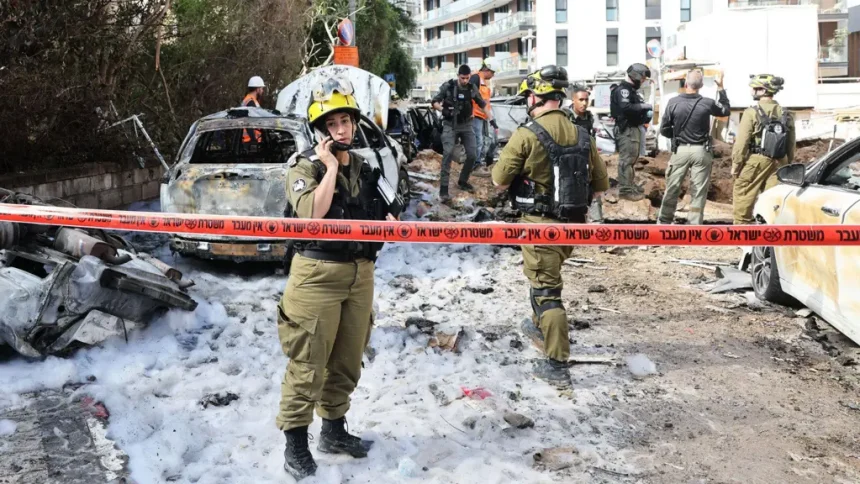
The Iranian Strike: For the first time, Iranian ballistic missiles reportedly penetrated Israeli air defenses near the Shimon Peres Negev Nuclear Research Centre in Dimona.
The US-Israeli Response: This followed a massive joint bombardment of Iran’s Natanz enrichment facility on March 21.
The Risk: The IAEA and WHO have issued “worst-case scenario” warnings, noting that while a nuclear explosion is unlikely, a “radiological release” from a direct hit could contaminate the region for decades.
The Pakistan Proposal: A New Venue for Peace?
With Oman’s previous mediation efforts having stalled, Pakistan has emerged as the likely host for “last-chance” talks. Reports suggest that Vice President JD Vance, along with senior advisers Steve Witkoff and Jared Kushner, are prepared to meet Iranian representatives in Islamabad this week.
The Hurdles to a Deal:
The Leadership Vacuum: Following the death of Supreme Leader Ali Khamenei on Day 1 of the war, the U.S. remains skeptical of the authority of his successor, Mojtaba Khamenei.
The “Hormuz Ultimatum”: Trump’s five-day reprieve is contingent on Iran agreeing to “fully and permanently” reopen the Strait of Hormuz. Iran, currently strangling 20% of the world’s oil supply, views the blockade as its only remaining leverage against total regime collapse.
Tehran’s Denial: Interestingly, while Trump speaks of “productive” talks, Iranian state media (IRNA) continues to deny that any direct contact has taken place, calling the U.S. claims “psychological warfare.”
Oil and the Global Shipping Logjam
The “Fluid” nature of the war is reflected in the markets. Brent Crude has stabilized near $112 per barrel, but the closure of the Strait of Hormuz has created a global logistics nightmare. Hundreds of commercial vessels remain stranded, and insurance premiums for transit in the Persian Gulf have become prohibitive.
Conclusion: Friday is the Deadline
The world is now watching a countdown clock that expires on Friday, March 27. If the “fluid” talks in Pakistan do not solidify into a formal “Strait Reopening Agreement,” the U.S. has made it clear that the paused strikes on Iran’s energy grid will be reinstated with “overwhelming offensive firepower.”