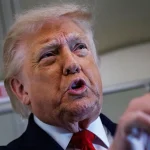

As preparations intensify for the 2026 FIFA World Cup, football’s biggest tournament is already generating headlines far beyond the pitch. This time, the controversy is not about tactics, star players, or qualification—it is about politics, leadership, and the growing relationship between FIFA President Gianni Infantino and former U.S. President Donald Trump.
Infantino’s close public association with Trump has sparked criticism from several voices within European football, where concerns about political neutrality and FIFA’s governance have resurfaced. Yet despite the backlash, there is little indication that the FIFA president feels under pressure.
Instead, many analysts believe Infantino is focused on delivering the biggest World Cup in history while maintaining strong relationships with political leaders whose cooperation is essential for hosting a tournament spanning three countries.
Why Trump’s Role Has Become a Talking Point
The United States is one of the three host nations for the 2026 FIFA World Cup, alongside Canada and Mexico.
Because the tournament will welcome millions of visitors, governments will inevitably play a major role in areas such as:
Border security
Immigration procedures
Stadium security
Transportation
Emergency planning
Diplomatic coordination
As a result, FIFA must work closely with political leaders regardless of party affiliation. That practical reality has led to increased visibility for interactions between Infantino and Trump, drawing criticism from some European observers who believe FIFA should avoid appearing too closely aligned with any political figure.
Europe’s Concerns
European football administrators have long defended the idea that football should remain politically neutral.
Some critics argue that high-profile appearances involving FIFA leadership and political figures risk creating the perception that the governing body favors particular governments or political leaders.
Their concerns generally focus on:
Protecting FIFA’s Independence
Football’s global appeal depends on neutrality. Many European officials believe FIFA should maintain equal distance from political leaders to preserve public trust.
Governance and Transparency
Some critics have questioned whether FIFA’s leadership style places too much emphasis on personal diplomacy rather than institutional decision-making.
Public Perception
Even when meetings are necessary for tournament planning, images of FIFA officials alongside politicians can generate controversy and fuel debate about the organization’s independence.
Why Infantino Is Unlikely to Be Concerned
Despite the criticism, several factors explain why Infantino is unlikely to change course.
The World Cup Requires Government Cooperation
Hosting the world’s largest sporting event cannot happen without government support.
The United States, Canada, and Mexico must coordinate on:
Security
Customs procedures
Infrastructure
Fan movement
Emergency response
International travel
Working closely with national leaders is therefore viewed by FIFA as a practical necessity rather than a political endorsement.
FIFA’s Expanding Global Influence
Under Infantino’s leadership, FIFA has expanded its commercial reach, increased investment in football development, and introduced a larger World Cup format.
Supporters argue that maintaining strong relationships with governments around the world helps secure resources needed to organize major tournaments successfully.
European Football Does Not Control FIFA
Although Europe remains home to many of the world’s biggest clubs and leagues, FIFA represents more than 200 national football associations across every continent.
Voting power within FIFA is shared globally, meaning European criticism does not automatically translate into political pressure inside the organization.
Infantino has consistently enjoyed support from many football associations outside Europe, particularly in Africa, Asia, and parts of the Americas.
Politics and Football Have Always Intersected
The debate surrounding Trump’s involvement is part of a much broader conversation.
Throughout history, major sporting events have often involved political leaders.
Examples include:
Opening ceremonies attended by heads of state.
Government funding for stadium construction.
Diplomatic meetings during international tournaments.
Security coordination between host nations.
While governing bodies strive to remain politically neutral, complete separation between politics and global sporting events has rarely been possible.
The Stakes for the 2026 World Cup
The 2026 FIFA World Cup is expected to become the largest tournament in football history.
For FIFA, success will depend on:
Safe and efficient organization.
Strong international cooperation.
High attendance.
Commercial success.
Positive fan experiences.
Smooth cross-border travel.
These priorities help explain why FIFA’s leadership continues engaging with government officials despite criticism.
Could the Controversy Affect the Tournament?
At this stage, there is little evidence that political disagreements will significantly affect the World Cup itself.
Most football supporters remain primarily interested in:
The participating teams.
Star players.
Match schedules.
Stadium experiences.
Tournament atmosphere.
Unless political disputes begin affecting logistics or fan travel, attention is likely to remain focused on events on the pitch rather than administrative debates.
Conclusion
The criticism directed at Gianni Infantino over his relationship with Donald Trump reflects broader tensions between football governance and global politics. While some European officials remain uneasy about the optics of FIFA’s engagement with political leaders, Infantino appears focused on the practical realities of organizing the biggest World Cup ever staged.
For FIFA, cooperation with host governments is essential, regardless of political affiliations. For critics, maintaining institutional neutrality remains equally important. As the countdown to the 2026 World Cup continues, this balance between politics and sport is likely to remain under close scrutiny.