

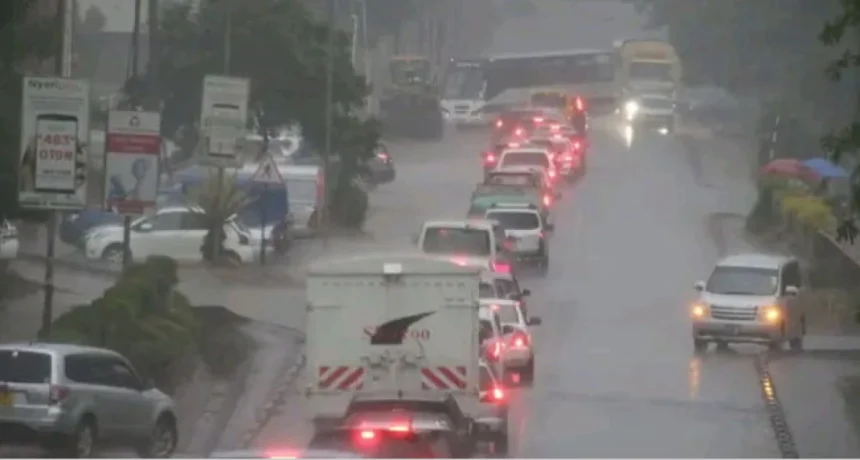
Urban flooding in Nairobi isn’t just about the volume of water; it’s about velocity and drainage failure. Because much of the city is paved, the water has nowhere to go but into the streets.
Identified “Black Spots” for This Week:
Thika Superhighway (Githurai & Kahawa West): Known for poor drainage at the underpasses, these sections can transform into “lakes” within 30 minutes of a heavy downpour.
The Nairobi Expressway (Lower Sections): While the elevated road remains clear, the drainage spouts often create “waterfalls” that flood the old Mombasa Road and Uhuru Highway beneath it.
Kilimani & Lavington: Despite being “upmarket” areas, the rapid construction of high-rise apartments has outpaced the sewer capacity, leading to significant street flooding on Argwings Kodhek and Ole Odume Road.
Infrastructure Under Pressure
The intensification starting tonight isn’t just a threat to your car; it’s a threat to the city’s basic services.
1. The Power Paradox
Kenya Power (KPLC) often faces a spike in “tripping” during the long rains.
Why it happens: Heavy winds cause tree branches to touch high-voltage lines, and lightning strikes can blow transformers.
The Forecast: With storms expected to be most severe in the Central Highlands, expect rolling blackouts in estates like Runda, Gigiri, and Garden Estate where overhanging trees are common.
2. The Riparian Clearing: A Double-Edged Sword
Governor Sakaja’s recent efforts to demolish structures along the Nairobi River were intended to save lives.
The Theory: Removing the “bottlenecks” (illegal buildings) allows the river to flow faster.
The Risk: Without the buildings to “slow down” the water, the river may move with even greater force toward downstream settlements like Ruai and Njiru. Residents in these low-lying areas must remain on high alert for sudden surges tonight.
The “Hydro-Static Lock” Threat
For many Nairobians, the biggest financial risk this week isn’t a flooded house, but a “dead” engine.
Pro-Tip: If your car stalls in deep water, DO NOT try to restart it. This causes “hydro-lock,” where water enters the cylinders and permanently destroys the engine block. Most insurance companies will reject your claim if they prove you attempted to restart the car while submerged.
Logistics & Business Disruptions
If you run a business or work remotely, the next week requires a “Flood Plan”:
Delivery Delays: Apps like Glovo and Bolt Food often experience massive shortages of riders during storms. If you rely on food delivery, order at least 90 minutes earlier than usual.
Internet Stability: Heavy cloud cover and rain-fade can significantly slow down satellite and fixed-wireless internet connections. If you have a critical Zoom meeting, have a mobile data backup ready.
The 72-Hour Outlook
Tonight marks the beginning of the “Saturation Phase.” By Sunday, May 10, the ground will be fully unable to absorb further moisture. This means that even a light shower on Monday or Tuesday could cause a major flood.