

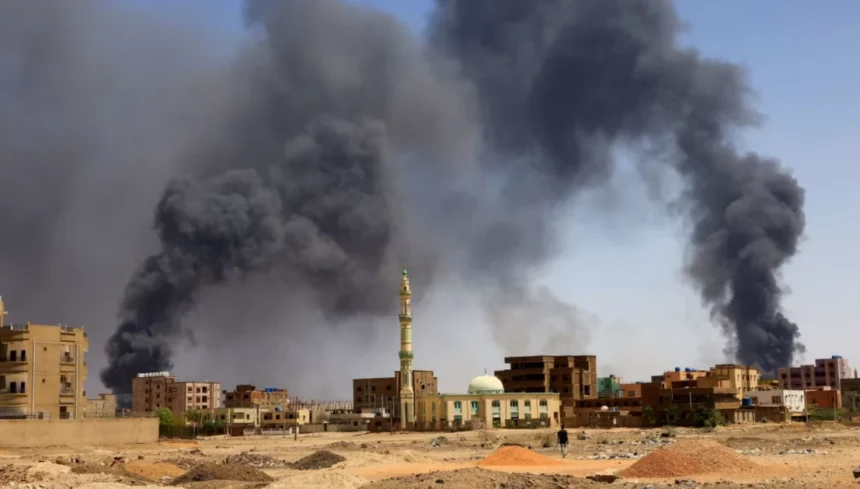
For three years, the war in Sudan was largely defined by urban skirmishes and artillery duels. However, May 2026 has introduced a terrifying new variable: long-range, precision drone warfare orchestrated from across international borders.
The strike on Khartoum International Airport—a facility that had only recently resumed international flights—was designed to do more than just damage runways; it was a psychological blow to the nation’s sense of recovery. The “Smoking Gun”: The Legend of S88The most explosive evidence presented by the Sudanese government is the technical data recovered from a drone with the serial number S88. The Interception: In March 2026, SAF air defenses downed a drone near El Obeid.
Upon forensic analysis, the Sudanese Intelligence Service claimed the flight logs originated from Bahir Dar Airport in Ethiopia. The UAE Link: Sudanese military spokesperson Brigadier General Asim Awad alleges that the drone’s hardware is part of a batch purchased by the UAE from Turkish manufacturers.
The flight paths suggest the aircraft crossed over the Blue Nile state, striking military and civilian infrastructure before its final mission in Khartoum.
The UAE’s Deflection StrategyThe United Arab Emirates has consistently maintained a policy of “active neutrality,” but the May 2026 incident has pushed their diplomatic team into overdrive.”Calculated Pattern of Deflection”An Emirati official, speaking via the Ministry of Foreign Affairs on May 6, described the Sudanese accusations as “fabrications.” The UAE’s argument is twofold: Shifting Blame:
They claim the SAF is using the “external enemy” narrative to distract the Sudanese people from their own military failures and the deepening famine.Peace Advocacy:
The UAE insists its only involvement in Sudan is humanitarian, pointing to the billions in aid sent to refugees in Chad and South Sudan.However, international observers note that the RSF, led by Mohamed Hamdan Dagalo (Hemetti), has seen its combat effectiveness surge recently.
In a defiant speech on May 6, Hemetti claimed his forces had tripled in size to 450,000 disciplined soldiers, a growth that critics argue would be impossible without massive external financial and logistical support. The Ethiopia Connection:
A Tense BorderThe recall of the Sudanese Ambassador from Addis Ababa marks the lowest point in Sudan-Ethiopia relations in decades. The SAF now openly refers to Ethiopia as a “launchpad for aggression.”The Al-Fashaga FactorThe tension is not just about drones.
It is deeply rooted in the disputed Al-Fashaga border region.Proxy Groups: Ethiopia has counter-accused Sudan of hosting and arming TPLF (Tigray People’s Liberation Front) fighters to destabilize Ethiopia’s western frontier. The Assosa Base:
Recent reports suggest that an Ethiopian airbase in Assosa is being used to transfer armored vehicles to the RSF, further fueling the “Dual Aggression” narrative touted by Khartoum. The Global Ripple EffectThe impact of the Khartoum Airport strike has vibrated through every major diplomatic capital.