

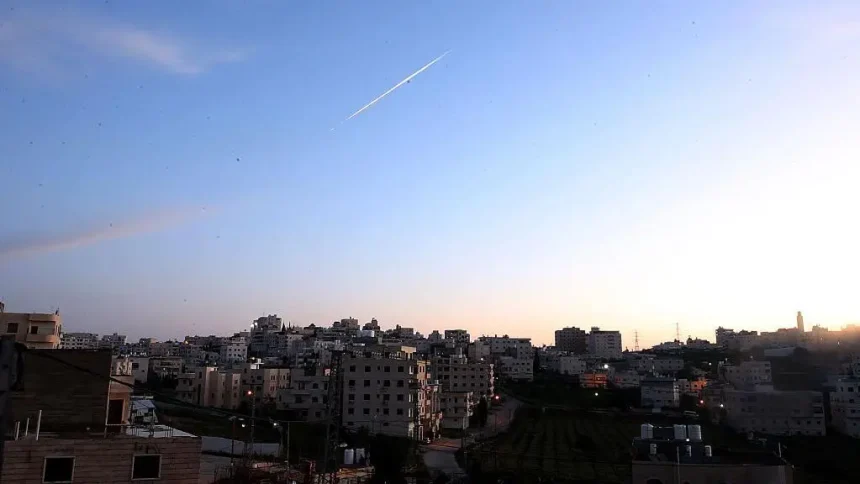
SANAA, Yemen — The shadow of a wider regional war became a reality this weekend. Following a month of relative restraint since the joint US-Israeli campaign against Iran began on February 28, the Houthi group in Yemen has officially entered the fray.
On Sunday morning, March 29, 2026, Houthi military spokesperson Yahya Saree announced a “second military operation” targeting vital sites in southern Israel, just hours after their first-ever ballistic missile launch of this conflict.
1. The Two-Wave Assault
The Houthis have shifted from verbal threats to kinetic action with two distinct operations:
Operation 1 (Saturday morning): A barrage of ballistic missiles aimed at “sensitive military targets” in southern Israel, specifically triggering sirens in Beersheva.
Operation 2 (Sunday morning): A coordinated wave of cruise missiles and drones targeting what the group described as “vital and military sites” in southern occupied Palestine.
While the Israel Defense Forces (IDF) reported successful interceptions of the primary threats, the psychological and geopolitical impact of the launches has sent ripples through global markets.
2. Coordinated “Axis” Strategy
The timing of these attacks was not accidental. Spokesperson Yahya Saree explicitly stated that the Houthi operations “coincided with the military operations being carried out by our brothers in Iran and Hezbollah in Lebanon.”
This confirmed the “multifront” nature of the current conflict, as Israel simultaneously manages:
A ground invasion and aerial campaign in Lebanon.
Direct retaliatory exchanges with Iran following the death of former Supreme Leader Ali Khamenei in late February.
Intermittent drone strikes from Iraqi-based militias.
3. The Vow to Continue
The Houthis have made it clear this is not a one-off event. In a televised address, Saree warned that military operations “will continue in the coming days” until the “aggression against Gaza, Lebanon, and Iran stops.”
They further warned that their “fingers are on the trigger” for even more direct intervention if the US and Israel continue to use the Red Sea as a launchpad for operations against Tehran.
4. Impact on Global Trade
The biggest concern for the international community is the Red Sea corridor. Having successfully disrupted 15% of global trade in 2024, the Houthis’ re-entry into the war raises immediate fears of:
Renewed Shipping Attacks: Potential targeting of commercial vessels in the Bab al-Mandab Strait.
Energy Prices: With the Strait of Hormuz already under Iranian pressure, a Red Sea blockade could push oil prices well beyond the current $110-$120 mark.