

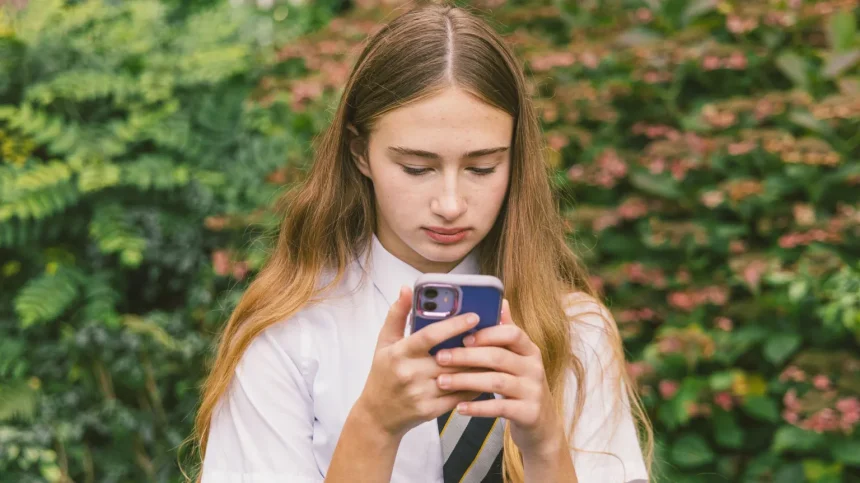
As of today, March 25, 2026, the “National Conversation” about children’s digital safety has moved from the halls of Parliament directly into the living rooms of 300 British families. The Department for Science, Innovation and Technology (DSIT) has officially begun its six-week pilot program to test how teenagers—and their parents—actually handle the most restrictive social media rules ever proposed in the UK.
The Three “Stress Test” Groups
To move beyond theory, the government has split participating households into three distinct “intervention” groups to see which restrictions yield the best results for sleep, schoolwork, and family life.
Group 1: The “Home Ban” (The Australia Model)
Parents in this group are instructed to use existing device controls to completely remove or disable access to selected social media apps. This mimics the enforcement of a total national ban for under-16s, similar to the law recently introduced in Australia.
Group 2: The “60-Minute Cap”Teenagers in this group are limited to exactly one hour per day across their most-used platforms, including TikTok, Instagram, and Snapchat. This test aims to see if “controlled moderation” is more effective than an outright ban
.Group 3: The “9-to-7 Curfew”This group focuses exclusively on the “Sleep Gap.” Social media access is blocked between 9:00 PM and 7:00 AM, allowing for daytime use but ensuring the “blue light” and addictive algorithms don’t interfere with rest.The “IRL Trial”: A Scientific CounterpartWhile the government conducts its 300-home pilot, a massive scientific study known as The IRL Trial is launching simultaneously in Bradford. Led by Professor Amy Orben (University of Cambridge) and the Bradford Institute for Health Research, this study will recruit 4,000 students aged 12–15.
“What we currently lack is high-quality research on what happens when you actually remove social media from a healthy teenager’s life,” says Professor Orben. This two-year study, funded by the Wellcome Trust, will look for long-term changes in anxiety, bullying, and even school absences.The Liz Kendall Strategy: “Evidence, Not Emotion”Technology Secretary Liz Kendall has been clear: the government wants to “give UK kids their childhood back,” but they want to do it without driving teenagers into the “darker, unregulated corners of the internet.
“By running these pilots alongside a massive public consultation (which has already seen 30,000 responses), the government is building a “defensible” case for whichever law it chooses to pass this summer.Can Parents Actually Enforce This?One of the most critical parts of the 300-home trial is the “Practical Challenge” phase. Officials will interview families not just about their mental health, but about the tech:Did the parental controls actually work?How quickly did the teenagers find “workarounds” (VPNs, web browsers, or secondary devices)?How much did enforcing the rules increase “family friction”?What Happens Next?The public consultation remains open until May 26, 2026. Once the six-week pilot data is analyzed alongside the 30,000 (and counting) public responses, the government is expected to table formal legislation by the end of the summer.