
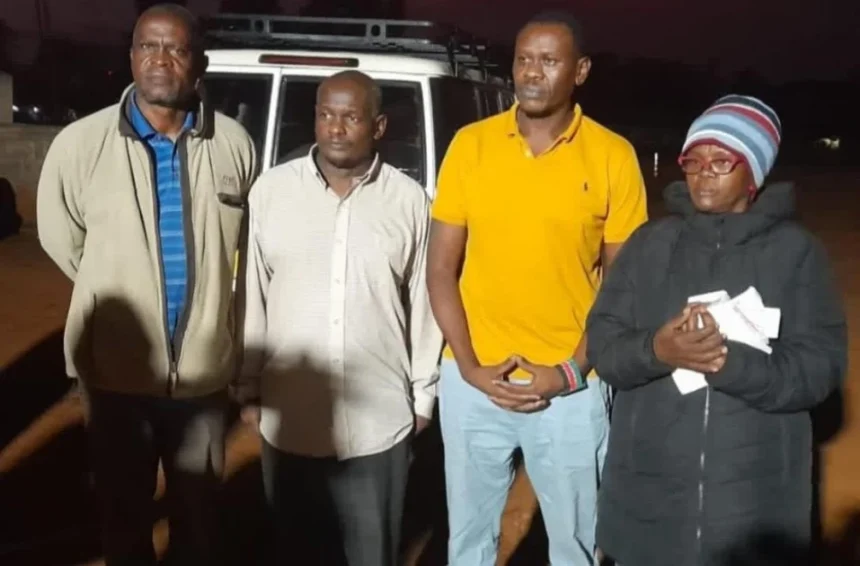
Kampala, Uganda – Relief and celebration have swept across Kenya’s human rights community after Ugandan authorities released Kenyan activists Bob Njagi and Nicholas Oyoo, who had been detained for several days under unclear circumstances.
The two activists, known for their cross-border human rights advocacy, were reportedly arrested in Kampala earlier this week under allegations of participating in “illegal assembly and incitement.” Their detention sparked public outcry in both Kenya and Uganda, with regional civil society groups calling for transparency and their immediate release.
The Arrest and Detention
According to reports, Bob Njagi and Nicholas Oyoo were in Uganda to attend a regional civic engagement forum focused on democracy, youth empowerment, and press freedom in East Africa. However, they were apprehended by Ugandan security officers shortly after the event ended.
Witnesses claim plainclothes officers seized the pair and took them to an undisclosed location before later confirming their detention at a Kampala Central Police Station.
Human rights organizations and fellow activists quickly mobilized to demand their release, describing the arrest as an attempt to intimidate cross-border activists who are pushing for greater political accountability and free speech in East Africa.
“These arrests were politically motivated. Our colleagues were in Uganda for legitimate advocacy work,” said Boniface Mwangi, a prominent Kenyan activist.
“Their detention was unlawful and a clear violation of international human rights standards.”
Diplomatic Pressure and Regional Reactions
The incident quickly attracted the attention of Kenyan authorities, with officials from the Ministry of Foreign Affairs confirming that they were in contact with the Ugandan government to secure the release of the two nationals.
Behind the scenes, diplomatic negotiations intensified as Kenya’s High Commission in Kampala engaged Ugandan police and government officials to verify the activists’ safety and legal status.
“The Kenyan government remains committed to protecting its citizens abroad,” a senior official at the Foreign Affairs Ministry said.
“We are grateful that our efforts, combined with those of civil society, have resulted in the safe release of our citizens.”
Ugandan officials later stated that the activists were detained “for questioning” and were released after “cooperating with ongoing investigations.” However, they did not specify the nature of those investigations or whether any formal charges had been filed.
Joy and Relief After Release
Family members, friends, and fellow activists in Nairobi and Kisumu expressed overwhelming relief after news broke of their release.
“We are grateful they are safe. It’s been a week of sleepless nights,” said Njagi’s sister, Ruth Wanjiku.
“We thank everyone who stood with us — from the media to human rights defenders — your voices made a difference.”
The two activists are expected to return to Kenya soon, with human rights groups planning a welcome and solidarity event in Nairobi to celebrate their freedom and highlight the growing risks faced by activists working across borders.
Human Rights Groups Condemn Intimidation
Several international organizations, including Amnesty International, Human Rights Watch, and Article 19, have condemned the detention of Njagi and Oyoo, saying it represents a worrying pattern of shrinking civic space in East Africa.
“Cross-border activism is not a crime. Governments must respect freedom of movement and association within the East African Community,” said Deprose Muchena, Amnesty’s Regional Director for East and Southern Africa.
Rights watchdogs argue that such arrests create fear among activists who are trying to hold governments accountable for corruption, governance, and abuse of power.
A Growing Trend of Cross-Border Crackdowns
The arrest of Njagi and Oyoo highlights a growing regional challenge — governments using border security and vague national security laws to suppress dissent.
In recent years, several journalists and political activists from Kenya, Uganda, Tanzania, and Rwanda have faced harassment, travel bans, or unexplained detentions while working across national boundaries.
Analysts say this trend threatens regional integration goals under the East African Community (EAC), which aims to promote free movement of people and ideas across member states.
“The region must not turn into a fortress against free speech,” said Dr. Sylvia Omondi, a Nairobi-based political analyst.
“If Kenya and Uganda want to be democratic leaders in Africa, they must protect—not punish—voices of accountability.”
Voices of Defiance and Hope
Speaking briefly after their release, Bob Njagi and Nicholas Oyoo expressed gratitude for the overwhelming support from activists, lawyers, and diplomats who fought for their freedom.
“We thank everyone who stood for justice. Our arrest only strengthened our resolve to keep advocating for human rights,” Njagi told reporters.
“Freedom must never be taken for granted. We will continue to stand for truth and justice, no matter the borders.”
Their lawyer confirmed that no charges were filed and that Ugandan authorities had agreed to return their travel documents, which were confiscated during the arrest.
What Their Release Means for Regional Activism
The release of Bob Njagi and Nicholas Oyoo marks a small but significant victory for civil society movements in East Africa, many of which operate in increasingly repressive environments.
Experts say the case will likely influence how governments handle foreign activists and regional forums, urging for greater respect for international law and human rights treaties.
“This moment should remind East African leaders that human rights are universal,” said Kenyan lawyer Martha Karua.
“You cannot build regional unity by silencing the people who demand justice.”
Conclusion: A Victory for Justice and Cross-Border Solidarity
The freedom of Bob Njagi and Nicholas Oyoo is more than just the end of a detention—it’s a symbol of resilience for East Africa’s human rights community.
Their case has sparked conversations about democracy, civic space, and freedom of movement within the region. It has also shown that collective voices—when united—can overcome state intimidation.
As they return home, Njagi and Oyoo’s story serves as a reminder that activism in Africa continues to face great risks, but it also thrives on courage, solidarity, and hope.
“They tried to silence us,” said Oyoo, “but justice spoke louder.”
“Inside the Arrest of Kenyan Activists in Uganda: What Their Detention Reveals About East Africa’s Human Rights Landscape”?